Subscribe to our social channels to get the latest news about Hungary!


Whether you are here to work, study, or gain Hungarian citizenship, it is worth knowing some basic facts about Hungary’s history. This knowledge may not only help you in everyday life but also assist in understanding certain attitudes of the Hungarian people, as well as the meaning behind symbols or even the names of streets you encounter during your day.
The ancestry and early history of the Hungarian people remain hotly debated, but some facts are well established. First, the Hungarians originated from the East, with some even coming from Central Asia. Secondly, the seven Hungarian tribes that conquered the Carpathian Basin in 895–896 were of mixed ethnic origin. Thirdly, Hungarian armies had previously been employed by Christian states, including one of the era’s superpowers, the Byzantine Empire, so they were familiar with the region they arrived in.
The conquest of the Carpathian Basin was not swift: the decisive battle securing the territory for the newcomers was fought in 907 near present-day Bratislava against the Holy Roman Empire. The first half of the 10th century was marked by successful Hungarian raids into the Byzantine Empire, and the German and Italian territories. As members of the bow-wielding peoples of the steppe, their cavalry was feared throughout Europe. They were equipped with horned, reflex bows and composed of highly trained warriors. However, over time, their enemies learned how to defeat them, making the threat of total annihilation a real possibility.

Such an end for an Eastern (semi-)nomadic people would not have been unique – that is how the Huns and the Avars disappeared centuries earlier. Today, we do not even know what language they spoke. Seeing no other option, Prince Géza and his son, Stephen I, converted to Western Christianity and founded the medieval Hungarian kingdom in the year 1000. Legend has it that István (Stephen) received the Holy Crown (now exhibited in the Hungarian Parliament) directly from the Pope. Between 1000 and 1301, the Árpád dynasty ruled the Kingdom of Hungary, which had become one of the wealthiest and most powerful European states by the end of the 12th century. For instance, based on income records from the reign of Béla III (1172–1196), the Hungarian king’s revenue was comparable to that of his French and English counterparts.
Thanks to the organisational skills of its rulers, the Kingdom of Hungary survived the Mongol invasion of 1241 without collapse. King Béla IV (1235–1270) was able to quickly rebuild the state, notably through the construction of stone fortresses, including the original Buda Castle.
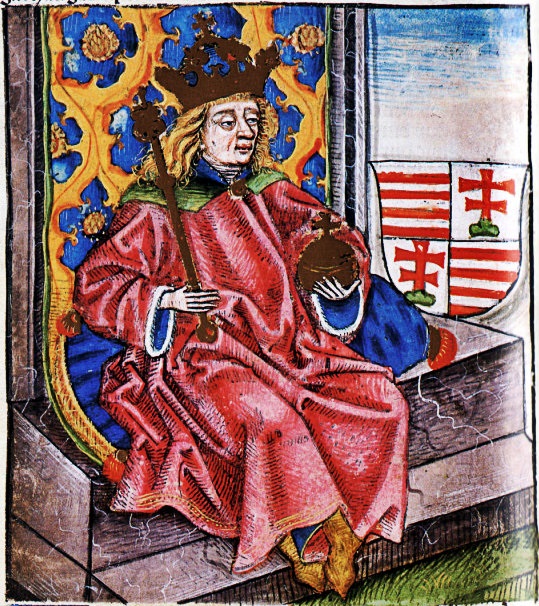
In 1301, the Árpád dynasty died out with the death of András III (1290–1301). After that, Hungary was ruled by monarchs from various dynasties. The Italian Anjou dynasty (1308–1395) came first, with Charles I and his son, Louis the Great, who also ruled Poland between 1370 and 1382. His daughter, Mary, became the first Queen of Hungary to rule in her own right (1382–1385), later co-ruling with her husband, Sigismund of Luxembourg, who also became Holy Roman Emperor.
It was during Sigismund’s reign that Hungary faced one of its greatest challenges: the rise of the Ottoman Empire. The conflict between the Hungarian kingdom and the Ottoman sultans lasted until the late 18th century, resulting in heavy losses and repeated threats to the Hungarian state and its people.
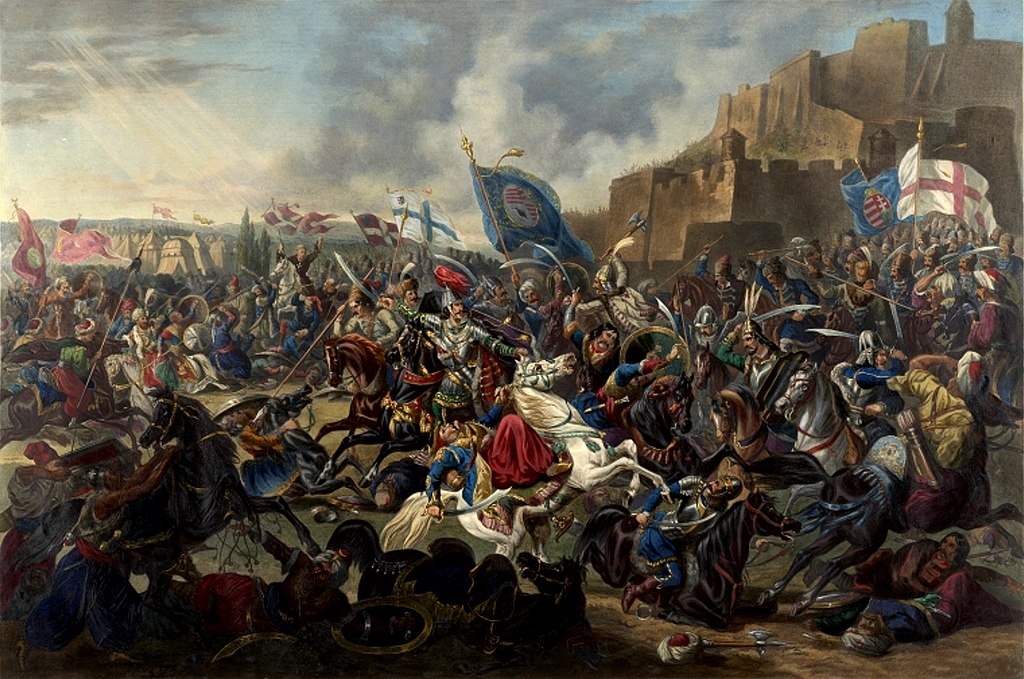
After brief periods of rule by the Habsburg dynasty (1437–1439, 1444–1457) and the Polish Jagiellonian dynasty (1440–1444), the Hunyadi family rose to prominence. János Hunyadi served as governor of Hungary from 1446 to 1453 and famously defeated Mehmed the Conqueror at the Battle of Nándorfehérvár (modern-day Belgrade) in 1456—an event commemorated by the noon ringing of church bells across the Roman Catholic world. His son, Matthias I (1458–1490), is regarded as one of Hungary’s greatest monarchs. He introduced the Renaissance to Hungary, built a vast library, erected Renaissance palaces in Visegrád and Buda, and even conquered Vienna, becoming King of Bohemia.
As Matthias left no legitimate heir, the Polish Jagiellonian dynasty returned to the throne. However, it now faced the era’s dominant superpower: the Ottoman Empire. Unable to form a Central European alliance or gather enough resources to oppose the Ottomans effectively, the last Jagiellonian king, Louis II, led a multinational army—Hungarian, Czech, Polish, and others—into the disastrous Battle of Mohács, where he perished in 1526.
Between 1526 and 1541, culminating in the Ottoman capture of Buda, Hungary was divided between two rival kings: Ferdinand I of Habsburg and János Szapolyai. Szapolyai secured Ottoman support but failed to control Western Hungary, while the Habsburgs were unable to take Eastern Hungary and Transylvania. Meanwhile, the Ottomans, hindered by the long march from Istanbul each campaign season, failed to conquer Vienna, and the Habsburgs were too occupied with other European conflicts to expel the Ottoman forces. As a result, Hungary became a war-torn frontier, suffering widespread destruction and depopulation.
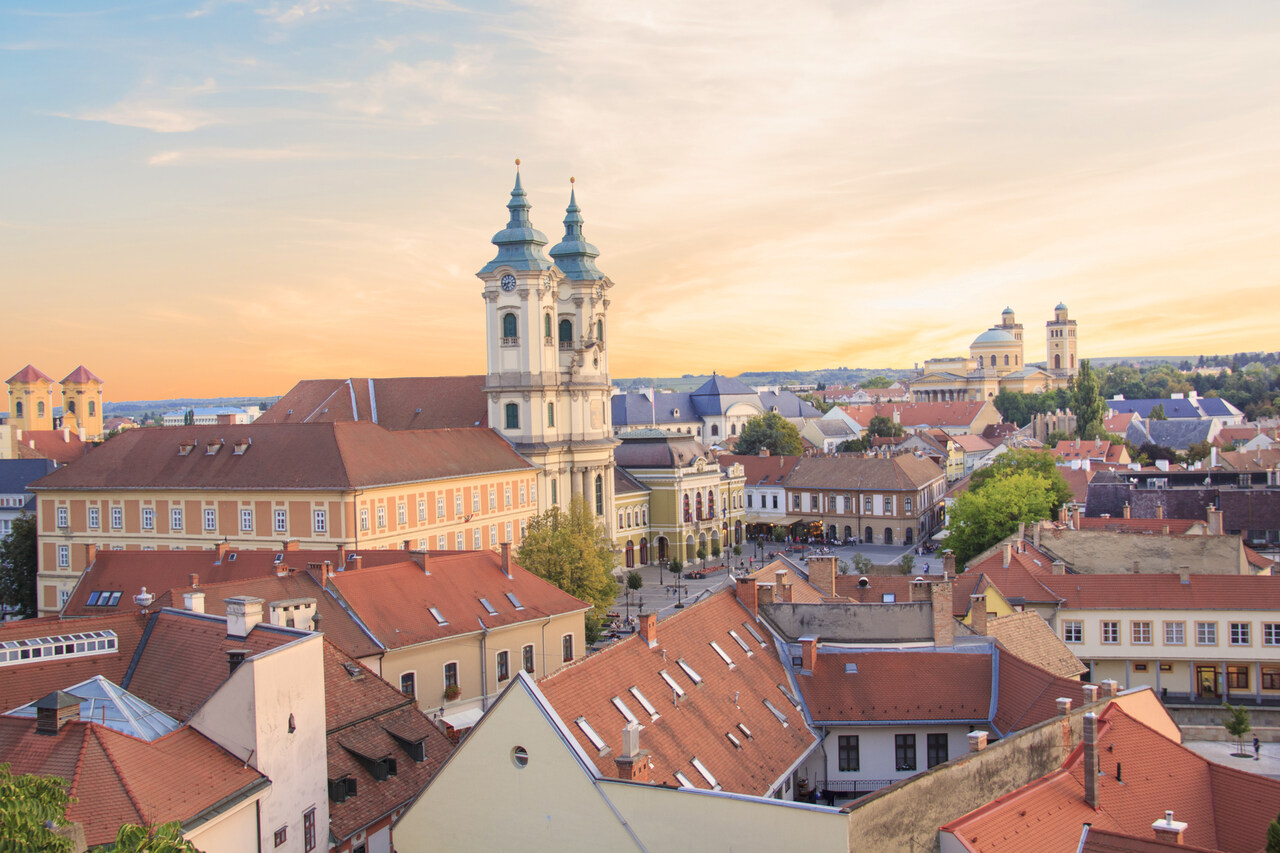
It was not until the late 17th century that the Ottomans weakened and the Habsburgs became strong enough to liberate Hungary. Buda fell to the Holy League’s armies in 1686, and the 1699 Treaty of Karlóca marked the full recovery of the former Kingdom of Hungary—except for the Ottoman vilayet of Temesvár (Timișoara, now in Romania).
The Habsburgs governed their western provinces with absolutist rule, whereas the Hungarian Diet of nobles sought to preserve their privileges and retain power over local governance. As a result, just a few years after Ottoman rule ended, an uprising broke out under the leadership of Francis II Rákóczi. Though ultimately unsuccessful due to the superior strength and organisation of imperial forces, the rebellion lasted nearly eight years. It forced the Habsburgs to sign the Peace of Szatmár in 1711, guaranteeing the liberties of the Hungarian nobility and the powers of the Hungarian Diet in Pozsony (Bratislava, Slovakia), such as the right to propose taxes and conscript troops.
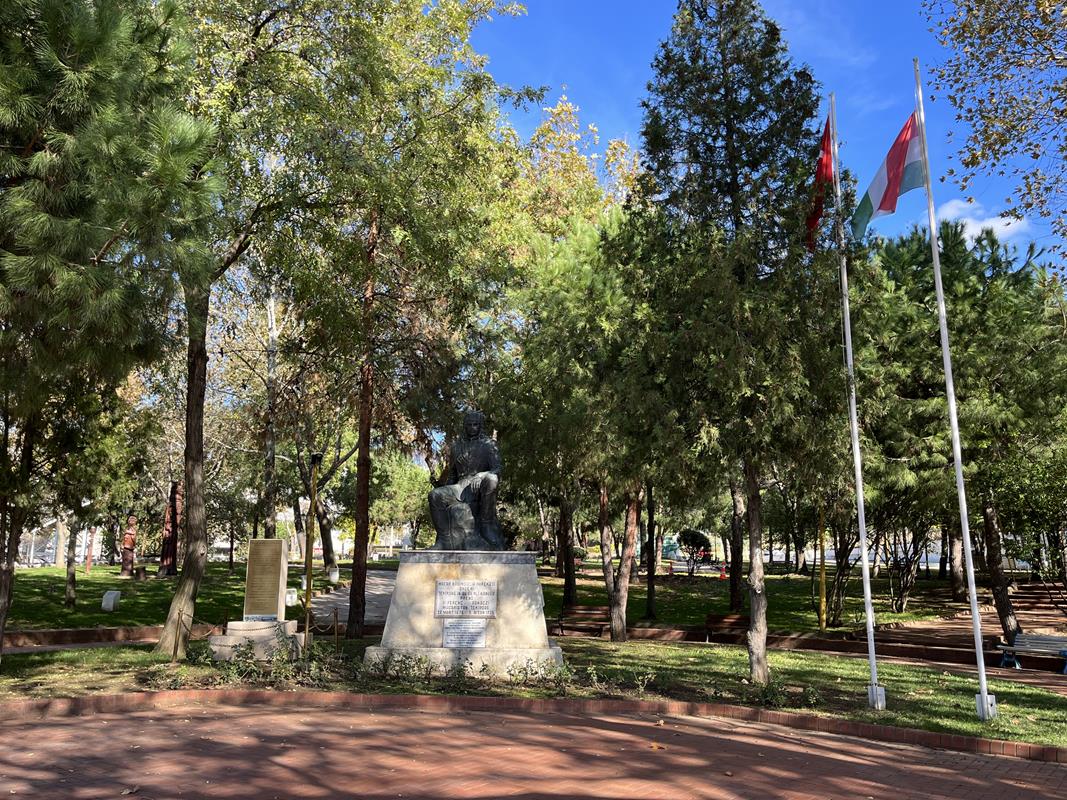
Rákóczi himself did not accept these terms and went into exile in the Ottoman Empire, where he lived out his final years near Istanbul in Rodostó. However, even he acknowledged that the Peace of Szatmár was a realistic compromise, securing nearly all the rights he had fought for.
To be continued.


