Subscribe to our social channels to get the latest news about Hungary!


Last Sunday’s European Parliament election led to varying degrees of political turmoil in Western Europe, with markets reacting swiftly to perceived threats. The euro plunged, but the Hungarian forint fell even more significantly, painting a bleak picture for both currencies.
The latest election results have already dealt a severe blow to the euro and European stock markets. The deep dive might not be short-lived, as neither markets nor analysts were prepared for the surge of the far-right, despite prior indications.
Analysts’ notes released since the election paint an increasingly grim outlook for the euro. The consensus is that the growing political extremism could fundamentally shake confidence in European markets, leading to asset devaluation, as reported by Bloomberg.

This process has already started. In response to the poor election results, French President Macron dissolved the parliament and called for early elections. The Belgian Prime Minister resigned, and the German governing coalition achieved its worst-ever results. Consequently, the euro dropped by 0.5% to a one-month low against the dollar, and Western European stock markets opened the first post-election working day with significant losses.
Analysts highlight that alongside uncertainty, volatility is likely to return, putting pressure on the euro’s market. The euro hasn’t been without stress lately either. Stronger-than-expected U.S. labour market data on Friday altered expectations for the Federal Reserve’s interest rate path, leading markets to price in only one rate cut instead of two.
This could result in a persistently high base rate and a robust dollar, which would be painful for the euro. The far-right’s advance in the European Parliament raises questions about Macron’s ability to implement his economic policies in a divided parliament and the feasibility of further fiscal policy convergence among member states.
Moreover, the German governing coalition’s setback, which oversees Europe’s largest and currently struggling economy, adds to the euro’s woes.
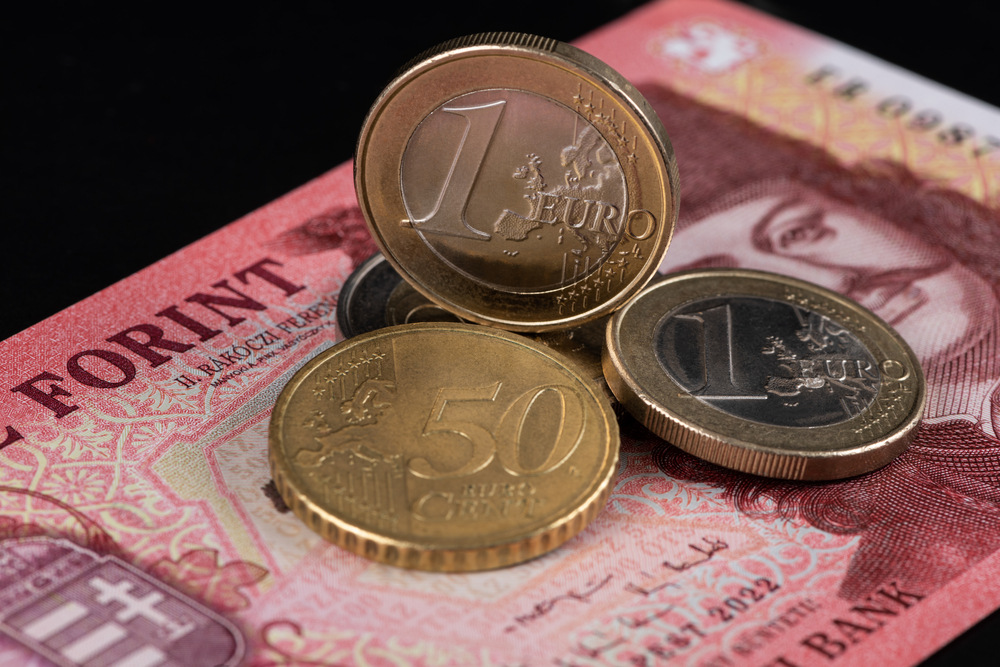
The Hungarian forint has fallen even more sharply than the euro in recent hours/days, despite no significant far-right surge domestically, Világgazdaság reports. However, the Tisza Party’s seven seats were a surprise on the international stage.
The forint’s decline appears to be more influenced by the dollar’s broad and prospective strengthening and Monday morning’s inflation data. May’s inflation came in at 4%, below the expected 4.2%, suggesting that the Hungarian National Bank has room to cut interest rates further, potentially weakening the forint. By 11:30 AM, the forint had dropped 0.5% to 393.4 against the euro.
There will be more excitement for the forint market this week beyond the election results. The Federal Reserve’s decision on Wednesday regarding the U.S. base rate is crucial. While markets are confident there won’t be a cut for some time, the Fed’s communication will significantly impact the forint’s near-term trajectory.
Read also:
Featured image: depositphotos.com


