Subscribe to our social channels to get the latest news about Hungary!


Robert F. Kennedy Jr., nephew of the late President Kennedy, has long criticised mRNA vaccines—including those shown to be effective against COVID-19. In a recent move, he has withdrawn approximately $500 million (around 169 billion forints) in funding from 22 projects dedicated to advancing this vaccine technology. Kennedy claims the vaccines lack proven efficacy, despite hundreds of scientific studies stating otherwise.
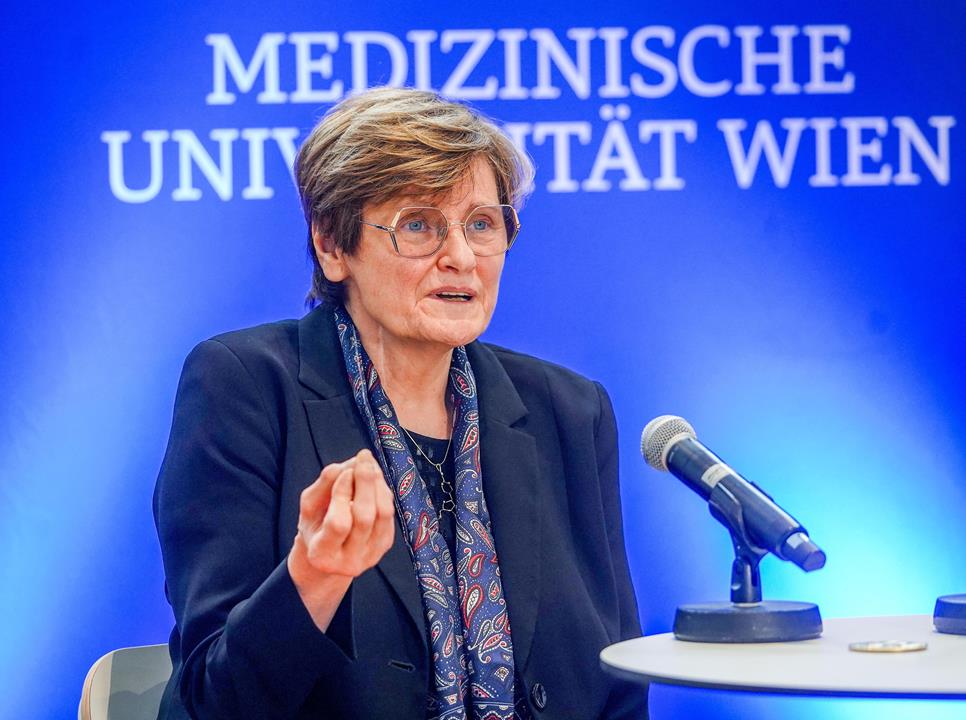
Katalin Karikó, who received the Nobel Prize for developing mRNA technology, also weighed in—suggesting the U.S. health secretary is behaving as if he were working for the Chinese government.
In early August, Kennedy announced the withdrawal of $500 million in funding from 22 mRNA-based vaccine development initiatives. In a video posted to X, the health secretary—who holds a law degree—is seen discussing the decision with medical experts and expressing doubts about the technology’s effectiveness. He argues that for respiratory illnesses, the drawbacks outweigh the benefits. This is not Kennedy’s first public criticism—he has previously campaigned to ban these vaccines altogether.
The decision halts collaborative research with major universities and corporations, including Pfizer, Sanofi, and Tiba Biotech. Kennedy claims that these vaccines are unsuitable for effective protection against respiratory illnesses such as influenza and COVID-19. He argues that the money should instead fund research into broader, more reliable methods that remain effective even as viruses mutate, Politico reports.
We reviewed the science, listened to the experts, and acted. BARDA is terminating 22 mRNA vaccine development investments because the data show these vaccines fail to protect effectively against upper respiratory infections like COVID and flu. We’re shifting that funding toward… pic.twitter.com/GPKbuU7ywN
— Secretary Kennedy (@SecKennedy) August 5, 2025
While Kennedy’s announcement drew immediate criticism, it has now been met with further rebuke from Nobel Prize-winning scientist Katalin Karikó, a pioneer of mRNA technology. In an interview with Magyar Hang, Karikó said:
“Never before has a minister—who is not even a researcher but a lawyer—simply declared that all funding would be pulled from an entire field of science, effectively halting research.”

Karikó questioned how the American government had become so anti-science under Trump and how someone with such views could have been appointed health secretary. She warned that halting research would allow China and Europe to gain an unassailable lead in developing future pandemic solutions—whether those pandemics arise naturally or intentionally. The U.S., she cautioned, could be left begging for help.
According to Karikó, anti-scientific policies are eroding the foundations of American universities—including prestigious institutions such as Harvard. On top of this, fewer foreign students are receiving visas, meaning their knowledge and innovation will strengthen institutions elsewhere. The result, she warns, is that the U.S. may soon lose its scientific edge. If attitudes in Washington do not change, researchers will leave.
Karikó also emphasised that mRNA vaccines can be updated annually to address new viral mutations.
She noted that mRNA vaccine side effects are comparable to those of traditional vaccines. Their effectiveness was demonstrated during the COVID-19 pandemic, when they are believed to have saved tens of millions of lives. She added that around 150 clinical trials are currently underway using mRNA technology to fight various infectious diseases and cancers. Particularly promising results have been seen in treating pancreatic cancer, one of the most aggressive forms. She believes the research will continue elsewhere in the world if not in the U.S.—and that America will inevitably fall behind.
Though many people in Hungary received mRNA vaccines (such as Pfizer and Moderna) during the coronavirus pandemic, their mechanism may now be less familiar. Unlike traditional vaccines, which introduce weakened or inactivated pathogens to stimulate an immune response—sometimes causing mild symptoms for a day or two—mRNA vaccines deliver only the genetic code (messenger RNA) for a specific viral protein, such as the spike protein in the case of COVID-19.
The body’s own cells then use this code to produce the protein, which the immune system recognises and responds to by creating antibodies. Thus, when the actual pathogen arrives, the body is already prepared to fight it. Furthermore, the mRNA molecule breaks down within a few days, does not enter the cell nucleus, and does not alter the body’s genetic make-up.
Read also:
Click for more health news.
To read or share this article in Hungarian, click here: Helló Magyar


