Subscribe to our social channels to get the latest news about Hungary!


With the introduction of Christian male primogeniture to the Hungarian Kingdom by Saint Stephen, no one outside the Árpád bloodline ruled in Hungary and this was almost unbroken for centuries, until the death of Andrew III. Thus, primogeniture was broken. However, the male sex of the sovereign was overthrown too, when Mary, Louis the Great’s daughter succeeded him on the throne in 1382.
Louis the Great inherited a financially well-off country from his father, which he handed over to his daughter, Mary I of Hungary, who thus became the first Queen of Hungary. This change was unwelcomed by the noblemen of Hungary, who rejected the idea of being governed by a female monarch.
Mary’s reign as a monarch was, sadly, short. She was not even crowned ‘queen’ as that title only referred to the wives of kings, so she was crowned ‘king’ in mid-September 1382. As Mary was only eleven years old when she was announced as the new monarch, her mother, Elizabeth, assumed regency. Here it must be mentioned that Mary was already betrothed to Sigismund of Luxembourg, but the queen mother made sure that the fiancé would not be present.
Sigismund asked for the wedding ceremony to take place on several occasions, but both the mother and the daughter postponed it, until October 1385.
The Hungarian noblemen regarded Charles III of Naples, Mary’s cousin as the lawful heir to the throne, and so invited him to dethrone Mary. Charles eventually took the crown in September 1385, but Mary’s supporters were adamant about keeping Mary as the head of the Hungarian Kingdom. This resulted in Charles being poisoned in February 1386, which, as it is expected, led to an anarchic revolt all across the kingdom.
Lithographies of Mary and her husband, Sigismund by Joseph KriehuberFollowing the death of Charles, Mary was restored to the throne but soon captured and imprisoned. She was released in July 1386, when an official pact was made with the noblemen: Mary should give up the throne to her husband, Sigismund, but can remain co-ruler.
Despite her official title as co-ruler, Mary had almost no influence on governing.
Sigismund’s hands were tied, he could only rule with the consent of the barons and his slowly gained status as king was diminished almost to a common nobleman’s, along with his wealth, as he had to distribute the royal lands among the landlords.
Albeit the spite received from the noblemen, Sigismund was liked by the towns that were not overseen by the lords. He aided the development of towns by issuing new laws and decrees in order to strengthen their rights, for which in return they supported him.
It was Sigismund who built the once-magnificent Castle of Buda, which was ruined centuries later during the Turkish raids. He also made Buda the capital city of Hungary and established a university at Óbuda.
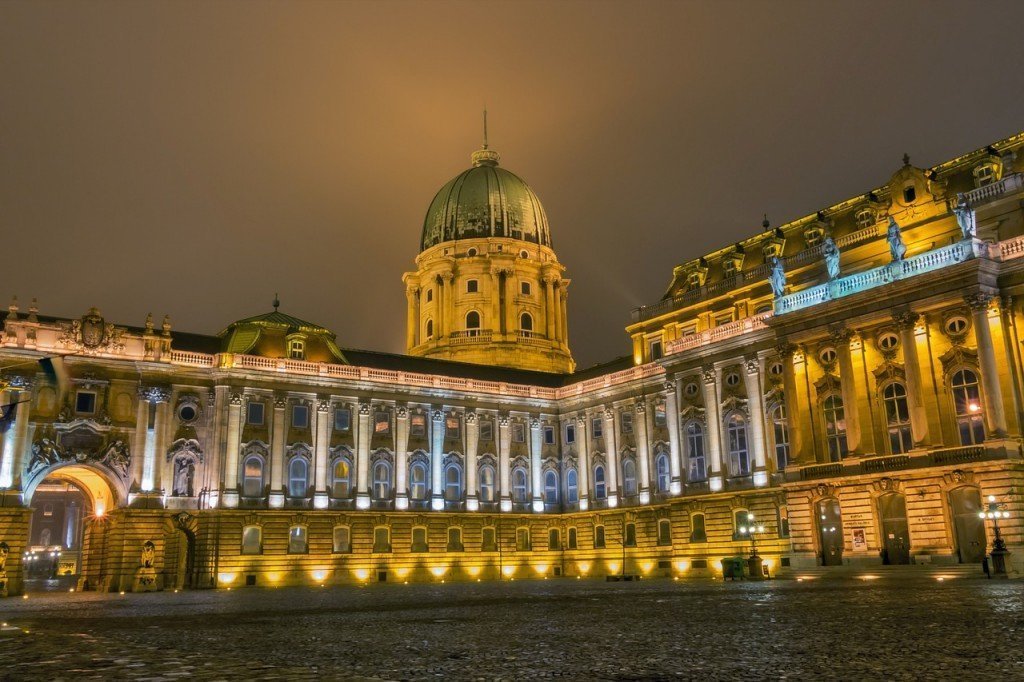
No matter how underappreciated and hated Sigismund was by the Hungarian ruling class, he had tremendous international success, as he was crowned as the King of the Romans in 1410 and King of Bohemia in 1419.
He was even elected Holy Roman Emperor, which catapulted Buda into Europe-wide popularity and became the centre of Europe.
When the threat of the Ottoman Empire arose, Sigismund allowed the first gipsies to enter the Kingdom of Hungary, as they had information on the Ottoman army’s tactics and weapons, and possessed great weapon forging skills.
Sigismund set a record as the longest ruling monarch in Hungary by keeping the crown for 50 years. This is in itself an achievement, and a further accomplishment given the hostile surroundings he was presented with.
featured image: Lithography of Mary by Joseph Kriehuber
Source: Daily News Hungary


