Subscribe to our social channels to get the latest news about Hungary!


Nagorno-Karabakh is a peculiar area, as it has been the site of smaller and larger armed clashes for decades. It also evokes heavy emotions in Azerbaijani and Armenian people. After the current war, which ended with a peace treaty on November 10, it is worth talking a little about the past, a lot about the present, and even more about the future of the region. Here is an interview with Ambassador of the Republic of Azerbaijan in Hungary, Prof. Vilayat Guliyev:
Daily News Hungary (DNH): First of all, thank you very much for the opportunity to be received by the Embassy. Surely, the last weeks and months must have been very hectic for you, but before we turn specifically to the topic of the Nagorno-Karabakh conflict, can you tell us where the conflict actually comes from? What is the origin of the bad blood between Azerbaijani and Armenian people?
Ambassador Guliyev: That is a long story. After the collapse of the Russian Empire in 1917, three independent republics emerged in the South Caucasus – Azerbaijan, Armenia, and Georgia. Defining borders between these states turned out to be a very painful process. All three national communities – Georgians, Azerbaijanis, and Armenians – lived in Tbilisi (Tiflis). Armenians were the second most populous community living in Baku, and Azerbaijanis comprised 60% of the population of Yerevan, which was called Irevan at the time. The situation was similar in smaller cities and villages, and there were a lot of disputes between parties. Georgians and Azerbaijanis had a history of national statehood before they were incorporated into the Russian Empire, and hence it was relatively easier for them to define territories of their newly restored states. Armenians, on the other hand, did not have a state or a capital city before being relocated into the territory of the Russian Empire. So, in the process of the formation of its statehood, Armenia had territorial claims both towards Azerbaijan and Georgia. Due to these claims, there was a bloody war between these two neighbouring Christian countries in 1919. Armenian claims to Nagorno Karabakh where Azerbaijani and Armenian populations lived together also started during these times. However, during the First Azerbaijani Republic (1918-1920), Karabakh was part of Azerbaijan and was recognised as Azerbaijani territory at the Paris Peace Conference.
After Bolshevik Russia occupied South Caucasus in 1920-1921, the Armenian Soviet Socialist Republic (Armenian SSR) voiced its territorial claims once again. But the Caucasian Bureau of Bolshevik Party decided that Karabakh should remain within the territory of Azerbaijan.
At the same time, taking into account that Armenians constituted an ethnic majority in this area, the Autonomous Region was created. In other words, Armenian claims that Stalin granted Nagorno Karabakh to Azerbaijan, which are widely circulated in European media, are completely groundless. This region belonged to us before the Bolshevik rule and also remained within our territory after that. Armenian claims to Karabakh were rejected.
During the collapse of the Soviet Union, Armenians asserted their claims once again. With the silent consent of Moscow, they started a war against Azerbaijan. The Nagorno Karabakh Autonomous Region and seven adjacent districts of Azerbaijan were occupied, and hundreds of thousands of Azerbaijanis were expelled from the occupied territories due to ethnic cleansing. The so-called “Nagorno Karabakh Republic” was proclaimed. But Azerbaijan had never yielded to this situation. We tried to resolve the conflict peacefully, in accordance with the 4 accepted resolutions of the UN Security Council. But Armenian neglect of the international law and the continuous Armenian violations of ceasefire and military provocation on the 27th September forced us to resort to military action.
DNH: In 1994, you lost control of the area. Which were the most decisive events in the zone before September 2020?
Ambassador Guliyev: Although both parties agreed to a ceasefire in 1994, it was never truly fulfilled. Separatists in Nagorno Karabakh and their patrons in Yerevan did not intend to honour the agreement. In April 2016, we witnessed the most prominent escalation of the conflict.
During this so-called “Four Day War”, the Azerbaijani army crushed the Ohanian Line and liberated some strategic heights and villages.
But at the time, Moscow intervened, and war efforts were halted.
DNH: After 26 years, something happened on September 27th, 2020, that gave the initial impetus to the armed attack. What was that?
Ambassador Guliyev: The main reason was that Armenia never stopped its aggressive policy towards us. Our villages near the line of contact were always exposed to enemy fire. During these years, tens of our soldiers as well as civilians – women and children – were killed by the Armenian snipers. Not only Nagorno Karabakh but Armenia itself had become a threat to our people. The Armenian Defense Minister David Tonoyan, who resigned after the current war, in April of this year had openly stated that their purpose was “fighting a new war for the new territories.”
Armenia soon put these threats into action, and on July 12th started a large-scale military provocation on the Azerbaijani-Armenian border in Tovuz far – hundreds of kilometres away – from the line of contact in Nagorno-Karabakh.
They were trying to gain control of strategic heights which would, in turn, let them control an important energy and logistics corridor. Azerbaijan repelled the attack, although with numerous casualties. Later in August, an Armenian subversive group was neutralised, and its leader was captured. Finally, on September 27th, another Armenian provocation forced our military to take firm action, and a 44-day-long war began, resulting in our victory.
DNH: During the war, which was one and a half months long, Azerbaijan occupied a large area. What were the primary targets?
Ambassador Guliyev: I think we should use a different term here. Please look at the map, the war was conducted within internationally recognised borders of Azerbaijan.
How can we occupy our own territories?
On the contrary, we liberated territories occupied by the Armenian forces. Until 1991, there was a Nagorno Karabakh Autonomous Region within Azerbaijan. Its territory was 4,380 sq. km., and its population comprised 120,000 Armenians and 60,000 Azerbaijanis. As I noted earlier, at the time of the decline of the Soviet Union, Armenians demanded that Nagorno Karabakh be merged into Armenia. With the help of the former Soviet military units and the international terrorist organisation ASALA, they waged a large-scale war against Azerbaijan. Not only did they occupy the territory of Nagorno Karabakh, but of the adjacent 7 districts of Azerbaijan as well, their territory being more than 8,000 square kms. As you can see, Armenian separatists controlled more than 12,000 square kms of the territory of Azerbaijan. They had carried out a complete ethnic cleansing of this territory. They did not agree to the peaceful resolution of the conflict. Armenian Prime Minister Pashinyan declared that “Nagorno Karabakh is Armenia, full stop” and announced that he would not return a single sq km to Azerbaijan. Armenia actually withdrew from the OSCE Minsk Group conflict resolution format. As a matter of fact, these peace talks had become quite fruitless.
Despite continuing for 26 years, not a single village was returned to Azerbaijan. Not a single Azerbaijani was given a chance to return to his home. In fact, there was not a place to return to.
All the cities and villages where Azerbaijanis used to live were destroyed. Thus, we had only one option to address the aggressor using the language they would understand. Azerbaijan waged a just war to get rid of the occupational army and liberated seven districts which Armenians did not want to return peacefully.
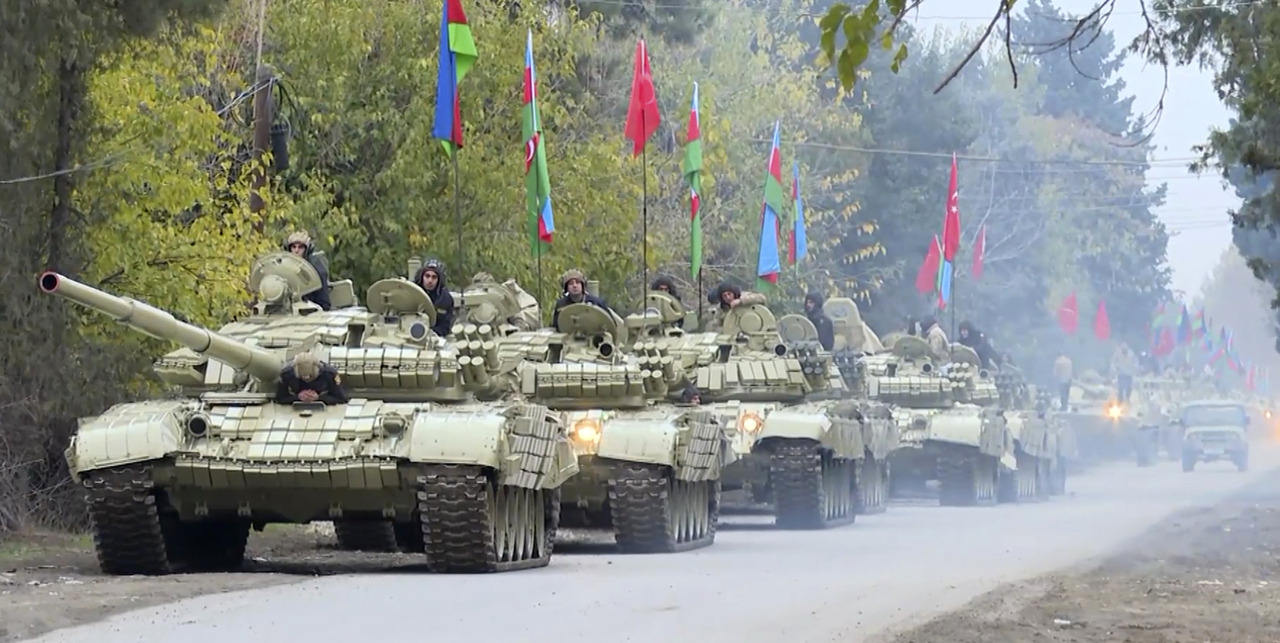
DNH: Part of the international press stressed that the Azerbaijani army was trying to put pressure on the civilian population by attacking civilians. Other media outlets called attention to the rocket attacks in Azerbaijani cities by the Armenian military. Where is the truth? Somewhere in between?
Ambassador Guliyev: From the first day, Azerbaijan has conducted warfare only against the military units of the enemy and against legitimate military targets. Our army never targeted civilians. Our soldiers rescued sick and elderly Armenians who were left behind in the villages fled by the Armenians. These civilians were returned to the Armenian side afterwards. Some civilian objects in Nagorno Karabakh must have been harmed. Nor do I rule out that some civilians could have been killed or wounded during the conflict on the Armenian side. But the scale is completely different.
To force the Azerbaijani army to stop the military operations, the Armenian side deliberately attacked Ganja, Barda, Tartar, Naftalan, Agjabedi, Beylagan, Mingachevir, as well as many other villages using cluster munitions as well.
As a result, 91 civilians, including 16 children, were murdered, and 405 people were wounded. 2,488 houses, 461 civilian objects, and 97 high-rise buildings were damaged and destroyed. Affected cities are tens of kilometres away from the line of conflict. There has not been any military infrastructure around. Civilian areas were targeted during night time. The Armenian side repeatedly attacked the Mingachevir water reservoir. Destruction of this reservoir could lead to humanitarian catastrophe for 2 million people in Azerbaijan and Georgia. At the same time, we can all witness barbaric methods used by Armenians in the districts which are currently being handed over to Azerbaijan according to the November 9th peace accord, namely, Aghdam, Kalbajar, and Lachin – they destroy civilian infrastructure, burn down forests, and lay mines. As soon as they agreed to surrender, the Armenian side started discussing revenge plans.
DNH: The peace treaty was signed on November 10, and since then the Azerbaijani have actually regained much of the lost territory. Do you think there will be peace in Nagorno-Karabakh? Or can we expect another war?
Ambassador Guliyev: Of course, we want the establishment of peace and mutual understanding in the region. Despite the overwhelming dominance of our military and economic potential over Armenia’s, for many years we have preferred the peaceful, negotiated solution to the conflict. We have wanted Azerbaijani and Armenian people to live in an atmosphere of peace and security. If Armenia would not insist on pursuing its unjust territorial claims towards Azerbaijan, the South Caucasus region, with its economic resources and human capital, could have become one of the blossoming regions of Eurasia. But the peace process does not happen with unilateral wishes of one side. Azerbaijan has already put its position forward.
Now everything depends on the path that neighbouring Armenia would choose, the steps it would take.
Armenia is the country which needs peace the most. Due to its policy of occupation, for many years this small country has been living in complete isolation, kept away from global projects, without any prospects of economic development and a rapidly declining population. From an independent nation, it is turning into a Russian outpost in the region. I want peace for every part of my country, as well as Karabakh.
But knowing Armenian policy all too well, I do not exclude the risk of a new war.
DNH: The Armenian side repeatedly raised the issue of the fear of revenge in the area occupied by the Azerbaijanis. Azerbaijan stressed that they wish for peaceful coexistence. What is expected?
Ambassador Guliyev: Look, even as we speak, 30,000 Armenians live safely in Baku and other parts of Azerbaijan. Armenia accuses Turkey of genocide. But several hundreds of thousands of Armenians live in Turkey. There are Armenian MPs in the Turkish parliament.
But is there a single Azerbaijani or a Turk living in Armenia? No. Because Armenians would never allow this.
They raise their children in the spirit of hate towards Azerbaijanis and Turks. Armenia may be one of the world’s few monoethnic nations. 99% of its population is ethnically Armenian. In 1988, when the Nagorno Karabakh conflict started, more than 300,000 Azerbaijanis were expelled from Armenia, the historical lands they had lived in for centuries. Armenians, on the other hand, had lived in our country for decades as citizens endowed with all rights. Azerbaijan is a multi-ethnic, multi-confessional, and multi-cultural country. Here, Russians, Jews, Talyshs, Lezgis, Tatars, and representatives of other ethnicities and confessions have lived peacefully and have never faced any difficulties in developing their cultures and languages. During this last war, they fought for Azerbaijan – a land they consider their common homeland.
Azerbaijani leadership does not see any problem for the Armenian population to continue living in our common homeland while obeying Azerbaijani laws. Our society has always been very far from chauvinist and revanchist feelings.
DNH: Also in recent weeks, Armenians have accused Azeris that they are carrying out a religious war, that Islamic countries want to destroy Christian Armenia. Is that true?
Ambassador Guliyev: This is completely false. Azerbaijan is famous for its tolerance not only in the region but also in the world. Representatives of different confessions live here in peace. In Baku, apart from mosques, there are Orthodox and Catholic churches, synagogues, and even a Zoroastrian fire temple. The Armenian church is still standing intact in the centre of the city. No one has ever had an idea of destroying or damaging it.
I could ask a counter-question – if this is a religious war, why do several Arab countries support Armenia, while Israel supports Azerbaijan?
During the first Karabakh war, Muslim and Shi’a Iran helped Armenia tremendously. This help still continues. Armenia presenting itself as the last Christian outpost in the entire Near East is a pure myth, complete fiction. We respect the religious feelings of all people, including our neighbours. These are not the Middle Ages for religious wars to take place. During its history, Azerbaijan has never had any affiliation with radical Islam, we have always preferred liberal and humanist values. In other words, there is nothing related to religion here. The truth is very simple: Armenia has occupied Azerbaijan’s lands, does not want to return them, and to mask its policy of occupation, it fabricates false narratives.
As a matter of fact, it is Armenia which is carrying out a religious war. Let me tell you a fact. In the territories occupied by Armenia, 35 out of 67 mosques have been completely destroyed, and the remaining mosques were transformed into pig pens or cattle barns to insult the religious feelings of Muslims.
For us, this has been – first and foremost – the war for the liberation of our homeland, in which Azerbaijanis of all ethnicities and confessions participated. Religion never played a role and never could do so.
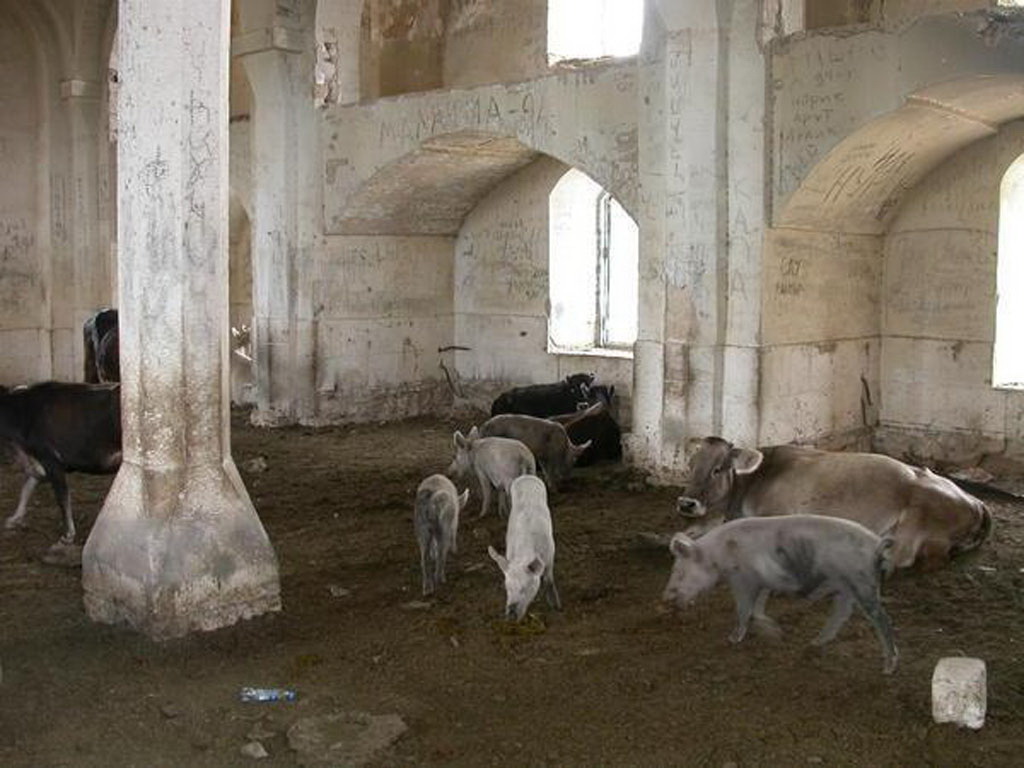
DNH: Azerbaijan is expected to make improvements in the recovered area. What is the condition of the former warzone? What will be the first improvements? Will it be the development of infrastructure or rectifying the system of institutions? Do you build a line of defence?
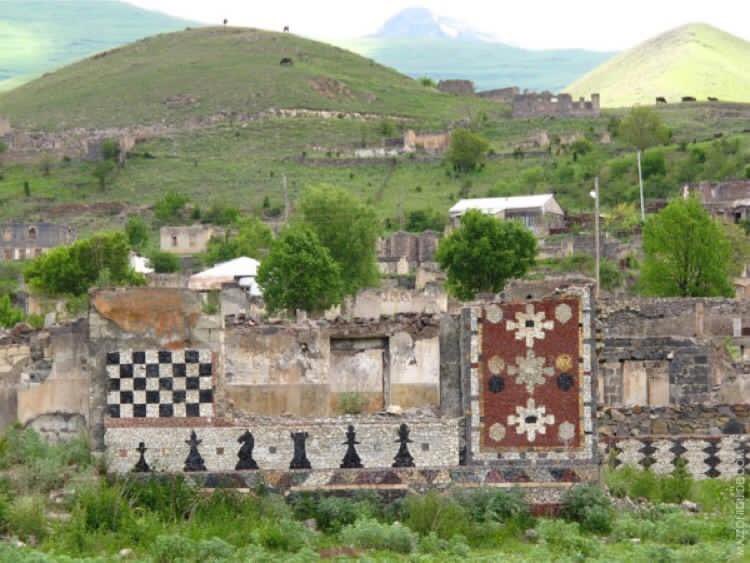
Ambassador Guliyev: During almost 30 years of occupation, Armenia has caused damages to our country’s economy, culture, and ecology in tens of billions of dollars. In the occupied territories, all infrastructure has been destroyed. The names of places have been changed; cultural heritage sites, even gravesites have been demolished. Imagine: prior to 1993, 40,000 people lived in Agdam, it was one of the prosperous, beautiful cities of our country. Now, there is not a single complete building standing. The same can be said about the cities of Fuzuli, Djabrail, Zangilan, Gubadly, Kalbajar, and Lacyn, and tens of villages and settlements. What steps are we going to take in liberated territories?
First, we want to involve independent experts and calculate the damage done to our country.
We will assure that these damages are paid, with the intermediation of international workers. In the second stage, we will clear the liberated lands from mines, as the enemy has planted tens of thousands of mines. Only after the territories are cleared will we start the building and reconstruction works. The projects to rebuild the liberated territories are already in the design stage. We will build new and modern cities and villages in the place of current ruins. Even before the end of the war, we started putting gas and electric lines, building new roads, and bringing mobile connection to liberated territories.
Azerbaijan plans to allocate 10 billion USD for the initial phase of reconstruction projects.
People who had to leave their houses want to return as soon as possible and start a new chapter in their lives.
As the war has ended with our decisive victory, there is no need for building any fortification line. As the President of Azerbaijan has mentioned many times, the previously existing status quo is no longer relevant. There is no such entity as the “Nagorno Karabakh Republic”. Nagorno Karabakh is Azerbaijani territory.
For the next five years, there will be Russian peacekeepers in the region.
All doors are open to Armenians who want to continue living in the territory as Azerbaijani citizens. But under no circumstances would Azerbaijan allow the occupation of its lands again by separatists or the building of the second Armenian state. Of course, no self-respecting state would allow this.
DNH: The current war has also shown that both Azerbaijani and Armenian people love this area passionately. What does Nagorno-Karabakh mean to you personally? If you visit the area, where will you go first?
Ambassador Guliyev:
Actually, I am from Karabakh as well.
The bigger Karabakh consists of two parts – the Lower Karabakh (otherwise called Aran, meaning “plains” in Azerbaijani) and Mountainous (“Nagorno”, in Russian) Karabakh. Karabakh khanate – an Azerbaijani state which has played an important role in our history – was established in these territories. Panah Ali khan (1693-1763), who was the founder of Karabakh khanate, put a foundation of the city of Shusha, an important cultural centre of the South Caucasus, in 1752. In 1806, Karabakh khanate entered into an agreement with the Russian Empire, by which the empire was responsible for protecting the khanate. After the Russian-Persian wars of 1812-1813 and 1826-1828, the Armenians started to be relocated to Nagorno-Karabakh and later claiming these lands.
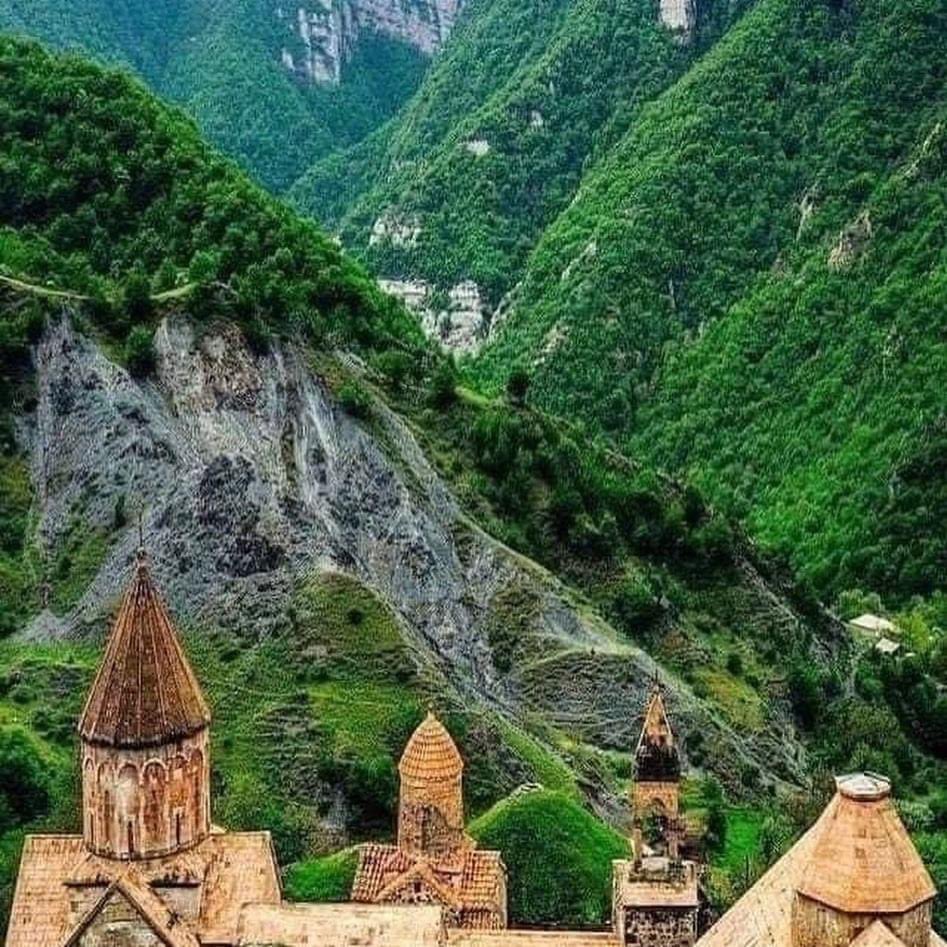
For me, Karabakh is an inseparable part of the homeland. It is a cradle of Azerbaijani culture. It is a homeland to the great sons and daughters of Azerbaijan, to our culture and science prodigies. It is a sacred land where our national spirit has been formed.
At the first possible opportunity, I want to go to the historic city of Shusha, which our army has liberated in a feat of exceptional heroism.
For the past thirty years, this has been the biggest desire of my heart.
Read also:


this article is complete bull shit how can you stand there and say that that land is yours when Armenians have been occupying it for over 2500 years this is testified by the ancient Greek historian Strabo and Roman historian Pliny the Elder (69 B.C.).Karabakh never belonged to Azerbaijan and was given to it by Stalin in 1921.