


Traditional Hungarian card games you might not have known

Change language:
The Hungarian card or Tell card has played an important role in the childhood of many Hungarians, especially in the 19th and 20th centuries. An era when recreation meant something else than staring at the screen of your smartphone. Whether you were out in the garden or at the playground, someone always grabbed a deck of cards and started playing. Although I preferred Magic the Gathering, there are many variations to the famous Hungarian card, and, today, I will introduce you to some of them.
The original article can be found on Magyarorszagom.hu.
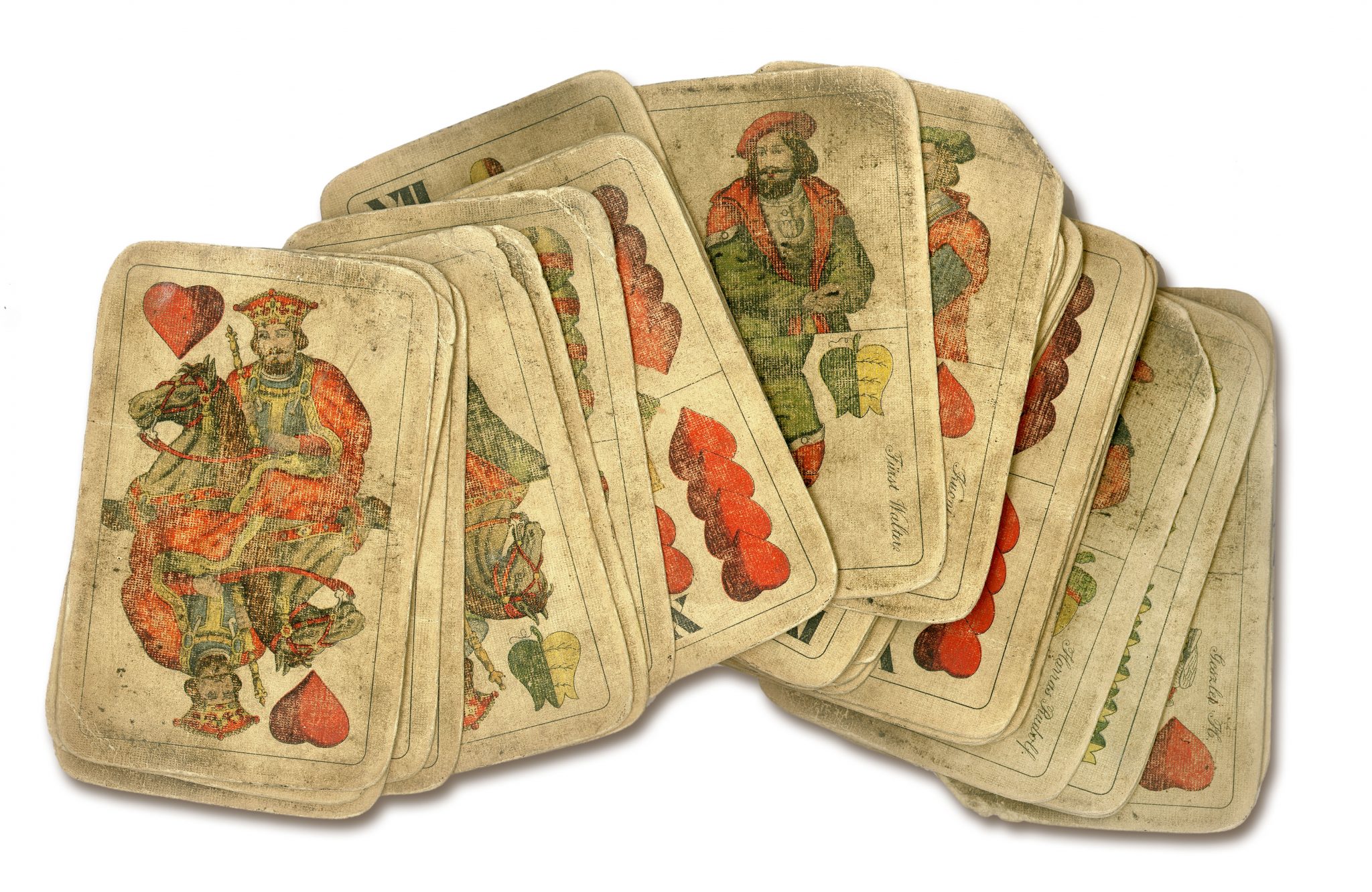
You can learn a little about the origin of the card in one of our previous articles HERE.
Snapszer
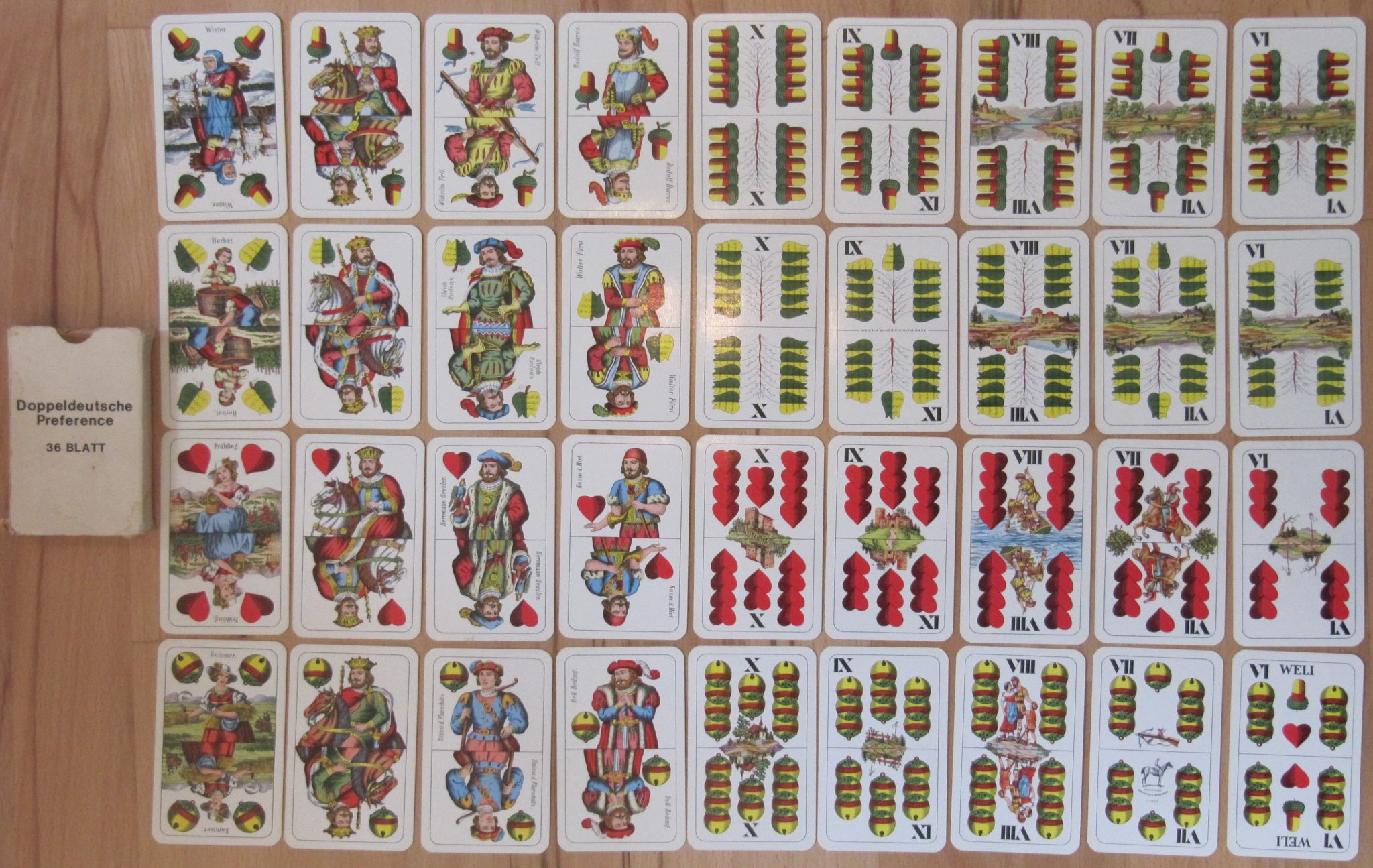
The snapszer or, in other names, snapszli or sechsunsechzig (meaning sixty-six in German) is a relatively complex card game. It can be played by 2-4 players with either a deck of Hungarian cards or with a deck of French cards. The goal of the game is to gain 66 points with calls and beats. The number of the Hungarian card decks depend on the number of players. In a 2-player game, we use 20 cards, and in a 3- and 4-player game, 24 cards are used. The ranking and point values of the cards are the same, though. The ace is the strongest card with a value of 11 points; X is worth 10, the king 4, the over-knaves 3 and the under-knaves 2. In the 3- and 4-player versions, the IX has no point value, so it is the lowest in the hierarchy. The main aim of the game is to gain 66 points by callings and beatings.
2-player variant
For this version, we do not need the VII, VIII and IX cards, so only 20 cards remain from the deck. The 12 cards we set aside will help with the scoring. After shuffling, the dealer deals 3 cards to their opponent and themselves, then puts one card on the table. This is the trump, and then they should deal 2 more cards for both players. The remaining cards are the draw pile.
During the game, there is no need to match colours, but a called card can only be won by a card with the same colour but with a higher rank. For the first beating, the dealer’s opponent calls a card. The player who wins the beat has the right to challenge. After a beat, the players can draw from the draw pile, but the player who won the beat always draws first. An upper-knave and king pair can be called by the player who has the right to challenge by playing one half of the pair. This is worth 40 points if it matches the colour of the trump; otherwise, it is worth 20. You need to call it accordingly forty or twenty. You then need to show the other part of the pair. The score can only be received if the caller can manage to get a beat. The trump can be changed out for any lower-knave that matches its colour. If the draw pile is gone, colour obligation comes into effect. If any player gains 66 points, they win the party, but if they do not manage to, then the last beater wins.
3-player variant
VII and VIII are not needed, so the deck consists of 24 cards. The IX has no point value, but otherwise, the values are the same as stated before. Every action in the game is followed by the player on the right. The dealer always changes and will be the player to the right of the starting player. In this variation, there are colour and value obligations. The dealer deals two rounds of four cards to each player. The goal is the same: to reach 66 points. The player to the right of the dealer must call a stump from the first four cards he receives. This player is the one to call a card for the first beating.
4-player variant
In this mode, two pairs of players play to get 50 points. The player to the right of the dealer calls a card, and the owner of that card will be his partner. The dealer deals 3 cards to each player. The player to the right calls out a card, and then 3 more cards are dealt for everyone. The player to the right of the dealer starts the call. The partner remains hidden until the chosen card is played. If the starting player has a strong hand, he can call snapszer; in this case, the partners must reach 66 points without their opponents receiving a beat. Otherwise, the game is the same.

Good memories.
Another great game, the ULTI. Would be to long to wright down the rules.
Does anyone know or remembers the rules of the strange “Kalàber” game? Please let me know if you do know something about it….
from my childhood I remember durok. Ofcourse I don’t know the correct spelling. It’s been so many years and no more hungarian relatives left to help me. I would love to be reminded of the game. I was about 5 years old in 1950 and played this game with my grandparents.
Unfortunatly divorce separated the family but my brother and I are still alive and I would love to suprise him with these cards and try to teach my grandchildren the game. any help for me?
Pandak and thuro are the family names. very poor people in hungary.