Subscribe to our social channels to get the latest news about Hungary!


It is almost eighty years since Budapesters’ reality became a nightmare after Hungary’s capital was declared a fortress. The open-air exhibition “Twelve Weeks in Hell – The Siege of Budapest on the Castle Hill”, organised by the Castle Police and the Hungarian Museum of Architecture and Historic Monuments Documentation Centre, commemorates the siege of the capital. The free open-air exhibition on the ramp leading to the Gloriett in the Castle Garden Bazaar will be open from 13 February until the end of March.
The siege of Budapest in late 1944 and early 1945 had serious consequences for the city’s inhabitants. Nearly 800,000 people were trapped in the siege ring, forced to take shelter in air-raid shelters to escape the constant bombardment and artillery attacks.
The Castle District was particularly vulnerable to attack, as it was here that the German defence centre was established. Thousands of civilians took refuge in the underground spaces of the Royal Palace or in the cave and cellar system of Castle Hill. Gas and electricity supplies were cut off, and there was no drinking water everywhere. It took more than fifty days for the city to fall under Soviet control. The hiding population struggled to survive in the face of life and death. Even after the end of the siege on 13 February 1945, many people lived in cellars if they lost their homes or feared the violence of Soviet soldiers: for them, it was hell from Christmas to Easter.
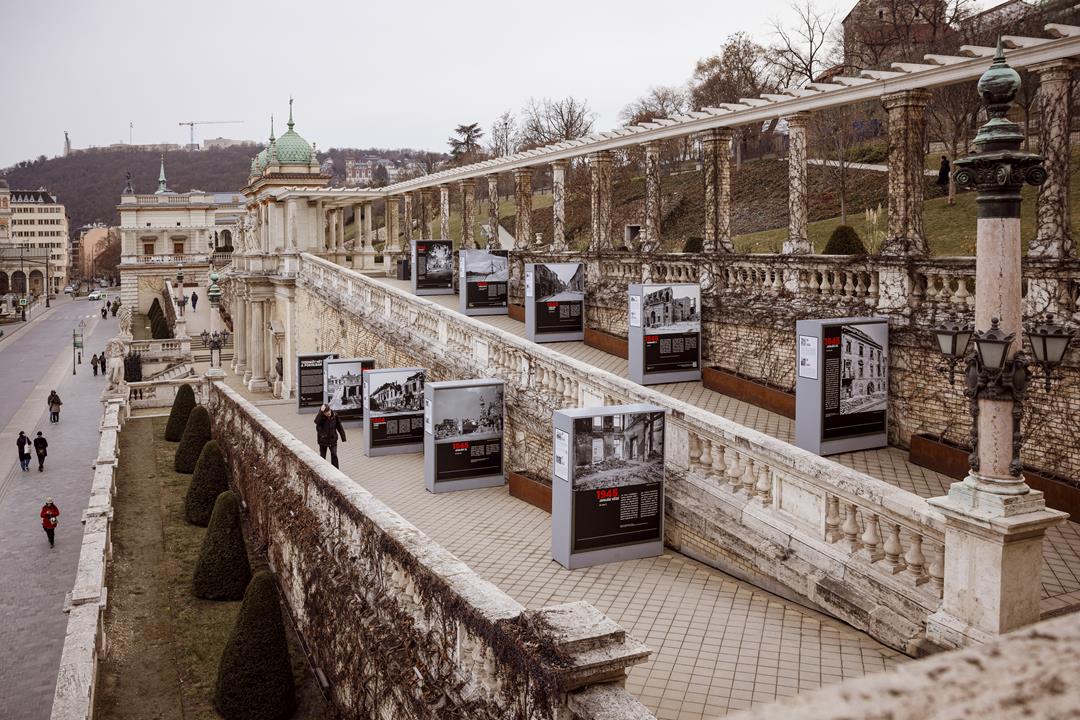
For a long time, the siege was an unresolved trauma for society, as official historiography did not mention the horrors of war. It was only after the fall of communism, in 1990, that the history of the siege could begin to be publicly told. The joint exhibition of the Castle Police and the Hungarian Museum of Architecture and Documentation Centre for the Protection of Historical Monuments captures the architectural heritage of the city and the suffering of its inhabitants. It aims to remind present generations of the horrors of war.
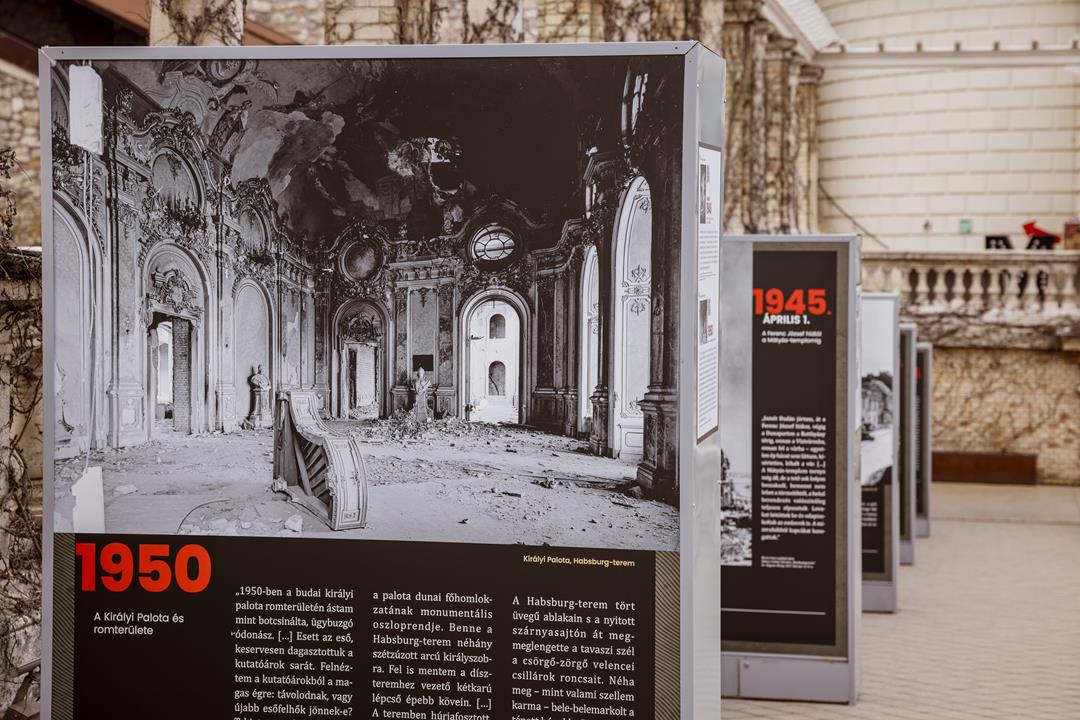
The photographs of the ruins and the first stages of reconstruction are a memento of the war’s destruction, while the diaries and memories recall the horrors of the period. During the siege of 1944-45, many of the buildings in the Castle District suffered serious but not fatal damage. Despite this, for ideological reasons, the authorities of the time decided to demolish all or part of the buildings. The aim of the National Hauszmann Programme is to restore the buildings of the Buda Castle Quarter to their former glory at the turn of the 19th and 20th centuries.
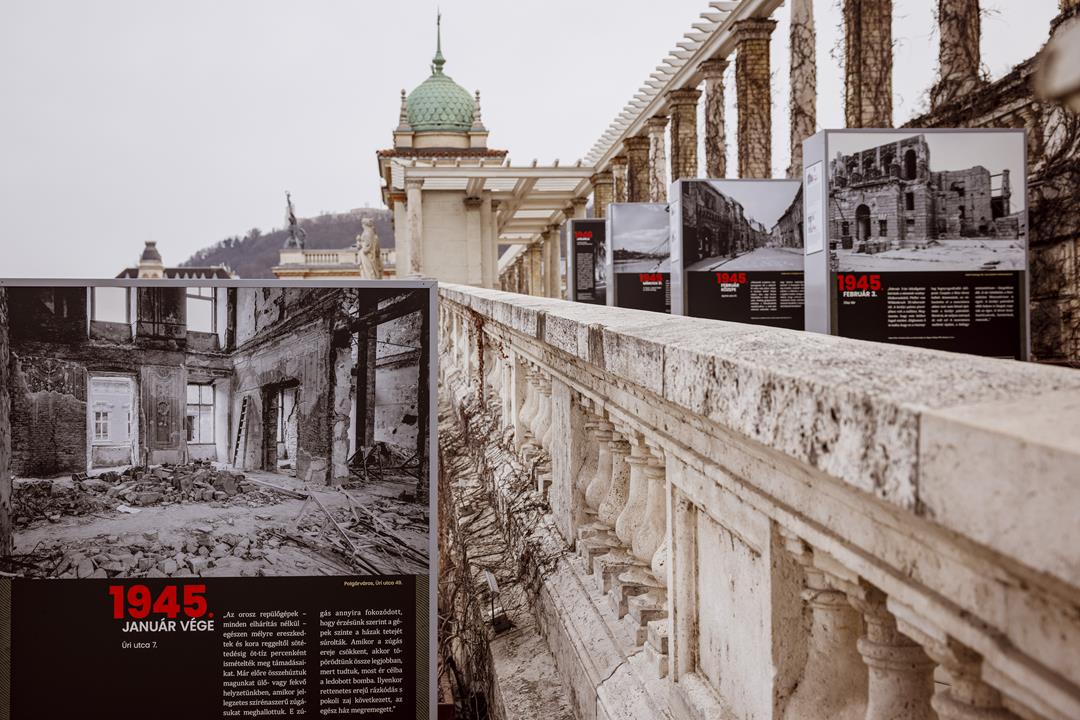
The exhibition will feature 10 free-standing, illuminated installations with a total of 20 panels showing how the inhabitants experienced the air raids, tried to bury their dead and struggled to survive. The open-air exhibition “Twelve Weeks in Hell – The Siege of Budapest on the Castle Hill” will be open from 13 February to the end of March.
Several accompanying programmes are planned to accompany the exhibition. Dr. Mihály Nánay, a historian, will present the everyday life, the background and the effects of the siege of Budapest during the Second World War through pictures and reminiscences. The Siege of Budapest , a museum educational activity for 9-12th graders, will give students an insight into the daily life of the siege: how Christmas 1944 was spent, or where the inhabitants of the Castle District hid during the air raids. You can register for the accompanying programmes via the Castle Garden Bazaar website.
A free map supplement entitled Then and Now is also available at the Information Point of the Palace of the Guards for visitors who want to get to know the present-day face of the sites on the exhibition’s tables.
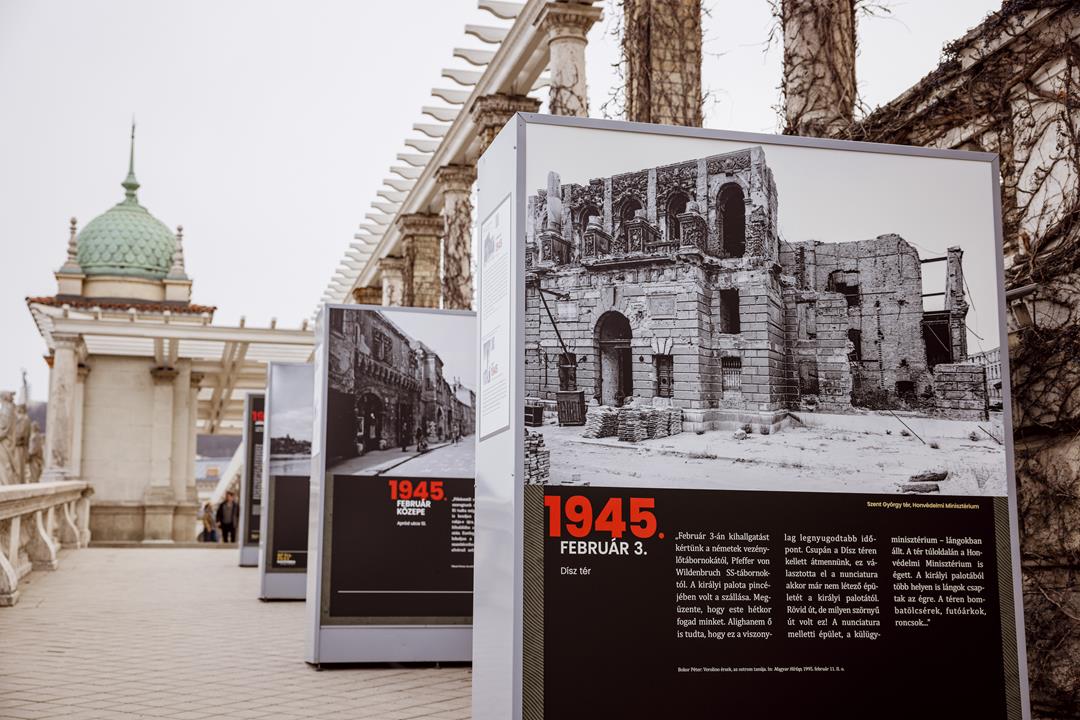
All texts are available in English on the exhibition tables, and you may also find a QR code on them with which visitors can identify the exact venue of the photo in the Buda Castle District.
Read also:


