

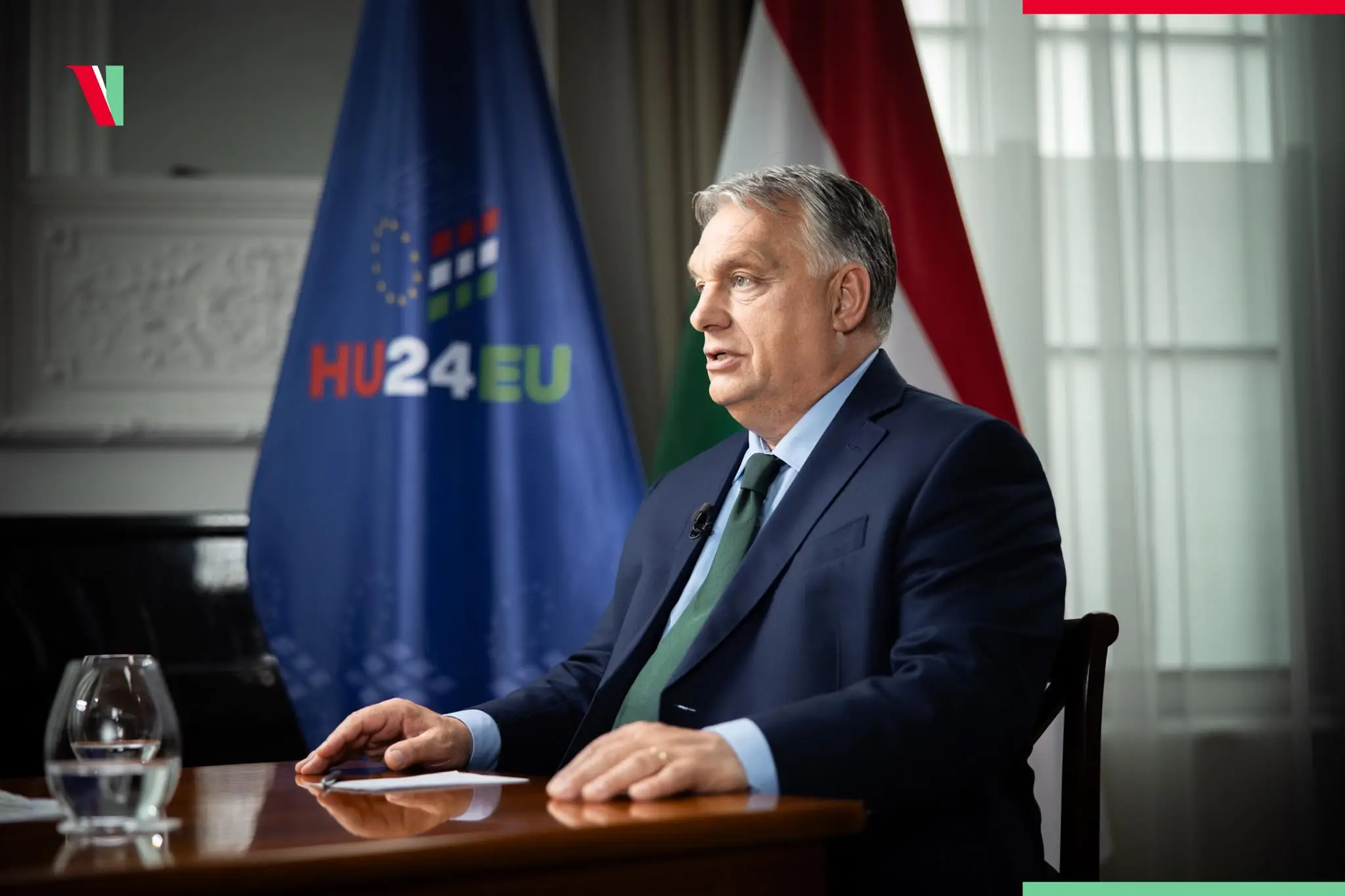
Former Hungarian Prime Minister Orbán Viktor has given his first in-depth interview since the election defeat, reflecting on the reasons behind the loss, taking responsibility, and outlining the future of the Hungarian right.
Speaking to the Patrióta YouTube channel, Orbán admitted the result had taken a toll on him, describing the past few days as an “emotional rollercoaster”. Despite this, he struck a forward-looking tone, focusing on the next steps.
According to Orbán, the campaign failed to achieve its objectives, with messages not reaching voters effectively. He also pointed to unexpectedly high voter turnout, which ultimately worked in favour of his opponents.
“The numbers speak for themselves,” he said. “The national side received 2.3 million votes, while the other side got 3.1 million, so the scale of the defeat is significant.”
Orbán made it clear that he takes full responsibility for the outcome.
“I am the party’s leader,” he said when asked who was to blame.
He added that his team had done everything possible, but the campaign ultimately failed to deliver the expected result. He realised this on election night, when early figures began to diverge from their projections.
“After the first results, I could already see that there would be trouble, because the incoming data showed something completely different from what our campaign had been built on,” he said.
The issue of “luxury lifestyles” and related criticism also came up during the interview. Orbán acknowledged that such topics may have influenced the election outcome.
“Certainly,” he replied when asked whether excessive displays of wealth and corruption allegations played a role in the landslide victory of the Tisza Párt.
At the same time, he firmly rejected the accusations. “I have never tolerated any form of corruption,” Orbán said, adding that he considers such claims to be political propaganda and insists that authorities have always acted when credible suspicions arose.
A message to both supporters and opponents
Throughout the interview, Orbán consistently referred to his political base as the “national side” and urged supporters to remain united despite the defeat. He emphasised that this community still represents around 2.3 million voters.
He called on them to overcome disappointment and maintain a sense of belonging, highlighting what he described as the government’s key achievements, including utility price cuts, family support schemes and housing assistance for young people.
“If there is an attempt to dismantle these, we will defend them,” he said.
At the same time, he urged his supporters to accept the defeat with dignity, claiming that opponents are “celebrating over them” while attacks and insults are being directed at their community.
Orbán also addressed voters of the opposing side, saying he does not consider their choice to be necessarily wrong.
“It will become clear what their decision meant, because the performance of the next government will ultimately define and evaluate that decision,” he said.
He adopted a measured tone, expressing hope rather than hostility:
“I wish that those who hoped for a better life and a better government after change will see their hopes fulfilled.”
Reflecting on the broader political landscape, Orbán argued that traditional left-right divisions are fading. In his view, politics is increasingly defined by a divide between the “national side” and what he described as a globalist or Brussels-oriented camp.
He believes key issues such as war and peace, national sovereignty, and economic direction will be shaped within this new framework.
“The future belongs to patriots. The future belongs to the national side,” said the former Prime Minister.
Hungary’s political shift is not only reshaping domestic politics but also triggering reactions on the international stage. In a related development, the Kremlin has already begun to reassess its position following Orbán’s defeat.
What lies ahead for the Fidesz party?
Orbán made it clear that the coming period will focus on rebuilding rather than retreat. After years in government, he signalled a return to movement-building, similar to the period following the 2002 defeat.
He suggested that internal changes will be necessary, including restructuring the parliamentary group. According to him, the current team was assembled for governing and winning elections, not for operating from opposition, meaning it must now be adapted to the new political reality.
He also indicated that a party congress may be convened, with the first phase of renewal potentially completed by the end of June.
Orbán believes the broader task will be to reorganise and rethink the national conservative movement, a process that will require significant internal effort and energy in the months ahead.
Featured image: Youtube / Patrióta


Peter Magyar, has accused his predecessor Viktor Orban and Slovakian Prime Minister Robert Fico of secret collusion. This is reported by aktuality.sk.
Speaking to European leaders, Magyar said that unlike Orban, his party would not drive migrants to the Slovak border just because “the electoral interests of their Slovak socialist friend demand it.”
Madyar said Orban’s government, in prior agreement with Fico, deliberately sent illegal migrants to Slovakia in order to create a migration crisis there. This was intended to help Fico win parliamentary elections by using the topic of migration to intimidate voters.
Madyar also said Orban prematurely released 2,200 convicted ferrymen from prisons, which contributed to the migration flow.
The Slovak opposition (the Progressive Slovakia, Democrats, and Movement Slovakia parties) demands an immediate explanation from Fico. MP Jaroslav Spiszak called Orban’s actions a “cynical game with the safety of citizens” and said that Interior Minister Matusz Šutaj Eštok only took credit for the migration crisis that ended immediately after the election thanks to the agreement between Fico and Orban, not the work of the police.
The leader of the Democrats party Jaroslav Nagy threatened criminal prosecution if the allegations are confirmed. Former Interior Minister Roman Mikulec (Slovakia party) said the 2023 migration crisis was “deliberately created” for election purposes.
The Slovak Interior Ministry rejected the accusations, calling them an attempt by the opposition to cover up its own failure. A spokesman for the ministry said that the current government, unlike the previous government, had “made Slovakia a safe transit country.”
https://www.aktuality.sk/clanok/hXrjbhq/tajna-dohoda-pred-volbami-orban-mal-ficovi-ucelovo-posielat-migrantov-tvrdi-peter-magyar/?fbclid=IwY2xjawRNRoBleHRuA2FlbQIxMABicmlkETE5RlE4QkI3YkJSQVZHcEd1c3J0YwZhcHBfaWQQMjIyMDM5MTc4ODIwMDg5MgABHu5j6rT5XiLM6NUSCb4q_vY1lIM2hHbPwywMPJAKfvW76RkkUkxTcXS2NHJW_aem_bZWohfD69J3B1xjSZPM6Ig
Dismantling the Orbán regime may not be enough. An important message came to Slovakia from Hungary (commentary by Peter Weiss) .
https://www.aktuality.sk/clanok/Xx45a5r/madarsko-vstupuje-do-ery-po-orbanovi-bude-to-koniec-putinovho-trojskeho-kona-v-eu-komentar-petra-weissa/
Behold, the new Gyurcsany, bang on queue! Not many people know that he was an ex-Commie. It wasn’t mandatory to become a member of KISZ as a student but he chose to, like his predecessor Gyurcsany. The most elegant thing to do would be to vanish from public life but he’s pathologically incapable of this.