Subscribe to our social channels to get the latest news about Hungary!


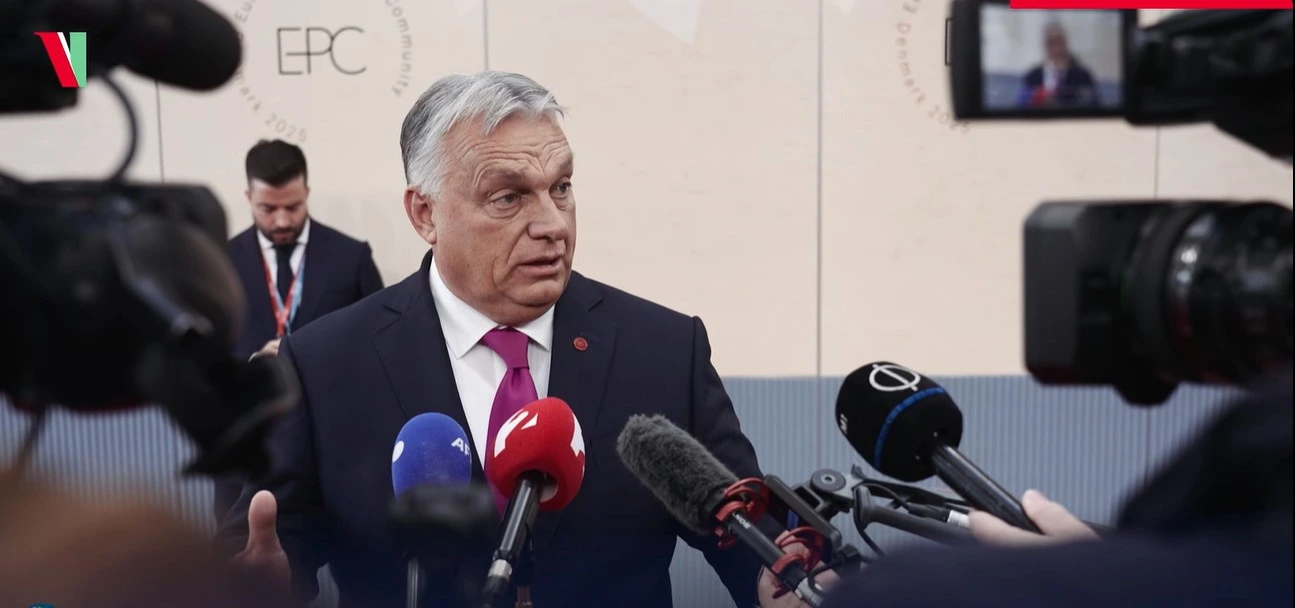
Germany has called for one of the European Union’s most fundamental decision-making rules to be overhauled, with Foreign Minister Johann Wadephul openly arguing that the bloc should move away from unanimity in foreign and security policy. Could Hungarian PM Orbán be the reason?
The proposal comes after weeks of growing frustration in Brussels over Hungarian Prime Minister Viktor Orbán’s decision to block a EUR 90 billion EU-backed loan package for Ukraine. This has reignited a debate over whether a single member state should still be able to stall major strategic decisions.
Speaking to Germany’s Funke Media Group, Wadephul said the EU should abolish unanimity in these policy areas before the end of the current legislative cycle in 2029, arguing that the bloc must become more capable of acting decisively on the international stage. He instead backed a qualified majority voting system among the 27 member states, saying recent deadlocks over Ukraine aid and sanctions on Russia had exposed the weaknesses of the current framework, Anadolu Agency writes.
The renewed German push follows Hungary’s continued refusal to approve the massive financial package for Kyiv, despite the loan being considered crucial for Ukraine’s wartime budget and defence needs.
Orbán has linked Hungary’s approval to the restoration of Russian oil transit through the Druzhba pipeline, which runs across Ukraine into Central Europe. Budapest has accused Kyiv of deliberately holding back the flow, while Ukrainian officials insist the disruption followed damage caused by a Russian strike and deny any political motivation.
The standoff is just the latest example of Hungary’s increasingly isolated position inside the EU, where Budapest has repeatedly used its veto power to delay or complicate joint decisions on Russia sanctions, Ukraine assistance and foreign policy statements.

Germany’s intervention is significant because it shows that calls to weaken veto powers are no longer limited to smaller member states frustrated by Hungary’s stance.
In recent weeks, similar concerns have been voiced by other EU leaders and diplomats, many of whom argue that unanimity is becoming unworkable at a time of war on Europe’s borders and mounting geopolitical instability. Orbán’s latest move may therefore accelerate an institutional debate over how the bloc makes its most sensitive decisions.
Wadephul also touched on Hungary’s upcoming 12 April general election, saying it would be up to Hungarian voters to decide their country’s political direction, while adding that Berlin would work with whichever government emerges.
Still, the timing of the German proposal leaves little to no doubt that Orbán’s latest veto battle could cause a potentially historic EU reform debate.
If you missed it: Orbán and Fico push EU to scrap sanctions, restart Russian oil flows immediately

 ZH
ZH DE
DE


I get paid more than $120 to $130 per hour for working online. I heard about this job 3 months ago and after joining this i have earned easily $15k from this without having online working skills.
This is what I do….. https://www.work27.info
Imagine being blackmailed by a country whom represents 1% of EU GDP. that is how ridiculous are the unanimous rules for policy adoptions
No thanks to VO for missusing his power of veto. Agree with Germany on scraping same as… a majority should suffice.
As for VO and Fico on oil from Russia… NEM. VO you maid the deal with the Devil, and at the same time support a war mongor… guess you forgot 1956 🥴 You don’t know where you are going if, you don’t remember where you came from, disgusting.
Canadian Unity Option 🇨🇦
puccup368@gmail.com
©2018-2026 All rights reserved.
The notion that Russia is the devil, or that we all ought live permanently in the year 1956, is a clear sign the CIA and MI6 news media lives rent free in your body, mind, heart, and soul.
THIS IS THE DEVIL – not in some other people or place.
I love Germany, have lived in Germany, speak German, and some of my mentors, when I was young, were those who fought for Germany in the 1940s.
That said, Germany has always had trouble permitting dissent, and, when I hear modern Germans, particularly the very intolerant Left, carry on about how ‘undemocratic’ Hungary and Russia are, I always think to myself : ‘how little you know yourself, or the rest of the world, for that matter.’
If the EU scraps the power of dissent, along with it’s warmongering in Western Russia, insane environmental policies, and election interference in mentor states, not to mention mass migration lunacy, this will be the end of the EU.