Subscribe to our social channels to get the latest news about Hungary!


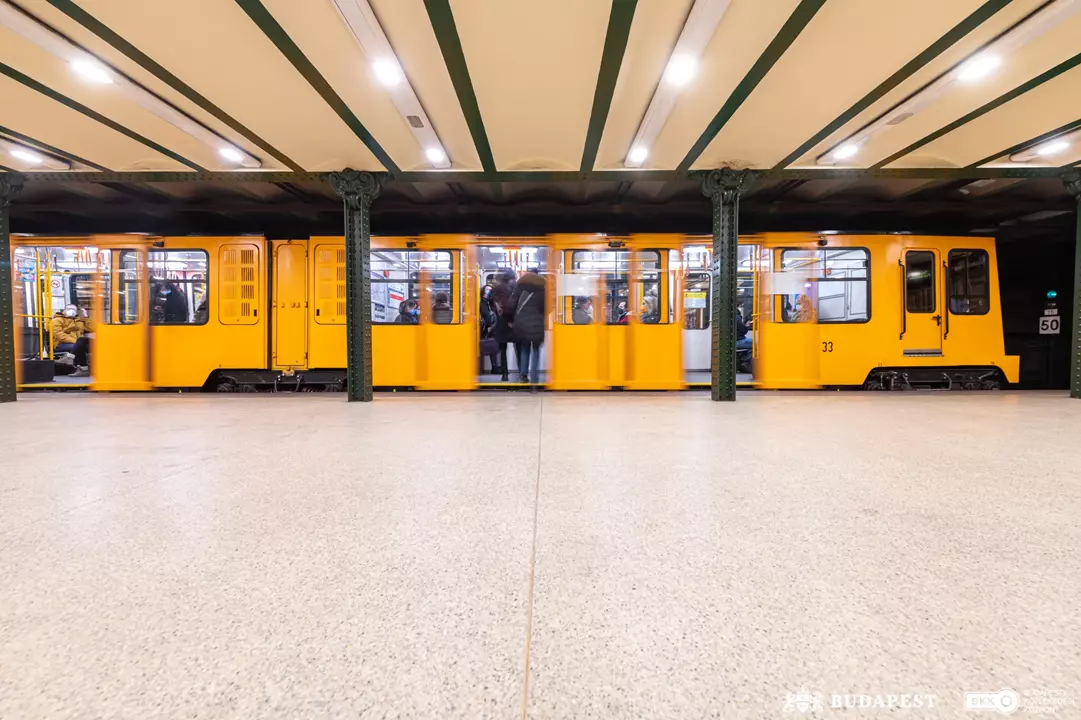
Budapest’s iconic M1 metro, widely known as the Millennium Underground Railway or “kisföldalatti,” is set for a comprehensive overhaul and extension. This marks a significant transformation for the city’s (and the European continent’s!) oldest metro line.
The Budapest City Council has placed the renovation and extension of the M1 at the centre of its strategic infrastructure goals. The line’s infrastructure was last partially refurbished 30 years ago, while the rolling stock has now surpassed 50 years in service, making a full-scale modernisation urgent.
According to Ádám Bodor, Deputy CEO for Mobility at the Budapest Transport Centre (Budapesti Közlekedési Központ, BKK), the central aim of the project is to extend the metro line to Rákosrendező railway station, InfoStart writes.
“We are considering a realistic first phase that focuses on the extension to Rákosrendező. At the same time, we aim to create a convenient interchange with Tram 1 at Hungária Boulevard and achieve full accessibility along the entire line,” Bodor said.
The project will also include the upgrade of the Mexikói Road depot, essential for keeping the line operational, as well as modernising signalling and train control systems. Surface-level improvements, particularly around Mexikói Road, are also planned, complementing ongoing developments near Rákosrendező.

 ZH
ZH IT
IT DE
DE


Wouldn’t this report have been richer with a graphic that showed on a map the proposed extension ? The editors / compilers seem to lack imagination when assembling their little reports.