Subscribe to our social channels to get the latest news about Hungary!


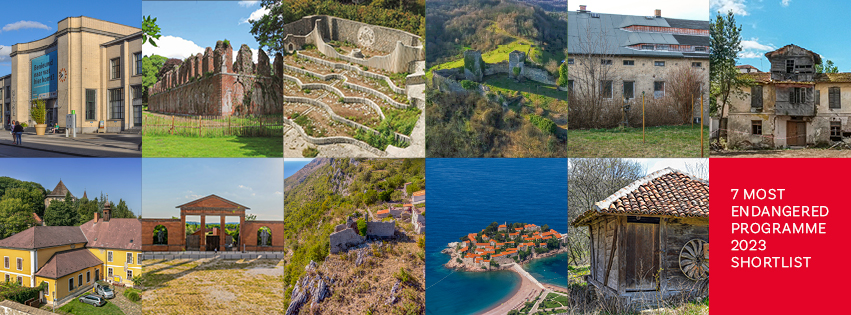
On the occasion of the 10th anniversary of the 7 Most Endangered Programme in 2023, Europa Nostra – the European Voice of Civil Society Committed to Cultural and Natural Heritage – and the European Investment Bank Institute have just announced the 11 most threatened heritage sites in Europe shortlisted for this year’s edition of the programme.
The 11 most endangered monuments and heritage sites in Europe for 2023 are:
• Memento Park, Budapest, HUNGARY
• Kortrijk Railway Station, Kortrijk, BELGIUM
• Domain and Royal Museum of Mariemont, Morlanwelz, BELGIUM
• Partisan Memorial Cemetery, Mostar, BOSNIA AND HERZEGOVINA
• Tchakvinji Fortress, Zugdidi, GEORGIA
• Sisters’ House Ensemble, former Moravian settlement in Kleinwelka, GERMANY
• Mansion (“Konaki”) of Gidas, Alexandreia, GREECE
• Herman Ottó Museum, Miskolc, HUNGARY
• Cultural Landscape of Paštrovska Gora, MONTENEGRO
• Cultural Landscape of Sveti Stefan, Paštrovići, MONTENEGRO
• Watermills of Bistrica, Petrovac na Mlavi, SERBIA
The selection was made on the basis of the outstanding heritage significance and cultural value of each of the sites as well as on the basis of the serious danger that they are facing today. The level of engagement of local communities and the commitment of public and private stakeholders to saving these sites were considered as crucial added values. Another selection criterion was the potential of these sites to act as a catalyst for sustainable development and as a tool for promoting peace and dialogue within their localities and wider regions.
Here is a video:
The 11 endangered heritage sites were shortlisted by an international Advisory Panel, comprising experts in history, archaeology, architecture, conservation, project analysis and finance. Nominations for the 7 Most Endangered Programme 2023 were submitted by member organisations, associate organisations or individual members of Europa Nostra from all over Europe as well as by members of the European Heritage Alliance.
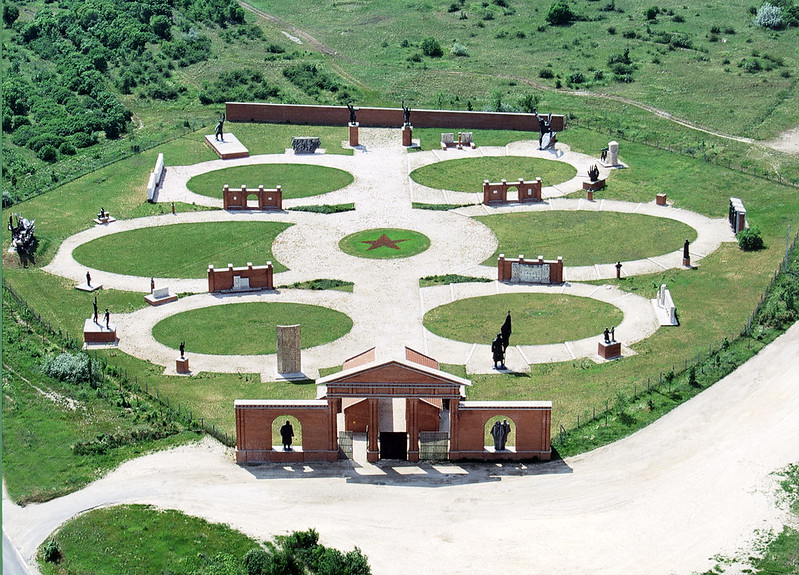
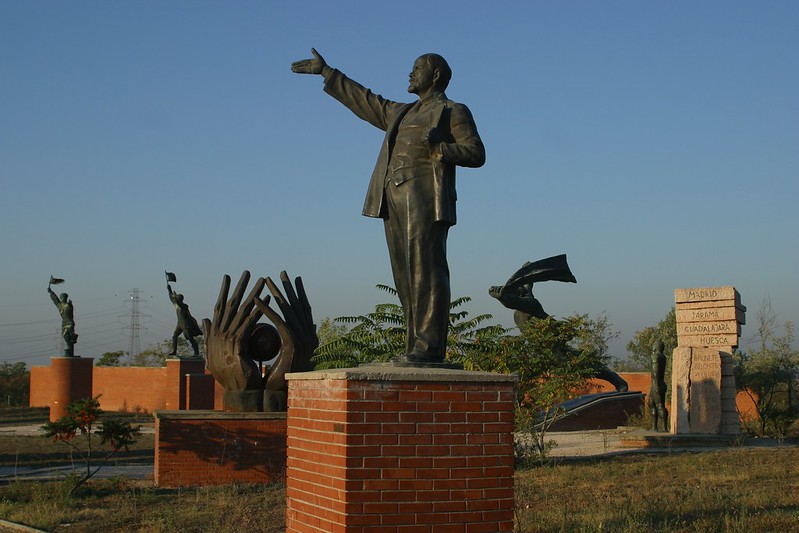
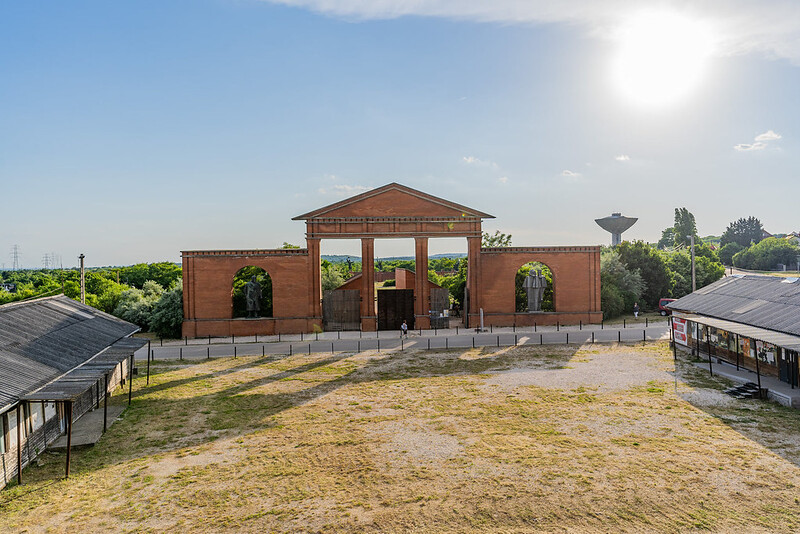
The Memento Park, also known as the ‘Statue Park’, is a history museum, educational centre, artistic action ground and tourist attraction – the resting place of statues which used to symbolise communist ideology in the streets of Budapest between 1945-1989. During the change of the political system in 1989-90, the public in Eastern European communist regimes turned radically against reminders of that era. In Hungary, a unique political and societal compromise initiated the relocation of unwanted public propaganda statues. The design competition to relocate 41 artworks was won by architect Ákos Eleőd. Opened in 1993, ‘One Sentence About Tyranny’ Statue Park is Europe’s first, and until today only, propaganda statue collection within a politically neutral setting.
The European significance of Memento Park emphasises the importance of democratic values by presenting political statues within an objective, artistic context; an inspired way to address a challenge faced across Europe.
“These statues are a part of the history of Hungary. Dictatorships chip away at and plaster over their past in order to get rid of all memories of previous ages. Democracy is the only regime that is prepared to accept that our past with all the dead ends is still ours; we should get to know it, analyse it and think about it!… This park is about dictatorship. And at the same time, because it can be talked about, described and built up, this park is about democracy. After all, only democracy can provide an opportunity to think freely about dictatorship. Or about democracy, come to that! or about anything!” stated Ákos Eleőd.
Time and continued relevance for new generations have proven the validity of this statement, giving visitors responses to family secrets, understanding for silence, absolution from trumped-up charges and answers to unspoken questions. Memento Park’s cultural heritage significance is how it explains dissonant heritage sensitively through metaphors. Sharing its distinctive approach with European audiences will benefit dissonant heritage’s appreciation in society.
However, Memento Park’s significance and sustainability are at increasingly urgent risk. Since opening in 1993, it has not been subsidised by the state. It has been operated and maintained by a business organisation, with support of a public benefit foundation since 2007. In this hybrid operational form, funding for conservation or development relies on income generated by visitors, which has become unpredictable. The operators undertake general maintenance, but income is insufficient for expert conservation. Reinstallation of the artworks onsite was done by unskilled workers; therefore deterioration began immediately but has recently accelerated. The skills needed for appropriate conservation are missing or expensive in Hungary.
The nomination to the 7 Most Endangered Programme 2023 was made by the Monumentum Public Benefit Foundation and endorsed by the ICOMOS Hungary and the Budapest History Museum. The ambitions for Memento Park through the 7 Most Endangered Programme are to raise European awareness and informed understanding of cultural appreciation of dissonant heritage, and to provide expert support for digitalization and conservation of the artworks and the park’s future sustainability.
Below you may check out some photos:
The Herman Ottó Museum in Miskolc is a fine example of Renaissance architecture. It housed a Reformed Church School between 1560 and 1902. The building was renovated and enlarged in the 18th century, and was restored in the end of the 19th century, incorporating Neoclassical elements, to accommodate the city’s museum. In the 1920s, the building was home to the Borsod-Miskolc Museum and functioned as the sole public library of the city, which was managed by both the Municipality of Miskolc and the County of Borsod. During this period, the building became a meeting point for intellectuals and citizens to exchange ideas.
Despite being classified as a Monument of National Importance in 1951–1958 by the Hungarian Government, the building has fallen into decay, and suffers from water ingress, damaged walls, windows and floors. The local community of Miskolc has campaigned for the restoration of the building to serve both as a museum and a cultural centre. Their efforts were supported by local and national stakeholders, such as the Miskolc Photo Club Association, the Hungarian Scout Association, the North-East Passage Cultural and Academic Association, the Hungarian Charity Service of the Order of Malta and the school “ Lévay József Reformed Grammar School . The nomination to the 7 Most Endangered Programme 2023 was made by the Scientific Secretary of the Herman Ottó Museum, Dr. Arnold Tóth.
Source: Europa Nostra, Memento Park


