


Did you know that Europe’s bravest woman was Hungarian?

Change language:
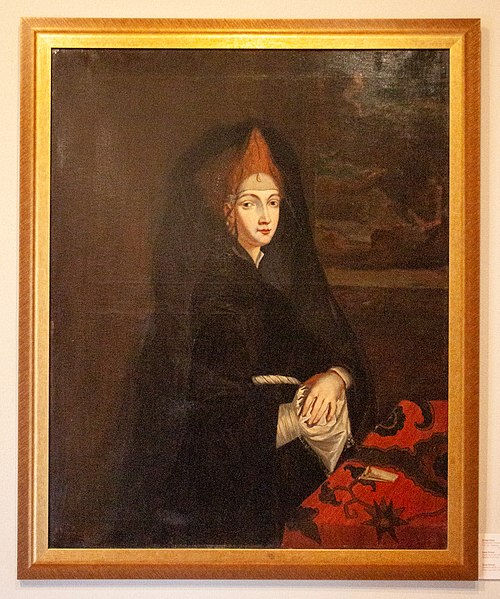
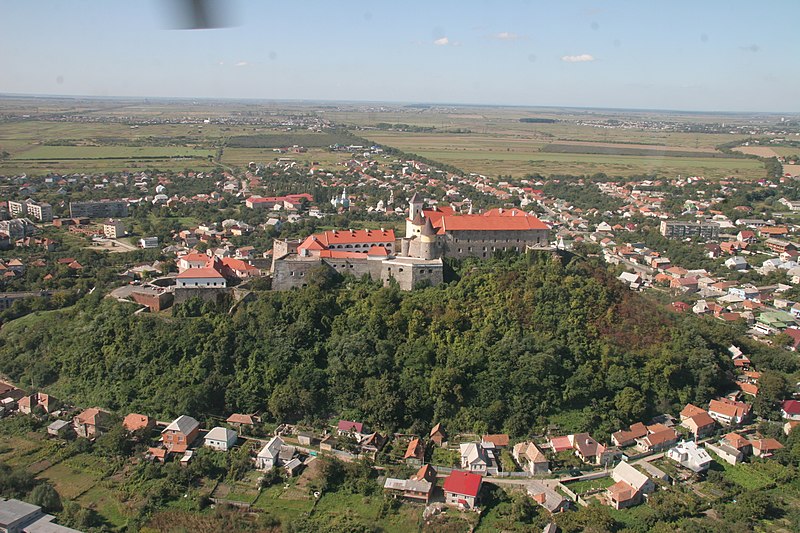
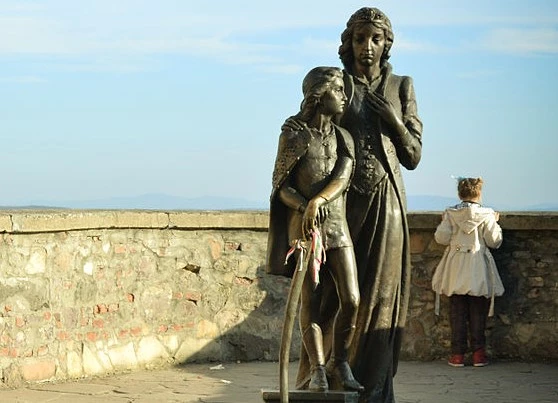
Ilona Zrínyi (1643-1703) defended the castle of Munkács (Munkacheve, today Ukraine) against the Habsburg army for years to protect her son, the later Prince Francis Rákóczi II (1676-1735). She did not surrender even though she was pregnant during the fight. Later, her eldest living son, Francis Rákóczi, lead a successful freedom fight against the Habsburgs between 1703 and 1711.
Strong women
Hungarian history is full of strong women who were not only brave but showed leadership skills when the time needed it. There is, for example, Hedvig (Jadviga), the youngest daughter of Lajos the Great (1342-1382), whose marriage to Władysław II Jagiełło made Poland a great power of Europe. Or there was Margit Slachta in the 20th century, who valiantly withstood both the emerging Nazi and the Communist dictatorship in Hungary. Without a shadow of a doubt, Ilona Zrínyi was among these strong women.
She could successfully withstand even the Habsburg army with a baby in her womb to protect her family and people.
According to femina.hu, Ilona was well-read and spoke Croatian, Hungarian, Italian, French, Latine and German. She was born in 1643 in Croatia to Péter Zrínyi, the ban (viceroy) of Croatia. Interestingly, the tongue of the family was Croatian. She mastered the Hungarian language with the help of the books of her uncle, Count Miklós Zrínyi (1620-1664). Based on the surviving documents, she was slim, tall and pretty. Many said that despite her feminity, she possessed the bravery of a man. Femina says that she was an expert in fishing, swordfight and falconry. Furthermore, she was skilled in herbs and medicines.
Battleground
Ilona Zrínyi lived in the time of three Hungarian realms. The Kingdom of Hungary was in the hands of the Habsburg dynasty, while the central regions with Buda belonged to the Ottoman Empire. The Principality of Transylvania was independent formally, but, in practice, it had to pay tax to Istanbul. The leaders of Hungary realised during the long 16th century that the Habsburgs could never command enough troops in Hungary to defeat the Ottomans. The opposite was true, as well. The Ottoman Empire passed its zenith in the 16th-century, and a slow decline started by the 17th. Thus,
Hungary became a battleground between the two great powers.
The leaders of Hungary realised there would be a chance, but they could not expect the help of Vienna.
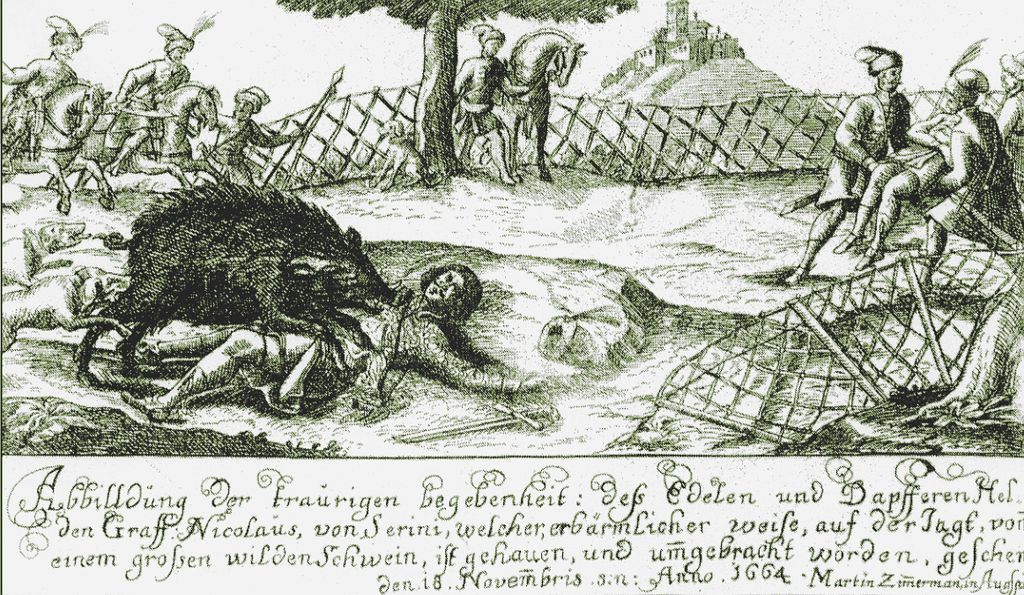
Therefore, secret operations started between the noble families to create an independent Hungarian army that could defeat both Ottomans and the Habsburgs and secure the long-lost Hungarian freedom. However, the plans were revealed. Probably that is why Miklós Zrínyi had to die in 1664. Officially, a wild boar murdered him during a hunt, but people doubted that story already in the 17th century.
Joan of Arc gets my vote as the bravest woman.