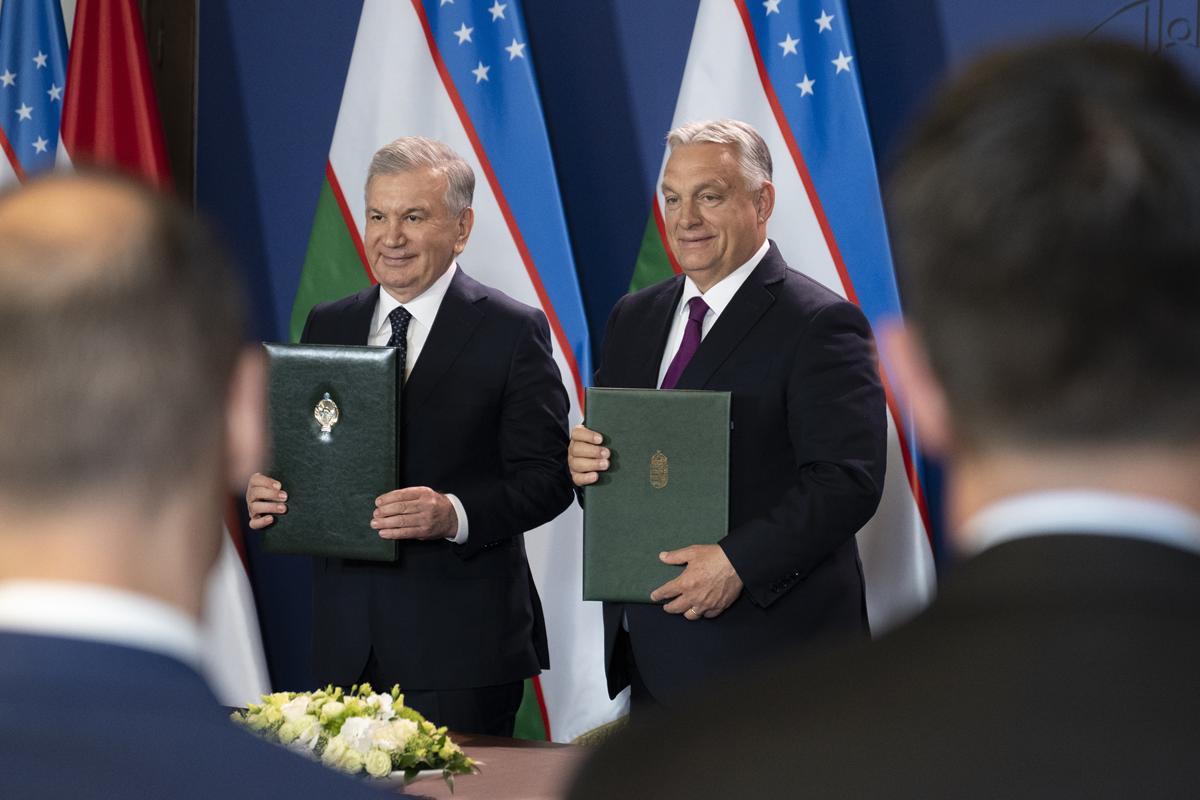
Shavkat Mirziyoyev’s “New Uzbekistan” vision leads the country toward a modern and democratic state

Change language:
The former Soviet republics have undergone various stages of political development, and Uzbekistan’s trajectory is particularly noteworthy, as it has demonstrated remarkable progress on political, economic, and social fronts. There is no doubt that the country is flourishing—let us take a closer look at the vision introduced by President Shavkat Mirziyoyev, who assumed power in 2016:
Political reforms in Uzbekistan
In 2017, President Mirziyoyev launched a five-year programme known as the “Action Strategy,” aimed at enhancing the effectiveness of the Oliy Majlis (parliament).
The primary objective was to expand its powers and improve its efficiency. As part of this effort, technical, financial, and informational support for members of parliament was strengthened. In a move towards modernisation, new institutional units were established, and digital platforms introduced to facilitate public discussion of draft laws—thereby increasing transparency and executive accountability.
The political reforms were designed to deepen democratisation and uphold the rule of law. In 2023, a radical constitutional overhaul was undertaken. Among its many outcomes, it restricted the extradition of citizens, abolished the death penalty, and expanded human and civil rights and freedoms. In addition to reinforcing the role of parliament, the government promoted decentralisation through the direct election of local government leaders. President Mirziyoyev has gained broad public support with his anti-corruption stance, backing of political pluralism, and commitment to strengthening civil society.
I personally served as an observer during the autumn 2024 parliamentary elections, visiting several polling stations in both Tashkent and rural areas. I was able to witness first-hand the impact of recent electoral reforms. Under the new “mixed electoral system,” elections to the legislative chamber combined majoritarian and proportional representation for the first time: 75 MPs were elected directly by voters, while the remaining 75 were chosen via party lists. Parties were required to secure at least 7% of the vote to gain parliamentary representation (in Hungary, the threshold is 5%). Notably—and unlike in Hungary—authorities installed webcams at all polling stations, enabling anyone, anywhere in the world, to watch the voting process live.
Economic reforms
From our vantage point in Central Europe, we can only admire the transformation Central Asia has undergone in the past decade. The New Uzbekistan agenda includes far-reaching economic reforms, recognising that political change alone is insufficient without economic development—a lesson learned globally.
The clear goal has been to establish a market economy and boost competitiveness, thereby unlocking opportunities previously unavailable to Uzbekistan. Reforms included liberalisation of the currency market, unification of exchange rates, reduction of customs duties, modernisation of the banking and financial sectors, and a radical overhaul of the tax system.