


The old Elisabeth Bridge in Budapest: one of the world’s most beautiful and longest chain bridges was demolished 80 years ago

Change language:
By Jácint Mayer, HellóMagyar.
A dignified symbol of modern Hungary, the Elisabeth Bridge stood as a testament to the nation’s ingenuity and spirit, capturing global attention for its size and aesthetic appeal. Together with the other iconic Danube crossings, the Hungarian Parliament, and Buda Castle, the Elisabeth Bridge cemented Budapest’s reputation as one of Europe’s most picturesque capitals. Yet, unlike its counterparts, it could not withstand the upheavals of history.
An international competition to design the bridge was won by German engineer Julius Kübler, in collaboration with architects Eisenlohr and Weigle, with a cable-stayed design. However, the bridge was ultimately built using Hungarian materials—foregoing the original design—due to the unavailability of suitable cables in Hungary at the time.
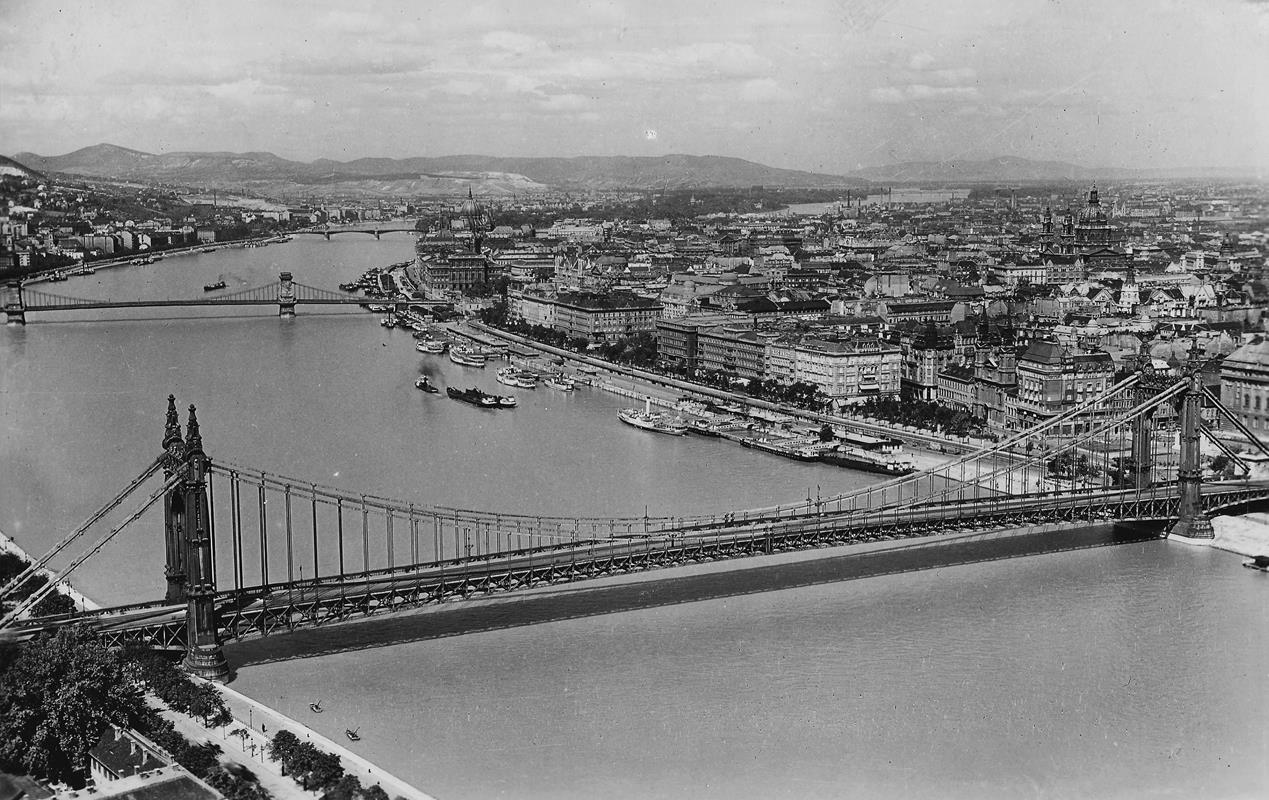
It was one of the most beautiful bridges of Europe. Photo: Fortepan/Deutsche Fotothek/Brüch und Sohn
Budapest’s Elisabeth Bridge, the most beautiful chain bridge
The ochre-hued crossing, initially known as the Eskü Square Bridge, opened to traffic on 10 October 1903 and was named after Queen Elisabeth, the beloved consort of Emperor Franz Joseph, who was assassinated in Geneva in 1898. At 378.6 metres in length, it was the longest chain bridge in the world at the time, with an unprecedented 290-metre span, a record it held until 1926. Its elegant structure and pioneering engineering earned it a place among the most beautiful bridges in Europe.
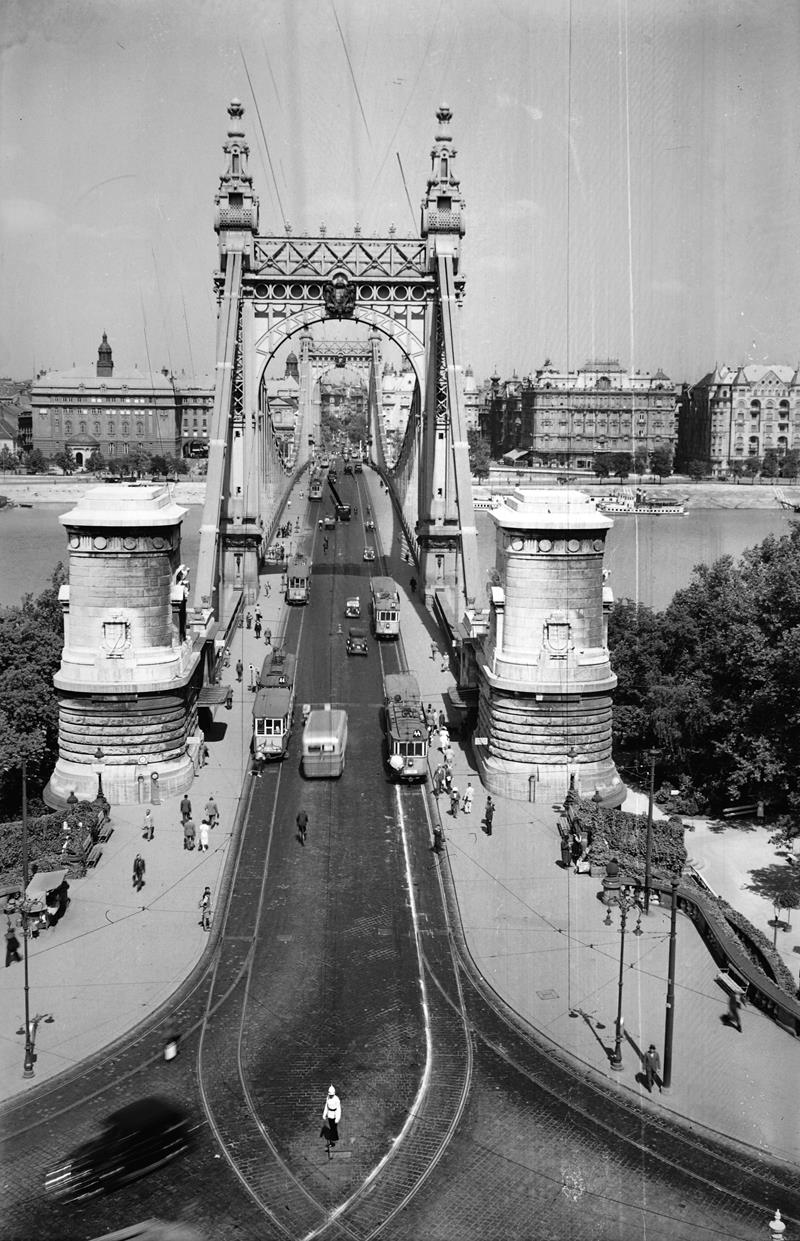
The bridge’s construction necessitated significant alterations to the city’s layout. Kossuth Lajos Street, a major thoroughfare today, did not yet lead to the Danube, requiring extensive urban redesign. The initial plan would have placed the bridge to the north, endangering the historic Downtown Parish Church. While the church was ultimately spared, the new bridge’s approach passed perilously close, and the Italian Renaissance-style Town Hall was lost to progress.
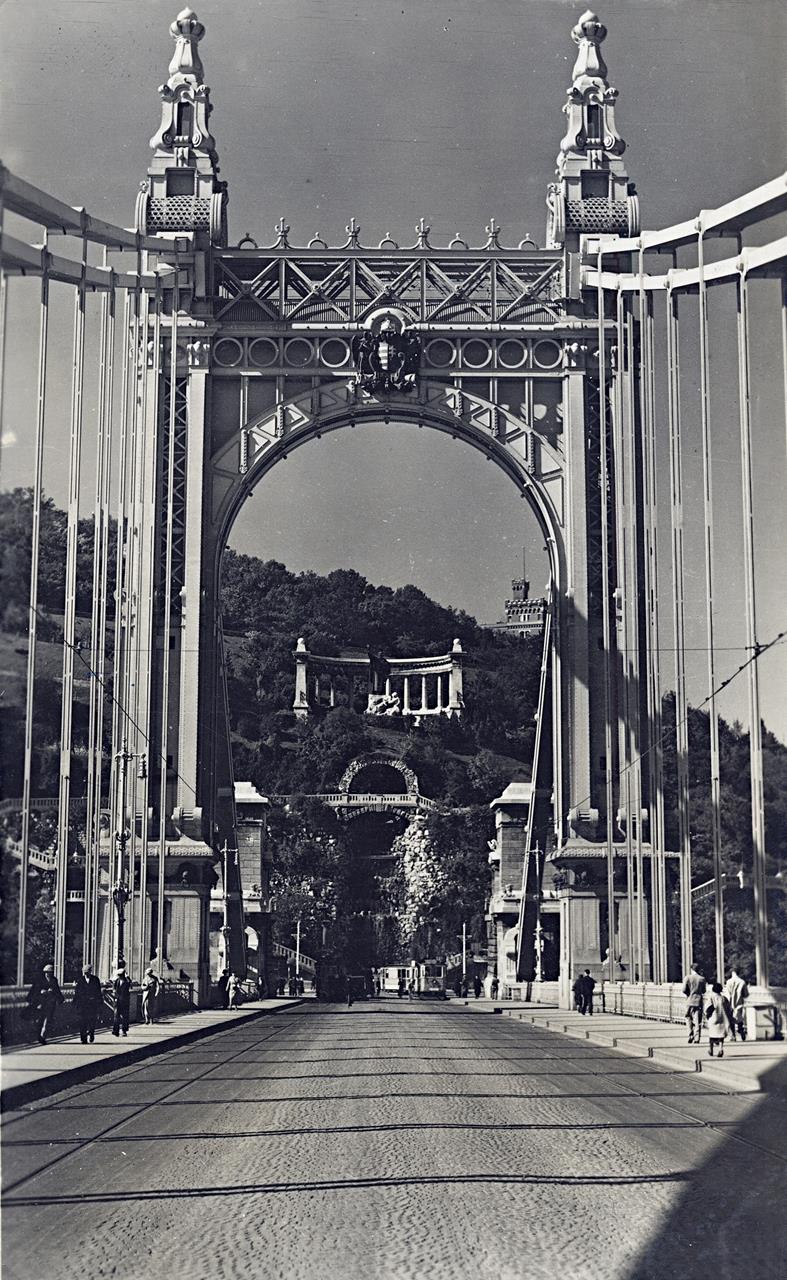
It may come as a surprise, but the large piers of the Elisabeth Bridge were not fixed; rather, they were supported by the chains themselves, resting on hinges that moved at their base, meaning they were not necessarily vertical. Their dimensions were significantly larger than those of the neighbouring Ferenc József Bridge, which bore a superficial resemblance to the Elizabeth Bridge.
Budapest’s Soviet siege destroyed almost everything
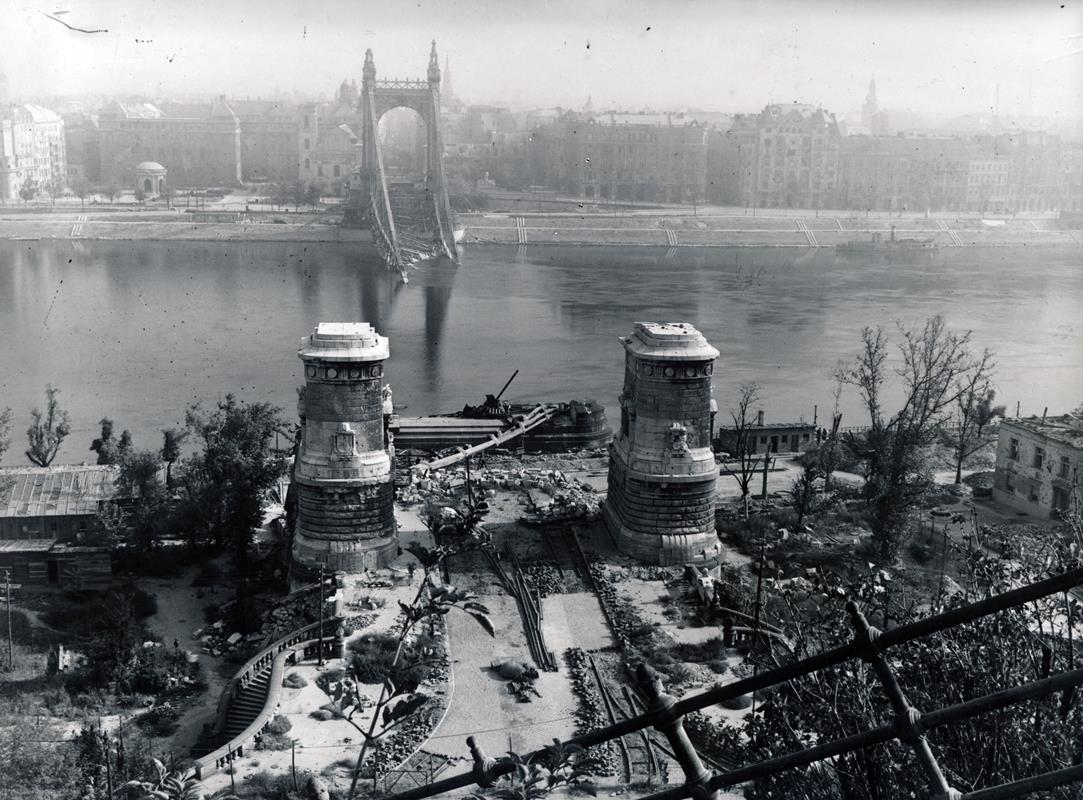
The Soviet siege of Budapest in 1944–45 is remembered as one of the longest and most destructive urban battles of the Second World War. The Red Army’s offensive against Pest achieved its objective in mid-January 1945, as the eastern part of the Hungarian capital was wrested from the control of German-Hungarian forces. Following the military evacuation of Pest, the last two remaining crossings, the Chain Bridge and the Elisabeth Bridge, were destroyed on 18 January 1945. While the precise moment of the Chain Bridge’s collapse into the Danube is documented in several memoirs, the destruction of the Elisabeth Bridge is estimated to have occurred at approximately 7 a.m. This marked the cessation of fighting on the Pest side and the subsequent transfer of hostilities to Buda.
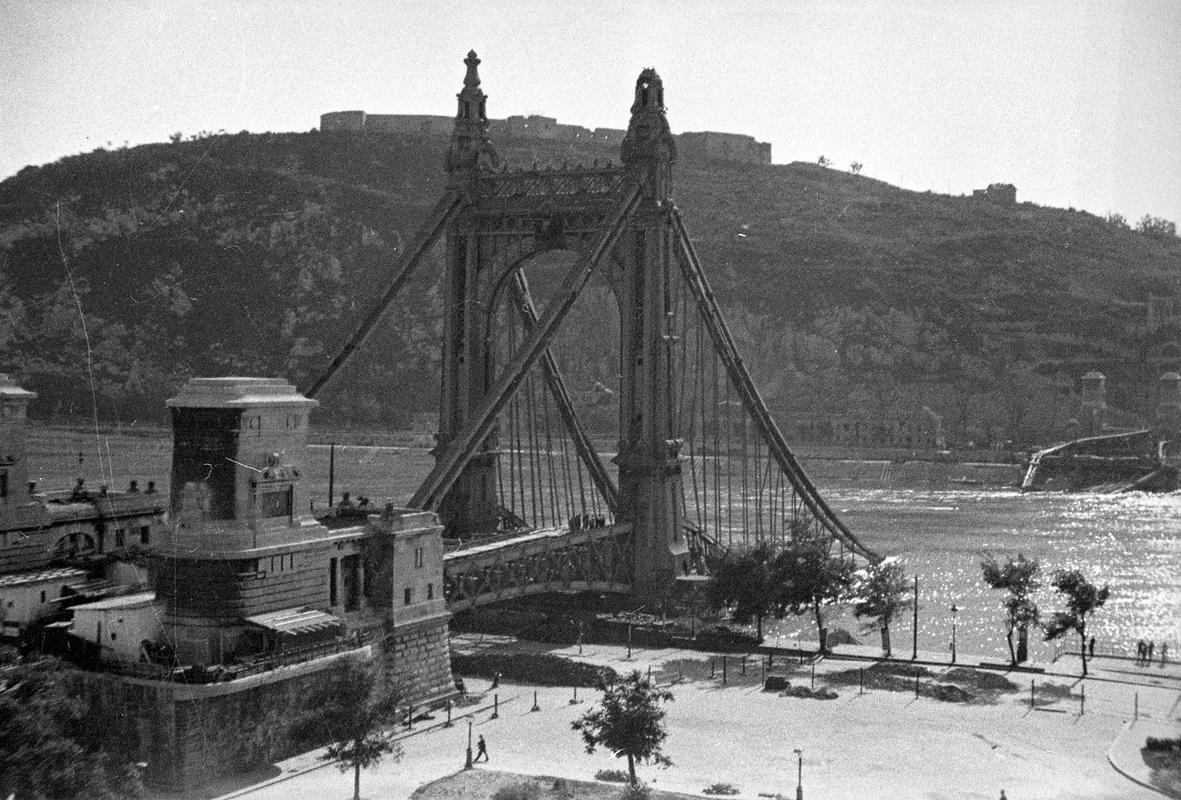
The ordeal of the Danube bridges had commenced earlier with American air force attacks in 1944, necessitating the establishment of specialised air defences to protect these critical structures. During the subsequent siege of the capital, relentless Soviet air and artillery assaults aimed to sever the connection between Pest’s defences and Buda. The bridges suffered extensive damage and required constant repairs by road crews, who were also ultimately tasked with their destruction.
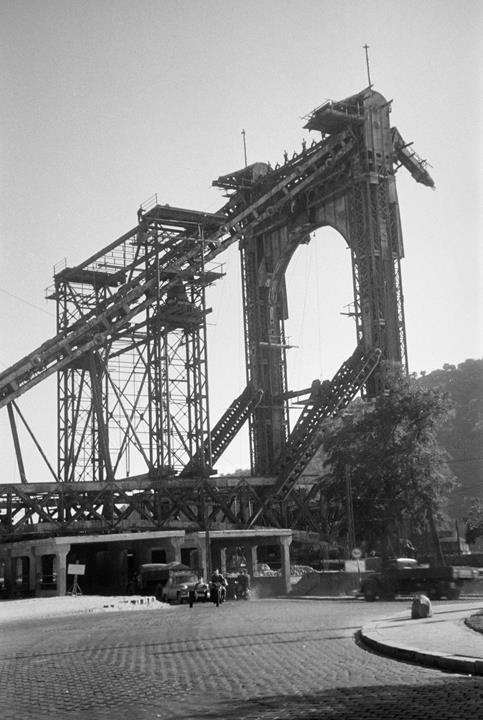
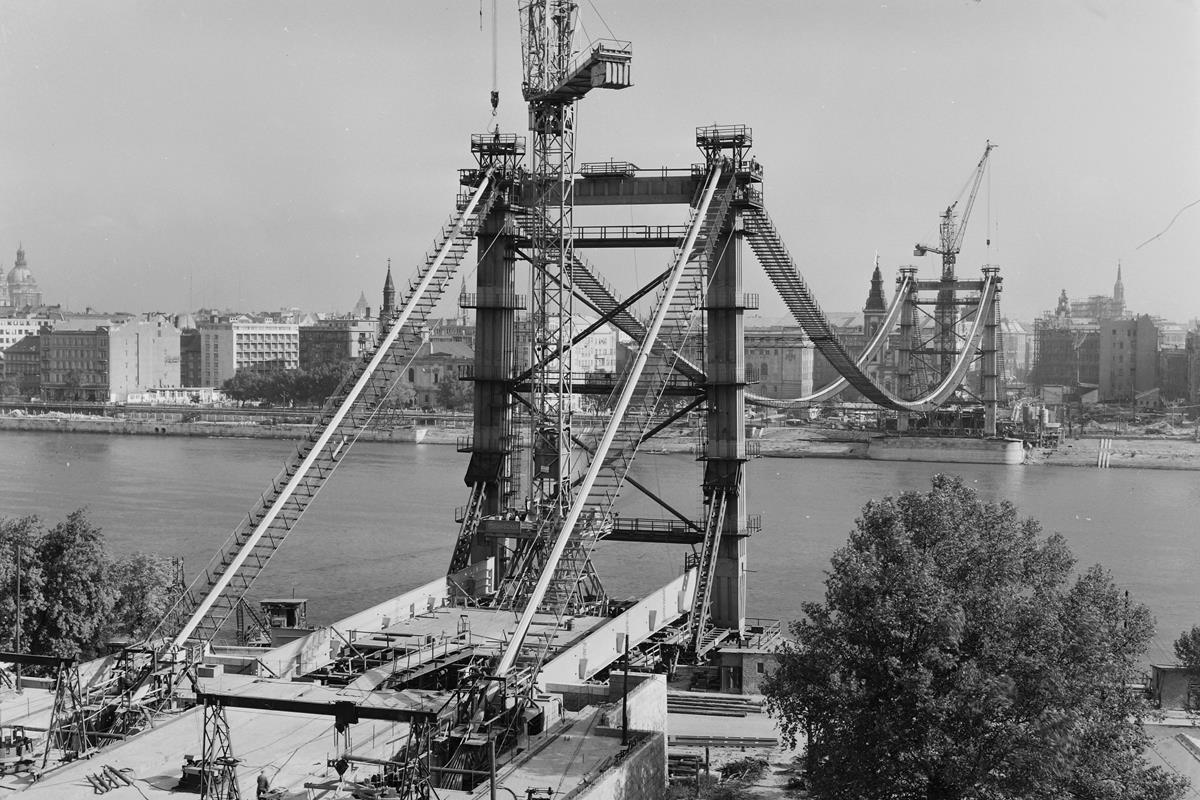
The very least the bridge should be painted the same color as the original so it blends in with both sides instead of over powering the area,
Remove the sidewalk to the stairs on the pest siide thats less than 4” inches from the historic church- put stairway down from beginning of the bridge where side walk ends.