Subscribe to our social channels to get the latest news about Hungary!


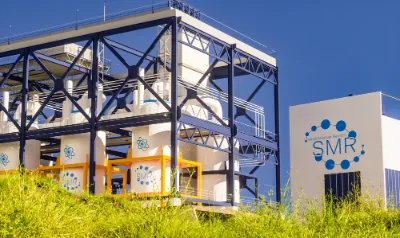
Although it sounds futuristic, American small modular nuclear reactors (SMRs) may soon supply energy to numerous Hungarian cities and industrial areas — at least, that is the intention behind the new American–Hungarian energy agreement. But will it be dangerous to have a small nuclear power plant next to every Hungarian city?
While the Russians have received a massive contract from the Hungarian government to expand the Paks Nuclear Power Plant (although the project is progressing slowly), the Americans are preparing to enter the Hungarian market with their small modular nuclear reactors. These operate on principles similar to those of large nuclear power plants, but they are easily scalable and can function in locations where traditional nuclear plants are impractical.
According to Foreign Minister Péter Szijjártó, this technology could soon provide power for cities and industrial zones across the country, though no specific timeline has been given.

The Hungarian government has strongly criticised the European Union’s REPowerEU regulation, which effectively bans the import and use of Russian piped and liquefied natural gas (LNG) from 1 January 2028. Besides claiming that the legislation was adopted under dubious circumstances, the Orbán government argues that the proposal threatens Hungary’s energy security and undermines the success of its utility cost reduction policies, insisting that only cooperation with Russia can diversify supply and keep prices low.
In addition to expanding the Paks nuclear plant with two new reactor blocks — a project facing significant delays — the government aims to install American small modular nuclear reactors (SMRs) capable of powering individual cities or industrial areas.
So, what should be known about these reactors?
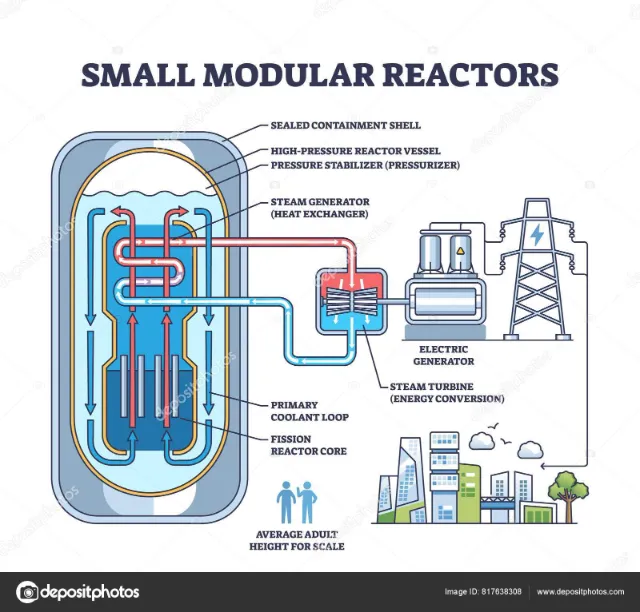
According to Péter Szijjártó, Minister of Foreign Affairs and Trade, SMRs could provide cheap, stable, and environmentally friendly energy to both industrial areas and cities. A recent agreement with the United States reflects this ambition, as the technology is most advanced there.
He stated:
“And I hope that within a few years, small modular nuclear reactors manufactured with American technology will contribute to ensuring that, besides households and families, businesses and economic players in Hungary can enjoy Europe’s lowest energy costs — a crucial key to the future competitiveness of the Hungarian economy.”
He emphasised the importance of rapid progress in both expanding the Paks plant and introducing small modular reactors in Hungary as soon as possible.
“At present, we see that American technology is the most advanced in this field, so it has the best chance of being implemented earliest in the form of small modular reactors. We have already signed an agreement on this matter. Today, we are clarifying the conditions for further steps,” he concluded.
Read also:
Click to read more energy-related articles.

 ZH
ZH IT
IT DE
DE


Only if Fidesz says in power.
Everyone else would sign up to the globalist-socialist-fascist “green” B.S., causing the price of energy to skyrocket while simultaneously devastating Hungary’s countryside and wildlife.
I wonder why the South African-developed Pebble Bed Modular Reactor was not even considered.