Subscribe to our social channels to get the latest news about Hungary!


On Sunday evening, skies are expected to be mostly clear across northern and northeastern Transdanubia and the central quarter of Hungary—offering ideal viewing conditions for the total lunar eclipse—HungaroMet Zrt. announced on Facebook Saturday.
According to their post, a total lunar eclipse will take place Sunday night and will be visible from Hungary. They noted the total eclipse phase will last over two hours, followed by the partial eclipse stage as Earth’s shadow gradually moves away from the Moon. The dark red, faintly glowing full moon will be accompanied by visible stars, and through a telescope, the massive red moon disk will appear to float in space against a backdrop of stars—a truly spectacular sight.
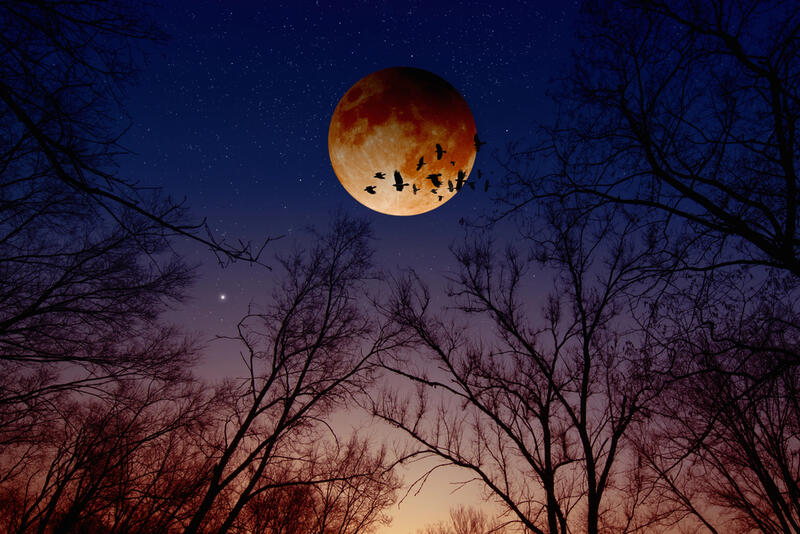
They reported that in Budapest, the total lunar eclipse will begin at 7:31 p.m. and last until 8:53 p.m. In eastern regions of the country, it will start a few minutes earlier; in the west, a bit later. Current forecasts suggest clear skies over large areas of northern and northeastern Transdanubia and the central part of the country, offering the best viewing conditions.
According to the post, high-altitude cloud cover could build over western, southwestern, and southern parts of Transdanubia starting Sunday afternoon. In northeastern and eastern counties, afternoon showers and thunderstorms may persist into early evening, producing patchy cloud cover. However, these rain cells are expected to gradually dissipate, and skies will likely clear as the evening progresses, allowing for at least partial views of the eclipse in these areas.
During a total lunar eclipse, the Moon passes entirely into Earth’s shadow, darkening significantly but not disappearing completely. Instead, it takes on a mysterious reddish-brown hue—caused by sunlight scattering in Earth’s atmosphere, the same phenomenon that makes sunsets red.
If the eclipse is bright enough, the dusky red-brown moon can be seen with the naked eye. The total eclipse will last until 8:53 p.m., meaning the Moon will spend a total of 82 minutes in full shadow. As atmospheric light scattering increases towards the end of the total phase, visibility will improve for unaided viewing.
According to the Svábhegy Observatory, the Moon will then take another 1 hour and 4 minutes for Earth’s shadow to fully pass across its surface, concluding the partial phase at 9:57 p.m. After that, only the penumbral eclipse remains, detectable only by keen-eyed observers on the brightly glowing full moon. An unobstructed view toward the eastern horizon is crucial for observing the eclipse. If conditions are right, the bright total phase should be clearly visible to the naked eye.
Read more science-related news on Daily News Hungary!
Worth Reading:
To read or share this article in Hungarian, click here: Helló Magyar


