Subscribe to our social channels to get the latest news about Hungary!


Eventrend Group’s latest Turistamonitor (Tourist Monitor) survey, conducted with the participation of more than four thousand foreign visitors, offers a comprehensive insight into how tourists in Budapest make decisions, what they look for in the city, and where they see the greatest room for improvement. The research was carried out in the summer and autumn of 2025 across eight iconic Budapest hospitality venues – including the New York Café, Gundel and Centrál – and includes responses from guests representing 139 countries.
The Turistamonitor clearly shows that visitors in Budapest now rely primarily on Google and TripAdvisor recommendations when choosing a restaurant or café. Digital reputation has essentially replaced spontaneous decisions, and in many cases, people decide where they will eat or have coffee well before they arrive.
A similar trend can be seen in accommodation bookings: two-thirds of tourists book online, most of them through Booking.com. The location is the most important factor, followed by price and average review score.
The survey also revealed that half of all guests book their accommodation at least a month before travelling, and they typically spend 3–6 nights in the capital.

Two-thirds of respondents eat in a restaurant at least once a day, and classic Hungarian dishes remain essential. Goulash soup, chicken paprikash, lángos, chimney cake and Somló sponge cake are still among the top favourites.
At the same time, tourists’ eating habits have changed significantly:
• 40% follow some kind of special diet,
• and one in five visitors is vegetarian or vegan.

This is no longer just a dietary choice but a global trend: the proportion of health-conscious travellers is increasing year by year. Guests expect to find suitable options in every category, from fine dining to street food and cafés.
Payment is overwhelmingly digital, while tipping is becoming less predictable: 13% of tourists never tip, and among Italian visitors, one in three does not usually leave gratuities.
Eighty-two per cent of foreign tourists are satisfied with Hungarian hospitality, citing staff friendliness as the top positive experience.
However, they also highlighted three key areas in need of improvement:
• cleanliness – not only in restaurants and cafés but also in public spaces,
• shortcomings in English-language communication,
• and the difficulty of accessing information both online and on location.
According to the research, language barriers already directly influence guest experience and willingness to return.
While 56% of respondents say they would certainly return to Budapest, one-third remain unsure.

The city’s attractions continue to be a major draw. Tourists’ top favourites include:
• the Hungarian Parliament Building,
• Buda Castle,
• and Fisherman’s Bastion.
Respondents describe Budapest as a “historic yet modern” city where cultural experiences and gastronomy together shape the overall travel experience. The capital appeals both to first-time visitors and to those who return year after year.
Deeper analysis identifies three key factors that will shape Budapest’s international success:
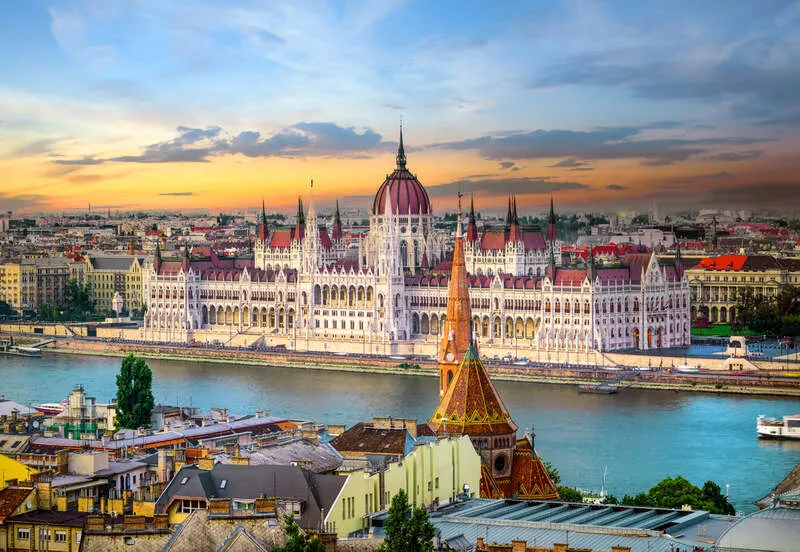
The Budapest Turistamonitor 2025 survey was conducted between 30 July and 10 October 2025 using both paper-based and online questionnaires, with a total of 4,244 respondents. Although the study is not representative of all tourist traffic in Budapest, it provides an accurate picture of the international visitors frequenting the city’s busiest, most iconic hospitality venues.
The research was carried out by Eventrend Group, a defining player in Hungarian hospitality for more than three decades, operating venues such as the New York Café, Gundel, Centrál and Spoon the Boat.

 ZH
ZH IT
IT DE
DE HR
HR NL
NL FR
FR JA
JA RO
RO RU
RU ES
ES TR
TR


People with dietary restrictions need to stay at home. Or starve while on a trip.
I personally Love Budapest and other parts of Hungary too.
The only Complaint I have,
Is that there is a clear problem with Disabled access to toilets,
Underground train stations and subways.
I fully appreciate that a lot of buildings are old and grade listed so they can’t really change.
But for Disabled people and People with children,
It is Really Really Bad,
Especially if you can’t use stairs.
How are people in wheelchairs or people with prams,
Parents / Grand Parents,Mothers or Fathers suppose to be able to use subways or metro’s when there are only steps to them.
In this day and age there should be ramps or lifts to such places ,
I can’t even eat in McDonalds by Nyugati train station or go to the toilets in Nyugati train station as they only have steps to access them.
I Love the Country,
But they could do more for people with prams and those that are in wheelchairs,
It’s very sad because it’s a beautiful country,
A country where I plan on living there in the next 2 years.
It’s hard enough being Disabled in the 1st place,
Yet alone trying to live a normal life.