Subscribe to our social channels to get the latest news about Hungary!


Wizz Air has quietly suspended its much-publicised plans to launch flights between Budapest and India, despite an earlier government announcement touting a daily connection to Mumbai by the end of this year. The low-cost carrier confirmed to Mfor that it has put its India expansion “on hold”, even though Foreign Minister Péter Szijjártó had declared in March that all agreements for the route had already been finalised.
The airline’s decision is not linked to the closure of its former Abu Dhabi base, Wizz Air told the outlet. The company previously intended to rely on newly ordered long-range Airbus A321XLR aircraft for potential South Asian routes, but later significantly scaled back its order (from 47 jets to just 11), shifting its focus back to the more familiar A321neo.

Wizz Air continues to face the consequences of regional instability. Before the Russian invasion of Ukraine, the airline served five airports in Ukraine and three in Russia: losses the company says hit its operations harder than those of any comparable carrier.
Despite these setbacks, Wizz Air says it intends to be the first airline to resume flights to Ukraine once it is safe to do so. The company reportedly has detailed plans ready for a rapid relaunch if and when airspace restrictions are lifted.
The war, along with operational pressures, also contributed to the termination of the airline’s Abu Dhabi base. Nevertheless, the Emirati capital is once again accessible from several European cities, including Budapest, Bucharest, Kraków, Katowice, Sofia and Larnaca.
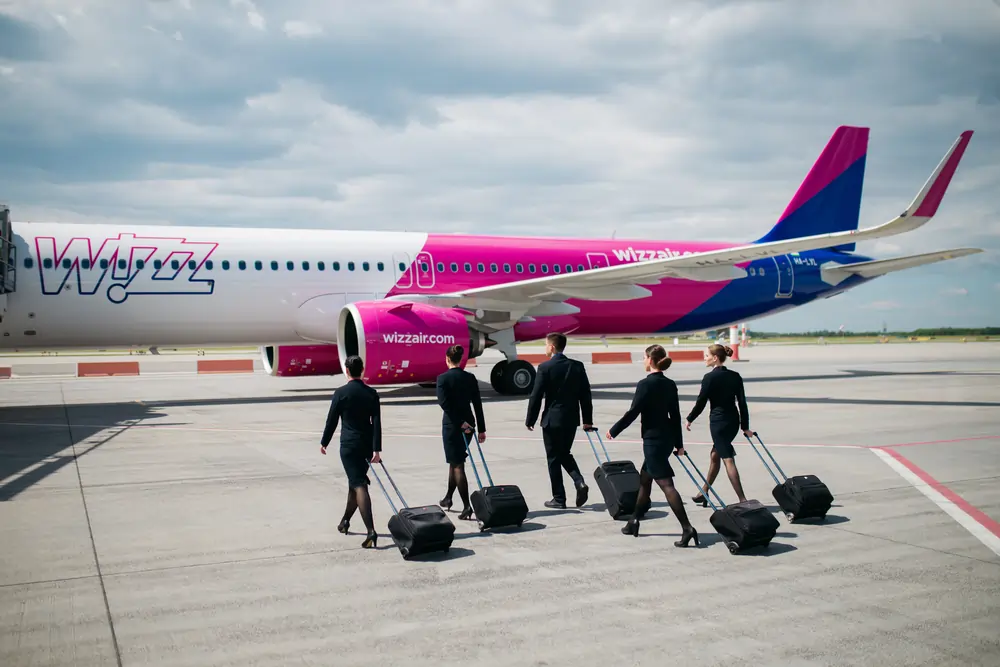
Wizz Air currently operates 74 routes from Budapest but aims to exceed 100, with growing demand shaping where the airline looks next, Mfor reported. According to the airline, summer travel patterns show rising interest in Nordic destinations, alongside strong weekend city-break traffic.
This indicates that Oslo, Helsinki or Gothenburg could soon return (or debut) on the Hungarian capital’s route map. Wizz Air previously flew to Oslo and Gothenburg from Budapest but later withdrew amid competitive pressures and political disputes. In Norway, the airline entirely exited the market after criticism from then-Prime Minister Erna Solberg, who cited labour-union concerns. Wizz Air has since re-entered the Norwegian market with flights to Bergen, suggesting relations with local travellers have improved.
In Sweden, Gothenburg was dropped in early 2023 after years of operation, leaving Ryanair as the sole low-cost competitor on the route. A similar situation unfolded in Scotland, where Wizz Air discontinued its Glasgow service in October, but Ryanair maintained its Budapest–Edinburgh connection.
Helsinki, however, would represent a major strategic move: no low-cost airline currently serves the Finnish capital from Budapest, with only the premium-priced Finnair operating the route.
The developments come as Wizz Air celebrates reaching a new fleet milestone, unveiling its 250th aircraft just one year after introducing its 200th. The special-livery plane features a design by Hungarian artist Balázs Hauser.
CEO József Váradi confirmed that the carrier plans to double its fleet to 500 aircraft within the next decade: a timeline that has already been pushed back several times. The airline operates one of the youngest fleets in its category worldwide, and remains the biggest global buyer of the Airbus A321neo. By 2029, Wizz Air intends for its entire fleet to consist of this 239-seat model.
Passenger numbers continue to rise as well: the airline carried 62.8 million passengers last year and expects up to 72 million this year.
However, expansion will not be effortless. Wizz Air Hungary’s revenues have declined for three consecutive years, and its 2023 after-tax profit reached only HUF 14.9 billion, which was a steep fall compared to its 2022 result of HUF 238.4 billion. Shareholders have also felt the turbulence, with the company’s stock dropping to less than one-fifth of its 2021 value.

 ZH
ZH IT
IT DE
DE HR
HR NL
NL FR
FR JA
JA RO
RO RU
RU ES
ES TR
TR

