Subscribe to our social channels to get the latest news about Hungary!


The pogácsa (turf-cake, small round cake, scone) is the king of savoury cakes and the indispensable product of Hungarian bakeries. This simple but amazing dish is a great on-the-go snack, welcome dish for guests, refuelling bite during excursions, and most importantly: a must-know recipe of the Hungarian cuisine.
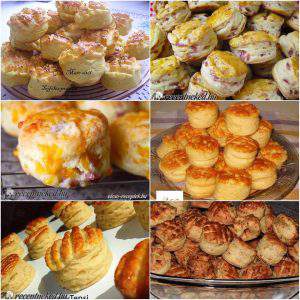
The round pogácsa is one of the oldest and most famous baked food in Hungary and many other countries as well. There’s no accounting for tastes, and there’s no “ultimate” recipe – everyone flavours it differently. However, the most common versions are the potato, buttery, cheesy and crackling pogácsa.
According to vilagkonyha.network.hu, the name comes from the Latin “focus” (fire). At first, you might not understand the connection, but if you think about the baked pastry of Italian bakeries – the Latin focacea – you’ll start to see the relation. The Italians still call the flat, small bread focaccia.
The Hungarian language took over the south Slavic pogača naming, which originally meant a type of flat pie.
The Germans call it pogatschen, the Turkish call it poğaça, while the Spanish call it hogaza.
The turf-cake (pogácsa baked in ashes) plays an important role in Hungarian folktales because it is what the mother gives to her son, who leaves for a journey full of challenges. It’s hard to imagine how a few pogácsa could be enough for a journey, but this is the magic of folktales. Among others, the tradition lives on in school graduations, when students receive pogácsa in their bags as kind of a lucky charm.
There are several ways of making pogácsa: it can be created with puff-pastry, leavened or rolled dough technique. And when it comes to flavouring, the options are endless.
Pogácsa can be made with cheese, sour cream, cottage cheese, crackling, cabbage, butter, fat, seeds, potato, onion, leek etc. and the different combinations of these.
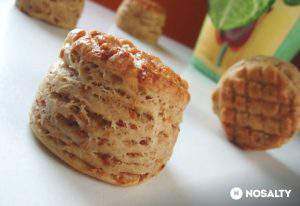
The most popular is probably the puff-pastry technique, which’s secret lies in persistent folding and resting. This is why we thought we’d pick a recipe that explains this method. Moreover, we wanted to present a traditional version, so we chose pogácsa with crackling (tepertős/töpörtyűs pogácsa) as it is a very Hungarian way of flavouring the pastry. Plus, it is connected to the winter pig-sticking season. The following recipe is from nosalty.hu.

Add a teaspoon of sugar to the lukewarm milk along with the yeast and let it rise for a few seconds. Sieve the flour into a big bowl, add one egg, the fat, the sour cream, the salt. Mix the ingredients gently and slowly start adding the yeast. Start mixing and kneading the dough with your hands. You can add 1-1.5 dl of water if needed. You’re looking for a puff-pastry consistency, which needs to rest for 20-30 minutes.
While the dough is resting, grind the crackling. Then, roll out the dough to an approximately 40×30 cm big rectangle shape and spread the ground crackling on the top. Roll up the dough and push it down gently with the rolling-pin. Fold in the two edges of the long-shaped pastry, and then fold the whole pastry in half. Let it rest in a warm place for 30 minutes.
Then, flatten it with a rolling-pin once more and fold it in three layers. Let it rest for another 30 minutes and repeat this process once more. Finally, roll the pastry out, cut a square pattern on the surface (the top of the crackling pogácsa should look chequered). Cut out circles, place them on a baking tin and grease the top of them with a beaten egg. Bake them at 180° Celsius, and they are ready to be served.
Enjoy!
Featured image: Wiki Commons By Top Budapest
Source: Daily News Hungary


That’s my favourite although craclings are not available in New Zealand?
The last roll out before you cut the squares and make the circles does not tell had thick you roll out the dough? Could you verify the thickness please? My mother in law made these and we love them but since she passed away we haven’t had them and I would like to make them for my husband. Thank you
I live in the American South, and while I think I can find cracklings, I’d prefer not to use them.
Can I substitute 300 grams of cottage cheese instead? Or if not, what quantity of cottage cheese should I use?
I want to make these for my 93 year old mother. Her parents were born in Hungary and she was raised with Hungarian food.
Thank you.
Cheryl, my Hungarian mother made her own cracklings this way: chicken skin cut into pieces and a pan with hot oil, drop the skin in and it will crackle and get crisp. In a pinch you could use pork cracklings sold in the chips isle.
The instructions do not specify the cooking time.
I will try 25 minutes and see what is the result.