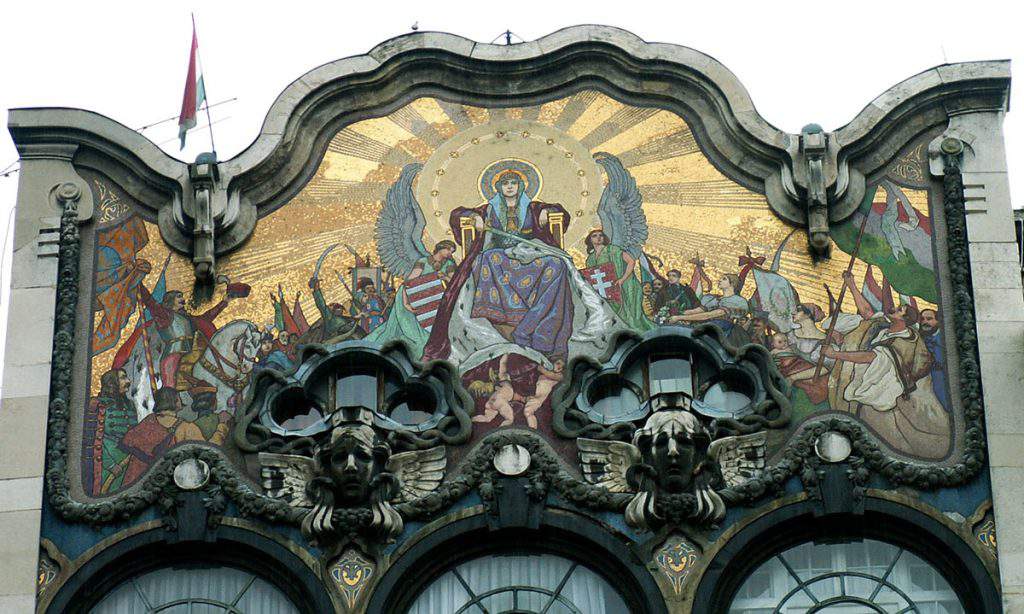
The 10 best known representatives of Art Nouveau style in Budapest
/imm.hu/
Change language:
Art Nouveau (or “New Art” in French) was a popular style between 1890 and 1910 that also conquered Hungary. The natural forms and structures along with the curved lines of plants and flowers very much characterise this style prevalent in art and architecture, and Budapest has some unique buildings that are excellent representatives of it. Mertutaznijo.cafeblog.hu collected 10 of these buildings, but of course, during a tour in the city, you can easily bump into further examples.
The history of the style and its characteristics
Secession, Jugendstil, Art Nouveau, Stile floreale, Tiffany style…. these names all refer to the same style appearing in literature, architecture, fine and applied arts. In Hungary, Art Nouveau architecture means a diverse artistic heritage dominant in the 19-20th century in the Austro-Hungarian Empire. In architecture, it firstly appeared in the 1890s, and by the end of the 1910s, it came to its end.
Its most important characteristic features are the stylised images, the wavering ornamentation inspired by plants and geometric patterns and the use of light colours. What is also a particularity of these buildings is that architects preferred rounded shapes rather than angles.
Its major architectural representatives in Budapest
1. Museum of Applied Arts (Budapest, 9th district, Üllői Street 33-37)
The palace of the Museum of Applied Arts is the third oldest applied arts museum in the world. It is the masterpiece of the style of Art Nouveau built between 1893 and 1896 based on the plans of Ödön Lechner and Gyula Pártos. In the fall of 2017, the museum was closed to start its full reconstruction and expansion, but admiring the building only from outside will not disappoint you.
/imm.hu/
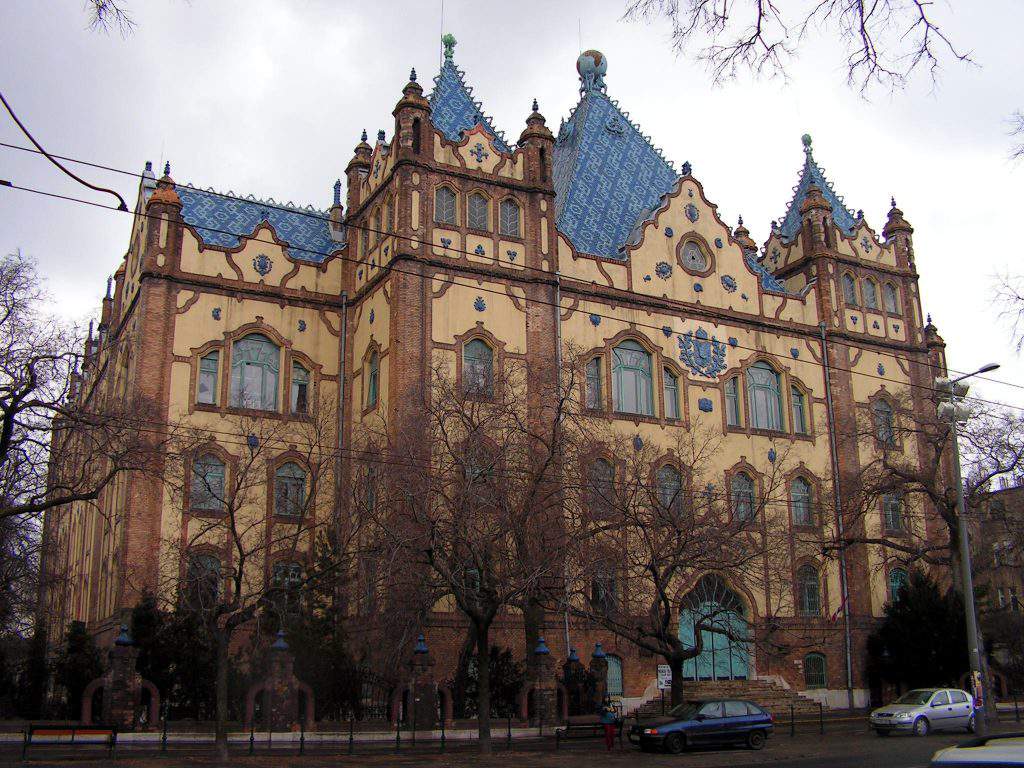
2. Geological and Geophysical Institute of Hungary (Budapest, 14th district, Stefánia Street 14)
It was during the reign of Franz Joseph I that on 18 June 1869, the foundation of the Hungarian Geographical and Geophysical Institution was agreed upon. The Institute was constructed in 1898-1899 based on the plans of Ödön Lechner. The execution works were carried out by Sándor Hauszmann, but the whole construction could not have been accomplished without the financial assistance of Andor Semsey. Its official inauguration took place on 7 May 1900. Franz Joseph himself also visited this exceptional Institute.
/keptar.oszk.hu
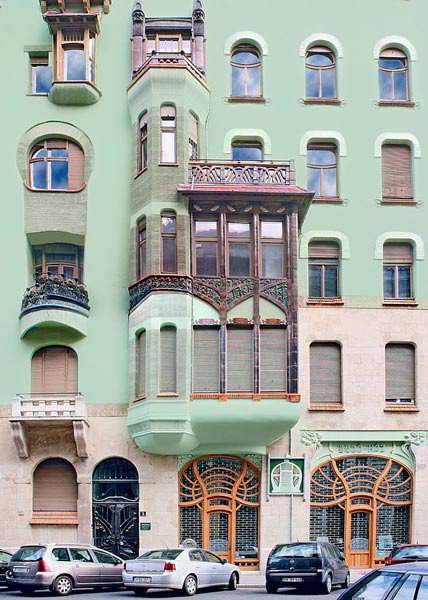
3. Bedő House /House of Hungarian Art Nouveau (Budapest 5th district, Honvéd Street 3)
The building, designed by Emil Vidor, reflects the influence of Belgian and French architecture. At the same time, the facade of the building also incorporates Hungarian patterns, like the Zsolnay ceramics patterns. Not long ago, the building was entirely renovated. Besides the private museum operating in the establishment and displaying furniture, porcelain, ironwork and paintings, visitors can sit into a lovely café, too.
/5.kerulet.ittlakunk.hu
4. Ernst Museum (Budapest, 6th district, Nagymező Street 8)
Originally, it was a private museum of Lajos Ernst that was set up in May 1912. In the building, visitors can see the works of two outstanding representatives of the Hungarian Art Nouveau style. One of them is Ödön Lechner who designed the hall, while the stained-glass windows are the masterpieces of József Rippl Rónai. Since 2013, the building gives a home to the Robert Capa Contemporary Photography Center where regular exhibitions can be visited.
/wikicommons by MarlaSinger7 /
/fesztivalnaptar.hu/
5. Royal Postal Savings Bank / today the Hungarian State Treasury (Budapest, 5th district, Hold Street 4)
The building, which was built based on the plans of Ödön Lechner and Sándor Baumgarten, was inaugurated in 1901. The Secession style typical of Lechner can be seen in the Hungarian flower patterns and the use of colourful ceramic tiles. The facade is decorated with beehives that are the symbols of savings reflecting the original function of the building. If you are in the neighbourhood, take a look at the building from outside. It is absolutely worth a visit. 🙂
/egykor.hu/
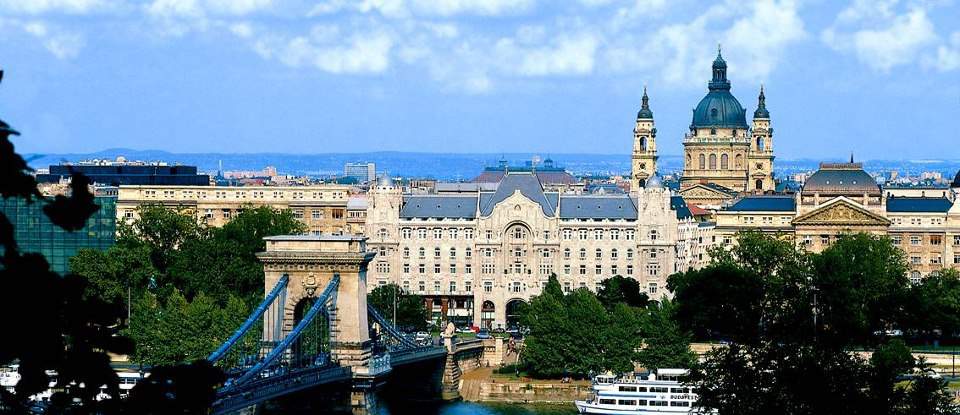
6. Gresham Palace / Four Seasons Hotel (Budapest, 5th district, Széchenyi Square 5-6)
The building was built in 1907 based on the plans of Zsigmond Quittner and the Vágó brothers and it operated as the headquarter of the London-based Gresham Life Assurance Company. Once, the very famous Gresham Café operated on the ground floor, and it was there that the exceptional Gresham circle composed of artists organised their regular reunions. Since 1987, the building along with other establishments overlooking the Duna is part of the World Heritage. After some renovation, the luxurious hotel, under the name of Four Seasons Gresham Palace Hotel, was reopened in 2004 providing 179 guest rooms to the visitors.
7. Gellért Bath and Hotel (Budapest, St Gellért Square)
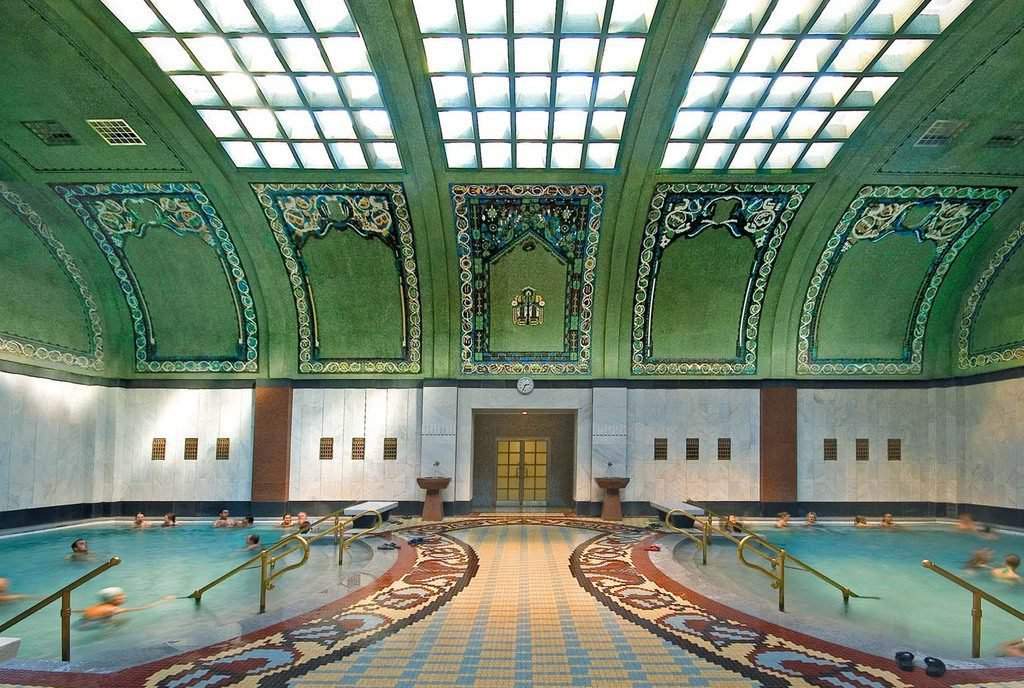
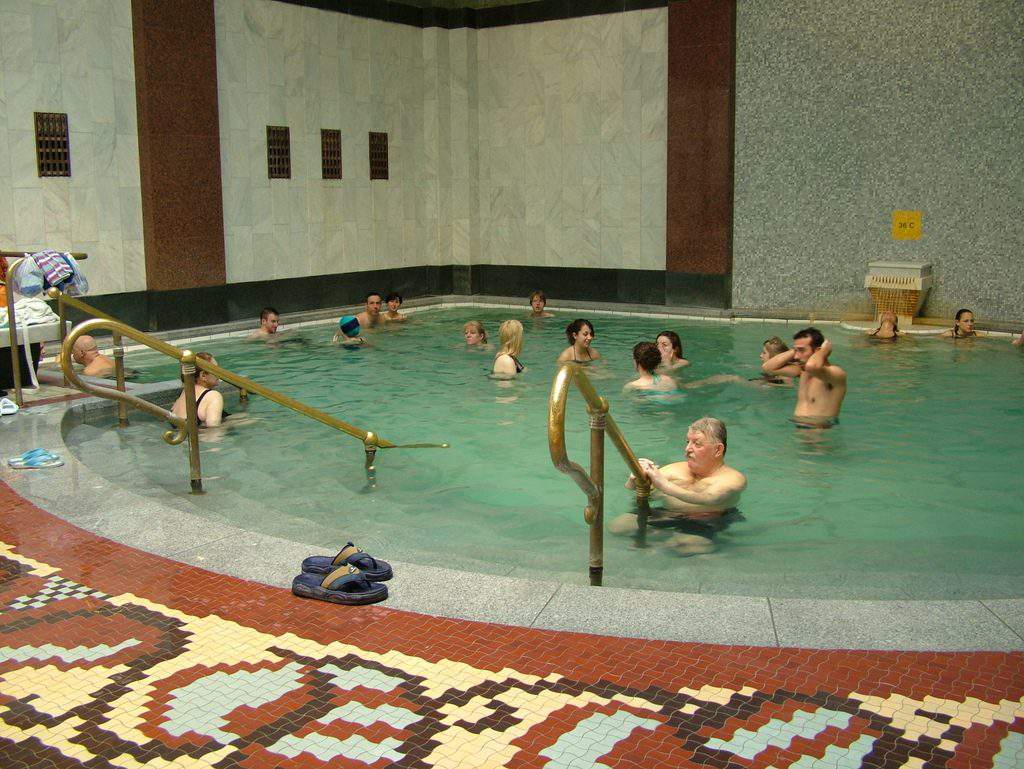
The Gellért Thermal Bath was built between 1912-1918 in Art Nouveau style. In the last year of the World War, Russian prisoners of war also worked on the construction of the building. The bath was the 1st luxurious establishment of the capital, and at that time, it was the most modern bath in Europe. Of course, visitors today are also amused by its design and thorough decoration that contribute to the peaceful atmosphere of relaxation.
/gellertfurdo.hu//gellertfurdo.hu/
8. Zoo Pavilions (Budapest, 14th district, Zoo Avenue 6)
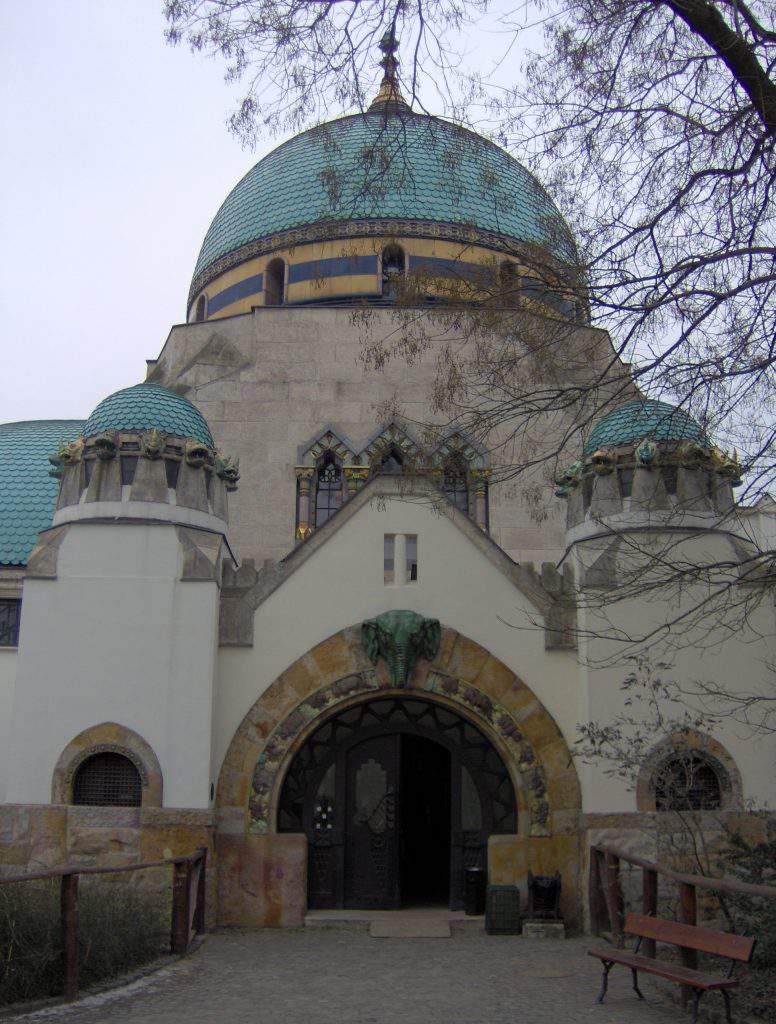
Most present-day buildings of the Budapest Zoo and Botanical Garden were built between 1909-1912. The Elephant House is one of the most well-known monuments of the zoo. Originally, the house, designed by Konrél Neuschloss, was named Pachyderm House. It is an exceptional example of the Art Nouveau style as far as both its exterior and interior decorations are concerned.
/wikicommons by Csanády/
9. Turkish Bank House (Budapest, 5th district, Szervita Square 3)
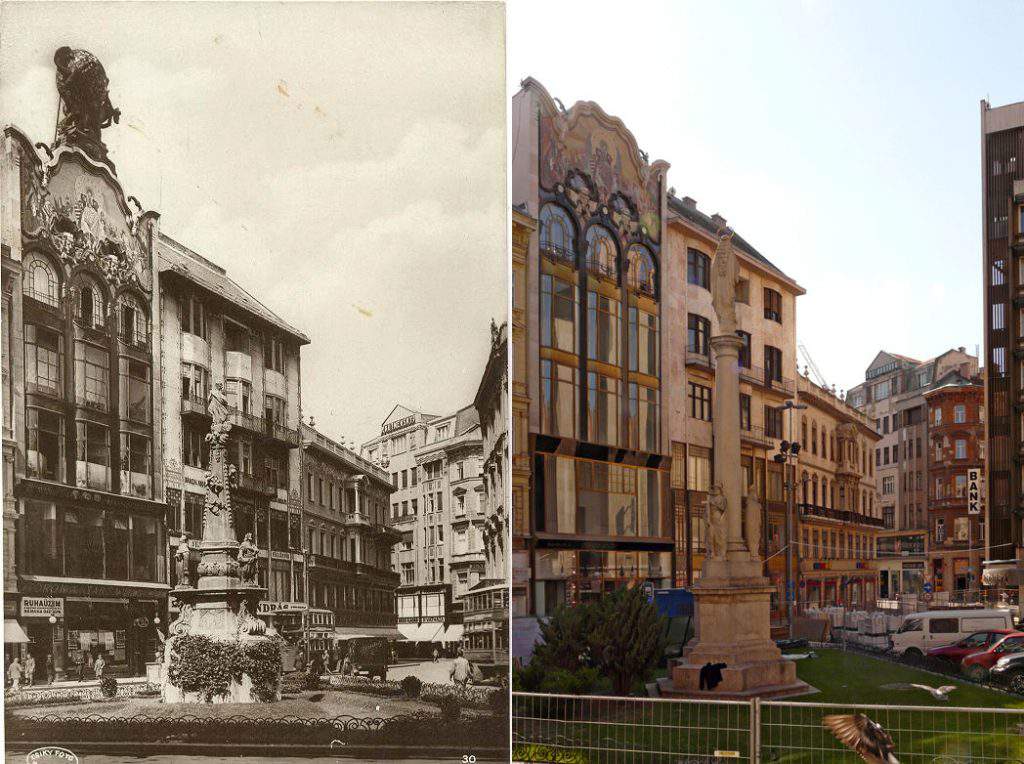
The building, once operating as a Turkish Bank house, is the perfect representative of the Art Nouveau style. It was designed by Henrik Böhm and Ármin Hegedüs in 1906. Most probably, its most prominent part is the facade that you can examine in the following photos.
/kitervezte.hu//kitervezte.hu/
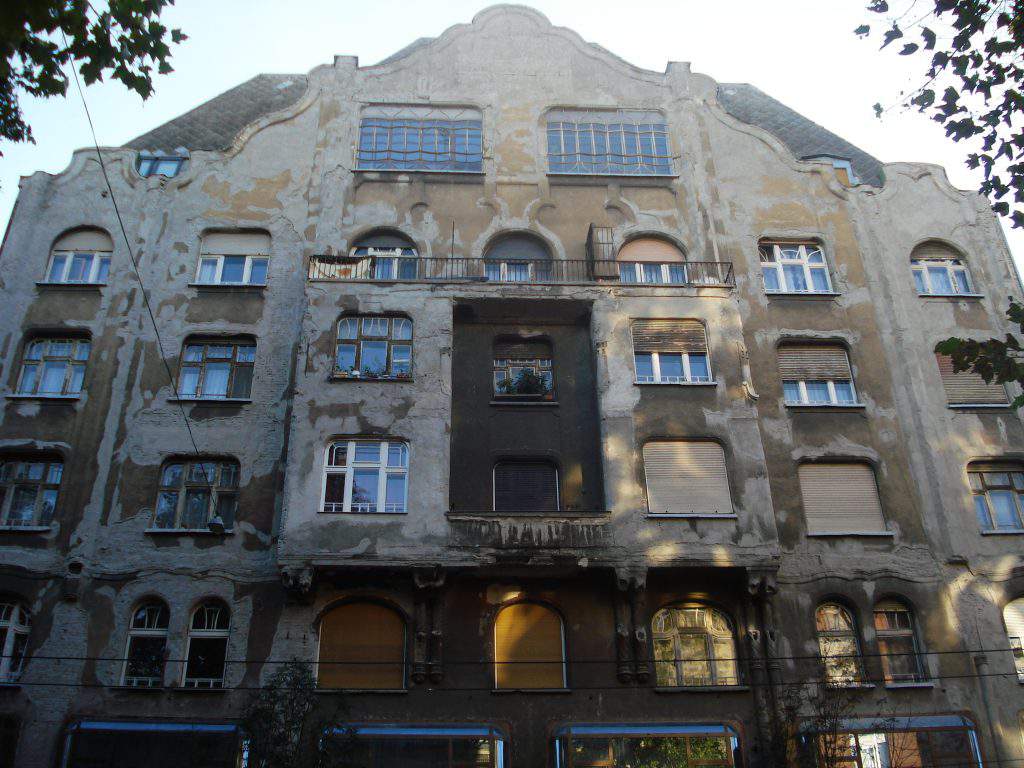
10. Szenes House (Budapest, 14th district, Thököly Street 46)
The construction of the building complex was commissioned by Mór Szenes after whom the building was named. It was built in 1906 based on the plans of István Nagy. It has one of the most beautiful staircases in Budapest. The wrought-iron gate and the stucco decoration create the perfect harmony for the block of flats.