Subscribe to our social channels to get the latest news about Hungary!


Since last time you seemed interested to learn that Hungarian language and culture had also some effect on the English language, I dug a little deeper and managed to find some more words that are borrowed from Hungarian. Many of the items on this list are actually significant in Hungarian culture and are defining elements of it. Let’s have a look at them.
Before you go any further, you can check out the first part of this article by clicking here. Just a quick clarification that you might need for this article: if something is Hungarikum, it represents Hungary and Hungarian people due to its attribute, uniqueness, or quality.
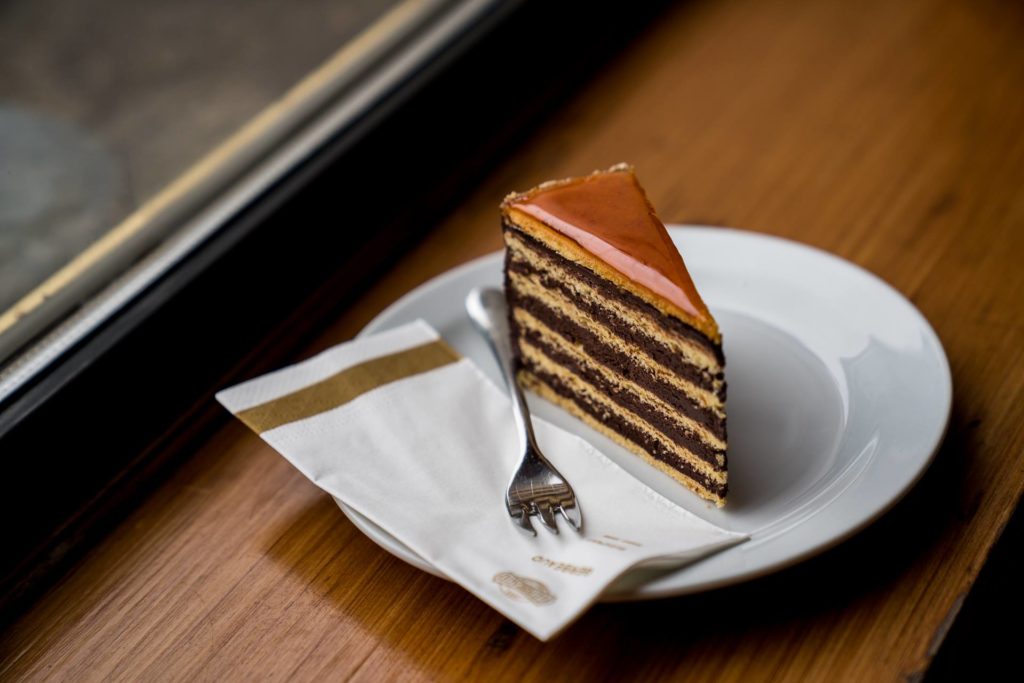
Dobos torte
“A torte made of multiple thin layers of sponge cake often containing ground hazelnuts, put together with a mocha-chocolate filling, and topped with caramel glaze,” – Merriam Webster Dictionary
“The layered pastry is named after its inventor, Hungarian chef József C. Dobos, a delicatessen owner in Budapest. Dobos cake was first introduced at the National General Exhibition of Budapest in 1885; King Franz Joseph I and Queen Elisabeth (Sisi) were among the first to taste it. The cake soon became popular throughout Europe, both for its durability through shipping and for its unique appearance.” – Collection of Hungarikums
We have already written several articles about this delicacy. We do not know for sure when confectioneries will reopen after the pandemic, but if you crave this delicacy, we also have the original recipe you can try.
Rubik
Although it is not part of dictionaries, as it is a proper name, many of you might be familiar with this word. If it does not ring a bell, well, I am going to tell you all about it. It comes from none other than Ernő Rubik, the inventor of the world-famous Rubik-kocka, or Rubik’s cube. He invented it around 1975, but he only got the patent after 1977, and it was called ’bűvös kocka’ (magic cube) back then. Shortly after, it was nicknamed Rubik-kocka, and the name stuck. Since then, it has become a kind of brand, and there are many varieties of brain-teasing puzzles under Rubik’s name.
Tokay
“A name of a town in Upper Hungary (‘Tokaj’). Also, Tokay (‘Tokaji’) wine, rich sweet wine of an aromatic flavour, made near Tokay in Hungary. Tokay grape is the variety of grape from which Tokay wine is made.” – Oxford English Dictionary
“The Tokaj aszu (or ‘Tokaji aszú’ in Hungarian) is a special wine produced in the Tokaj wine region; it is the nectar of individually hand-picked “aszu” berries botrytized on the vinestock. It is made by bathing the dough in high quality must or wine of the same year from the Tokaj wine region. Following fermentation, it is maturing and refining in oak casks placed in a constant-temperature cellar.” – Collection of Hungarikums
You need to taste it, but until you can get your hands on a bottle, you can read our articles about this Hungarikum.
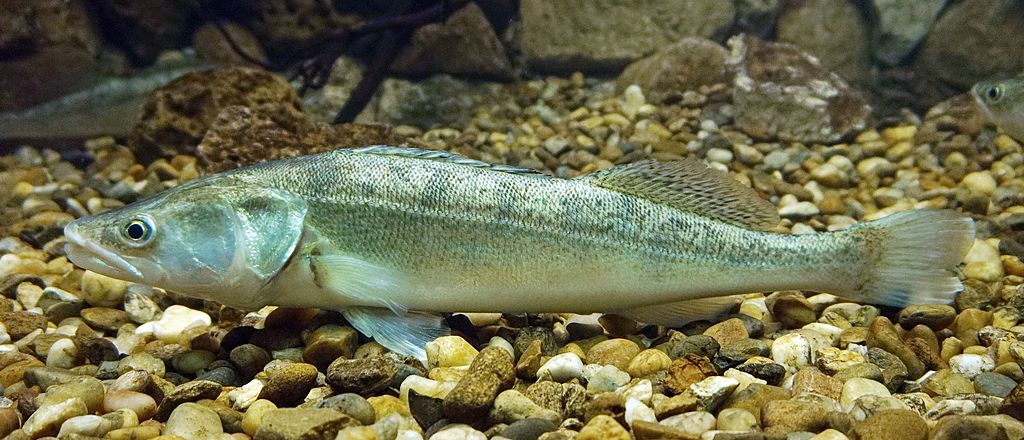
Fogas
“An Eastern European fish (Lucioperca sandra) resembling a perch, especially one from Lake Balaton in Hungary that is highly esteemed as food,” – Merriam Webster Dictionary
In Hungarian, it literally means ‘having teeth’, which becomes evident if you look at this fish. It is certainly food you might encounter in establishments near Balaton, but a dish made from this fish is present all over the country, and you can order it in many restaurants. Not everyone likes fish, but it is certainly regarded as one of the best fish in Hungary, right after our next word.
‘Halászlé’ or fisherman’s soup
Although ‘fogas’ is very popular in Hungary, ‘halászlé’ or ‘fisherman’s soup’, sometimes ‘fish soup’ as it is referred to in English, has not only become a Hungarikum, but it is almost just as known worldwide as ‘goulash’ is.
Every cook does it differently, but only two kinds became Hungarikums. One is the ‘Tisza’ (river in eastern Hungary) fish soup and the other is the ‘Baja’ (a city in southern Hungary, next to the Danube). They may be different in how you prepare them, but the next word is one ingredient they both need.
Paprika
According to the Oxford English Dictionary, it is a word borrowed from Hungarian. It is a powdered spice that looks deep-orange or red, made by grinding the dried fruits of peppers. In many languages, ‘paprika’ also refers to the plant itself, but not in English. ‘Paprika’ has been part of Hungarian cuisine since the plant’s arrival to the country around the 16th century. It is so characteristically Hungarian that paprika made from the peppers of Szeged and Kalocsa have become Hungarikums. Wow! It is the fourth Hungarikum on this list, which is a coincidence, I swear, but it is an essential ingredient, perhaps even the soul of Hungarian cuisine.



There are quite a lot of highly doubtful connections being made in this article, but the one that is most improbable is fish soup. Britain is an island nation, surrounded by seas with a vast number of species of fish. It is thus much more plausible that fish soup was being prepared in Britain long before any Hungarian influence.
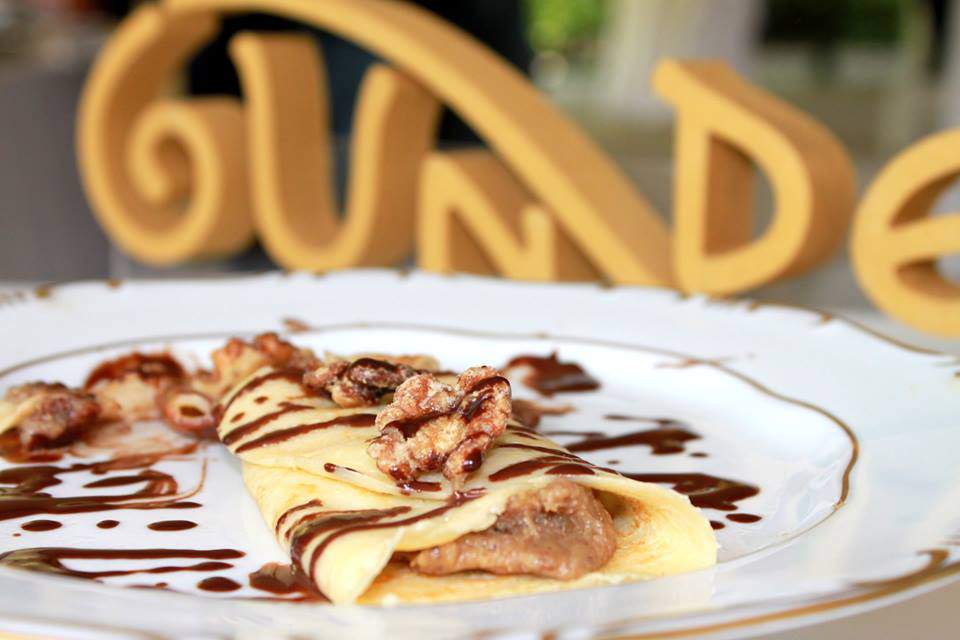
All of these words are used in English only in case of “proper nouns” in order to name Dobos cake, Tokay, and so forth. They aren’t English words at all! Are you kidding while saying that we use the word “palacsinta” when we speak about pancakes or crepes, or the word “halászlé” for a fish soup?! I have never heard it for almost 40 years. So such interpretation is a kind of personal imagination and huge exaggeration.
Yes, forints is a well known word in Britain. So well known, indeed, that there are dozens of questions on Tripadvisor asking ‘what is the currency of Hungary?’.