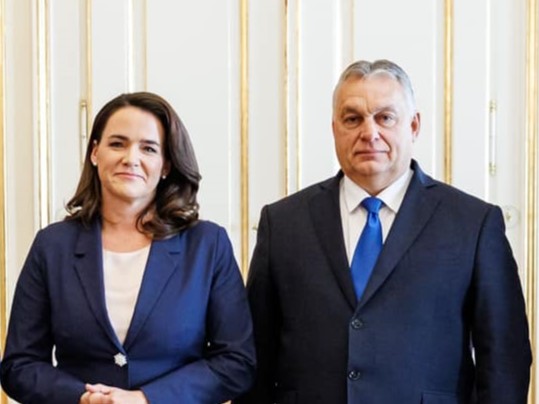
PM Orbán talked frankly about the clemency scandal almost resulting in his downfall

Change language:
Prime Minister Viktor Orbán said he expected for there to be “more pro-peace and fewer pro-war supporters” in the European Parliament after the upcoming election.
‘Pro peace’ and ‘against peace’ blocks?
In an interview published by the daily Blikk online on Thursday, the prime minister said “wrangling between the pro-war and pro-peace camps” was present both in Europe and in the US, adding that in Europe “we are not well off … there are twenty plus member states in the European Union that are distinctly pro-war … there is one member, Hungary, which is firmly pro-peace and there is Slovakia, which has just manoeuvred itself from the pro-war position to being pro-peace by way of its new government.”
The European election will involve more than the distribution of mandates in the European Parliament, it will also be a national election in every country, the prime minister said, adding that governments indeed had a responsibility towards their citizens.
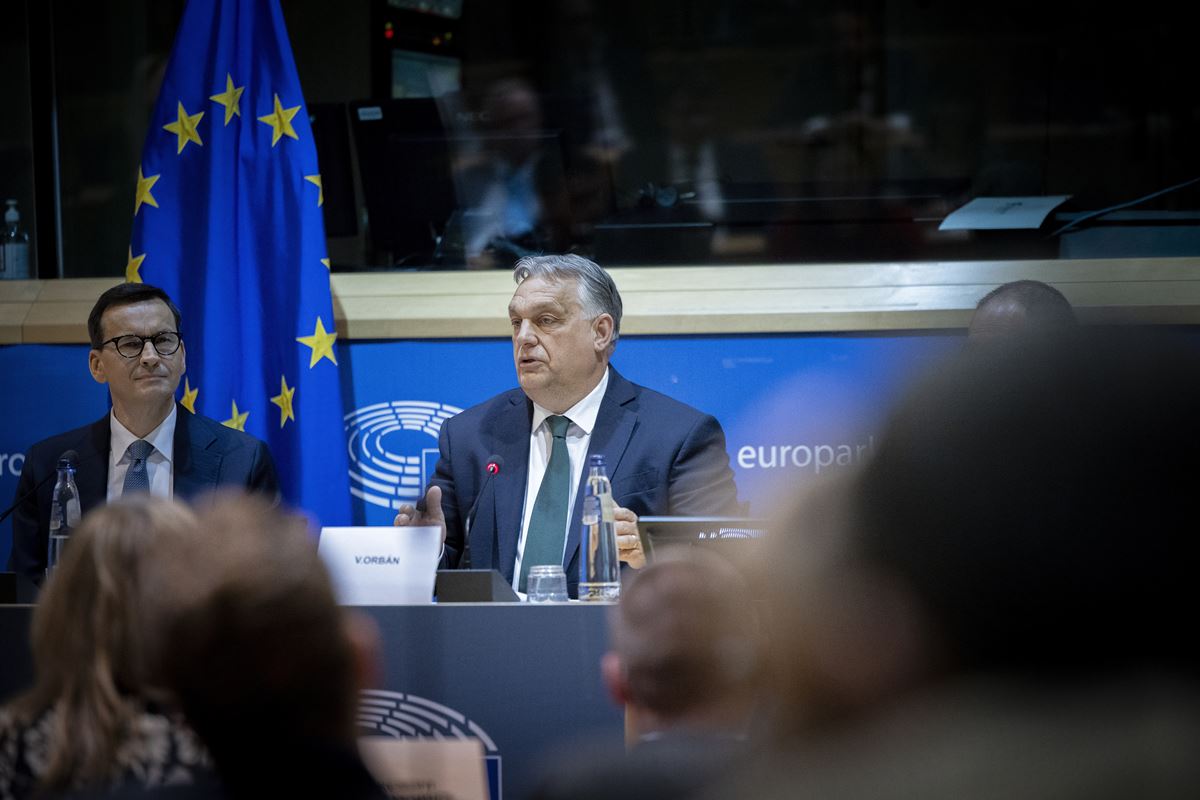
He also said he expected prime ministers’ attitude about the war to change everywhere because despite all their weaknesses, European policies were basically democratic policies, and one “cannot go against the stream without consequences for too long”. “The prime ministers will have to adapt to public opinion,” he added.
US presidential election will decide
“I expect a European Parliament where pro-peace politicians are in majority,” he said, adding that he also expected power relations to change in the European Council, with more pro-peace supporters and fewer pro-war supporters.
The next level of the war, which would involve giving Ukraine technology that can reach Russia, with western European or even NATO soldiers entering Russian territory, would be considered too much even by the majority of the so-far pro-war prime ministers, he said. It is a process that requires skilful manoeuvering, and it will be influenced by both the EP election and the US presidential election in November, he added.
“These two elections together could result in a change that could take the western world, the western pro-war politics, to a pro-peace stance, and to peace,” he said.