Subscribe to our social channels to get the latest news about Hungary!


Marcin Romanowski, the former Polish deputy justice minister, has been granted asylum by Hungary, Gergely Gulyás, the head of the Prime Minister’s Office said in an interview with online news portal Mandiner. He also said that there is a rule of law in Poland.
Gergely Gulyás, the head of the Prime Minister’s Office, confirmed the news about Marcin Romanowski’s political asylum in Hungary to Mandiner. Former Polish Deputy Justice Minister Marcin Romanowski has reportedly sought and been granted political asylum in Hungary. According to Hungarian and EU law, the asylum was granted after Romanowski faced what has been described as a breach of due process in Poland.
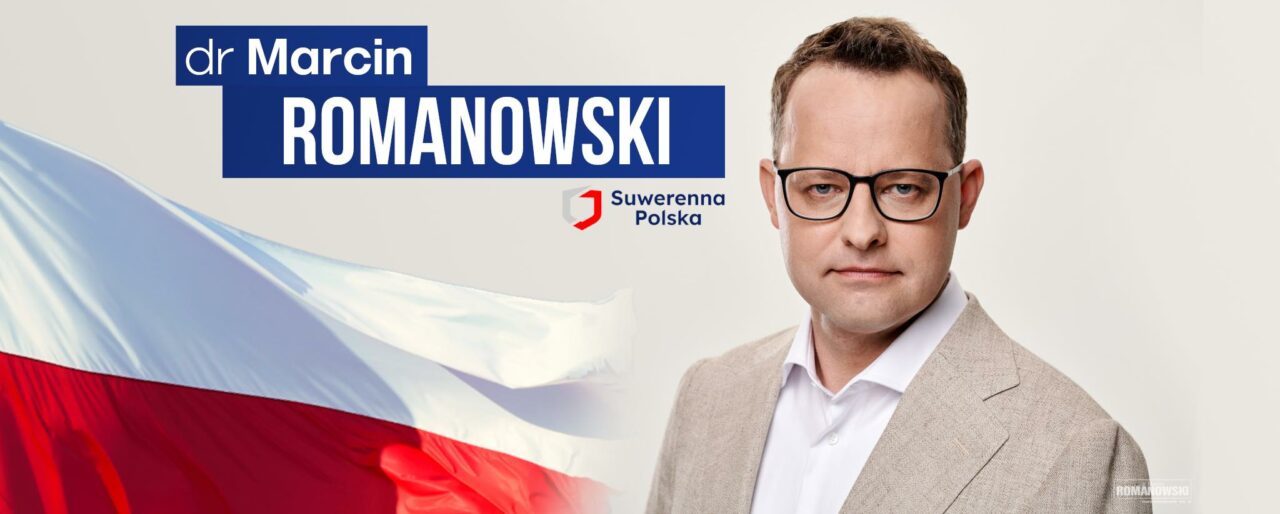
Gulyás said there had been proof of the lack of fair procedure in the case of the former deputy justice minister who was arrested this summer despite being protected by immunity in his capacity as a member of the Parliamentary Assembly of the Council of Europe. Gulyás said Romanowski was released only after an official complaint had been submitted by the assembly’s president to Polish authorities. A court in Poland confirmed that the arrest had violated laws.
While Marcin Romanowski faces allegations of serious crimes involving damage to state assets in Poland, his arrest occurred despite his immunity. According to Gulyás, the Hungarian state, which granted him political asylum, cannot assess the validity of the charges or access details of the Polish proceedings. He further explained that political asylum is awarded when there is significant doubt about the impartiality and independence of judicial processes in the applicant’s home country. In this instance, concerns about political influence in Poland’s legal system, particularly in Romanowski’s case, were deemed sufficient to justify the asylum, the Hungarian politician explained to Mandiner.
Gergely Gulyás underlined that Hungary did not interfere in other countries’ domestic politics but it was necessary to state that a constitutional crisis had developed in Poland since last year’s elections as a result of the Tusk government’s actions. He added that for instance, the Polish government failed to carry out the decisions of the Polish constitutional court, and “criminal law was being used as a tool against political rivals”.
The decision to grant asylum to Marcin Romanowski is unlikely to ease tensions between Hungary and Poland, but Hungarian authorities have maintained a consistent stance on asylum since 2015. They argue that individuals fleeing war or political persecution, such as former Macedonian Prime Minister Nikola Gruevski, should be granted refugee status regardless of any political disputes. Hungary emphasises the distinction between migration and the protection of genuine refugees.
Read also:


Sigh. So much for all the chatter regarding a Visegrad 4 revival. With Poland always bringing the clout. Our Politicians apparently see better opportunities elsewhere. Russia, Belarus, the far away USA under the Old Donald …
Polish people have a short memory they forgot the massacre of a 100,000 Poles by Ukrainians. Tusk just visited Ukraine and had a love fest with Zelensky; both are EU puppets.
There is no reason for Hungary to reestablish relationship with a country that changes its policies as often as the wind changes directions.
The election of Tusk signified the diminishing of sovereignty of Poland.
@mariavontheresa – I LOVE history – the more factual and data, the better!
Just a few snippets … As to your point, I do think people remember ?
“The Holodomor, also known as the Ukrainian Famine, was a human-made famine in Soviet Ukraine from 1932 to 1933 that killed millions of Ukrainians”
https://en.wikipedia.org/wiki/Holodomor
“Katyn Massacre, mass execution of Polish military officers by the Soviet Union during World War II”
https://www.britannica.com/event/Katyn-Massacre
“The NKVD prisoner massacres were a series of mass executions of political prisoners carried out by the NKVD, the People’s Commissariat for Internal Affairs of the Soviet Union, across Eastern Europe, primarily in Poland, Ukraine, the Baltic states and Bessarabia”
https://en.wikipedia.org/wiki/NKVD_prisoner_massacres
“Meanwhile, the Red Army, which had been detained during the first days of the insurrection by a German assault, occupied a position at Praga, a suburb across the Vistula River from Warsaw, and remained idle. In addition, the Soviet government refused to allow the western Allies to use Soviet air bases to airlift supplies to the beleaguered Poles.”
https://www.britannica.com/event/Warsaw-Uprising
“It has been estimated that between 1946 and 1953 deportations and guerrilla deaths reached 95,000 in Estonia, 125,000 in Latvia, and 310,000 in Lithuania. After 1953 many of the surviving deportees were allowed to return, though in many cases not to their former homes.”
https://www.britannica.com/place/Baltic-states/Soviet-republics
And then, there is the matter of abduction of Ukrainian children to Russia:
https://www.aljazeera.com/news/2024/2/8/un-committee-urges-russia-to-end-forcible-transfer-of-ukrainian-children
I think everyone knows what they are fighting against – or arming themselves for, to make sure history does not repeat itself? Thanks for flagging!
Norbert, I did not deny that atrocities were done against Ukrainians. However, Ukrainians did kill 100,000 Poles because of their ethnicity. That is called genocide. The Polish people accept the murder of their family members and compatriots every time they give support to Ukraine. Poland should have remained neutral.