


Horrible sight: Budapest’s dreaded Hunger Rock emerges for the second time in a year

Change language:
This is the first year the dreaded Hunger Rock has appeared twice in the Danube riverbed.
On 2 July, a seemingly harmless but deeply troubling “old acquaintance” resurfaced in Budapest: the Hunger Rock once again emerged from the Danube. This sandstone formation is not just a natural curiosity—it serves as a stark warning about the city’s condition. At dawn, the water level of the Danube dropped to 84 cm, and by the afternoon, it had dipped further to 79 cm, making the rock—visible only during droughts—reappear.
The Hunger Rock that haunts river pilots
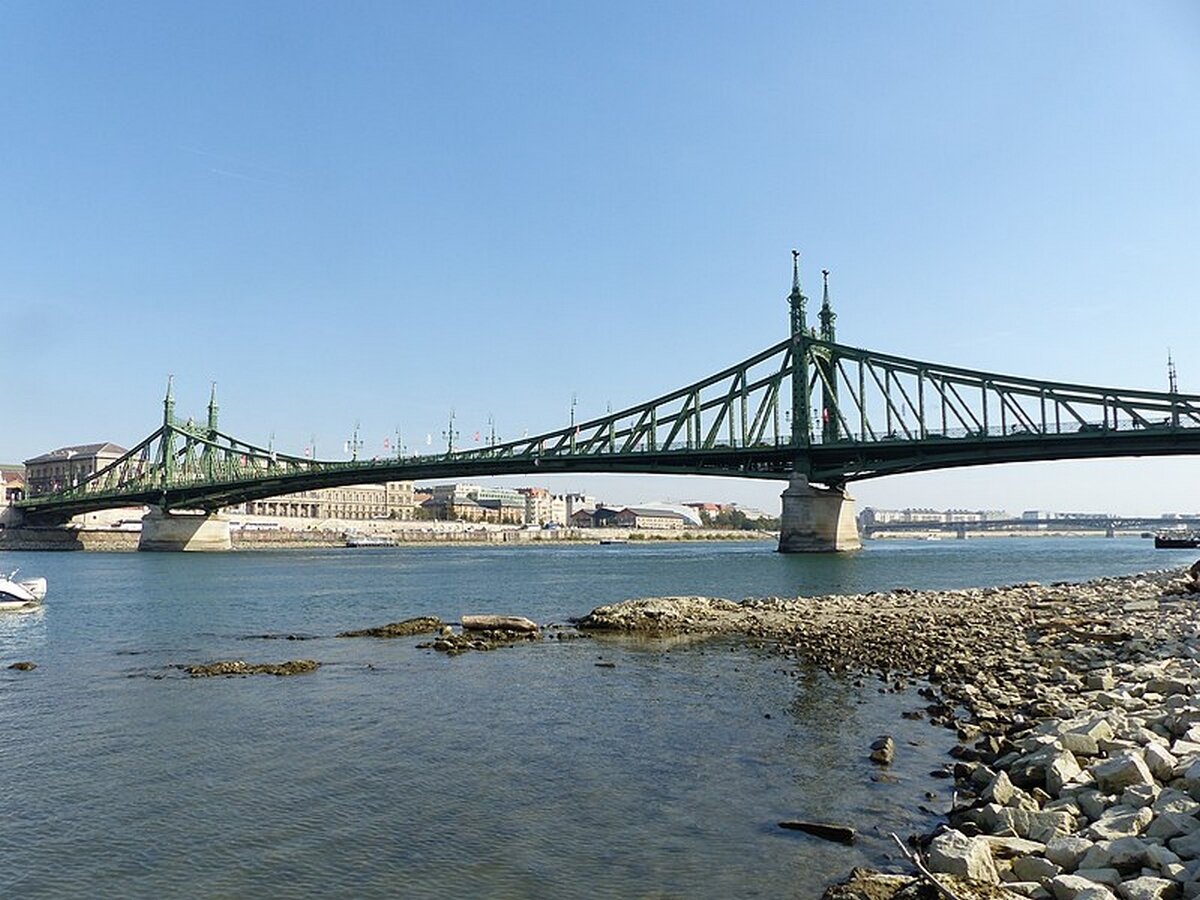
The Hunger Rock, also known as the Famine Stone, is a (usually submerged) sandstone formation in the riverbed of the Danube beneath Gellért Hill. Known as the lowest point in the capital, locals jokingly call it “Hungary’s lowest mountain peak.” The rock’s elevation is 95.76 meters above sea level. It earned its name because it only becomes visible during periods of extreme low water: times of “famine.”
The formation lies in Budapest’s 11th District, in the river about 20–30 meters from the Raoul Wallenberg riverside and roughly 5 meters from the shoreline, approximately 60–70 meters north of Liberty Bridge. It emerges above the surface when the Danube’s water level falls below roughly 95 cm, as measured by the city’s official gauge.
According to one legend, the rock got its name because during droughts, river mills stopped turning due to the low water level, resulting in a flour shortage. Another story references boatmen who, in times of low water, were unable to operate their ferries at this ancient crossing point.
Shipping under threat
The Danube riverfront has always been a vital part of Budapest’s cultural and recreational life. River cruises, waterfront festivals, and evening light shows—all of these are at risk if water levels continue to fall, reports BudAPPest.
Navigable routes along the river are narrowing, hotel ships face increasing challenges in manoeuvring, and suspending several sightseeing cruise lines may become unavoidable. Parts of the riverbank are already exposed and dry, degrading the tourist experience and discouraging visitors.