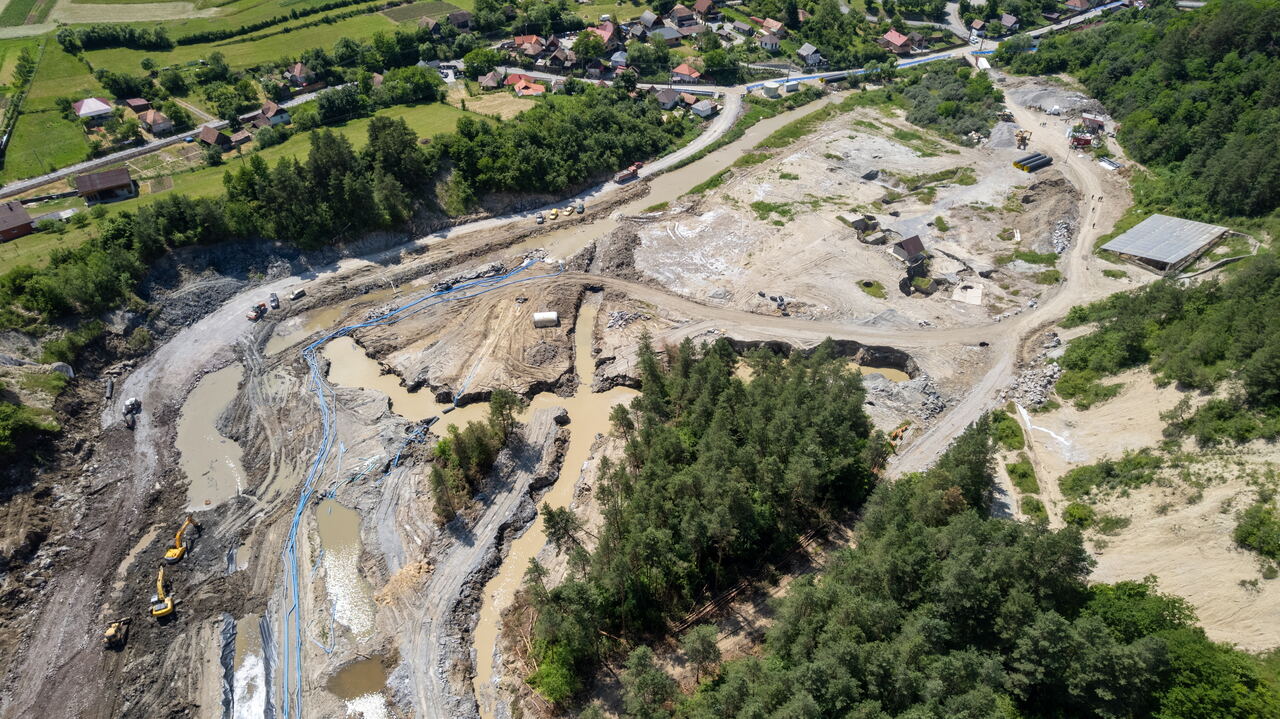
The end: Devastating flood shuts down iconic Praid salt mine forever

Change language:
The Praid salt mine was more than just a tourist attraction in the heart of Székely Land—it was a vital economic and cultural hub. But a natural disaster in May has forever changed that. Torrential rains caused the Korond stream to swell, breaching the mine’s protective geofabric and flooding the underground chambers. Since then, the mine has been completely closed.
The extent of the damage is staggering: an estimated seven million cubic meters of water flooded the mine’s tunnels—approximately the equivalent of fifteen years of salt production dissolved. According to those affected, the Praid salt mine, as we once knew it, will never reopen.
Economic collapse: Tourism and local community devastated
Index reports that the mine’s tourism sector generated roughly €10 million in annual revenue, much of which supported the local population. Around 2,000 guesthouses operated in the village, mostly within family homes. Now, these accommodations stand empty, bringing in no income.
The closure isn’t just an economic disaster—it has dealt deep wounds to the community. Locals had built long-term plans around the mine, and now they’re grappling with the harsh reality that neither production nor visitor returns are guaranteed.
Lack of accountability
One pressing question remains: who is responsible for the disaster? During a panel discussion at the Bálványos Summer Free University, county councilor László Geréb and Zoltán Zakariás, president of the Hungarian Alliance of Transylvania, both pointed to serious state-level negligence. Geréb argued the mine’s fate lies with the state, which failed its obligation to protect this valuable asset.
He even raised suspicions of mismanagement, noting that the state was responsible for operating the sal tmine. Zakariás added that not only the mining company, but also the water management authority—and indeed the entire state—were at fault. While he acknowledged the local community may have been complacent, he emphasized they are not to blame, trusting instead that experts and decision-makers would fulfill their duties.
Geréb noted that residents kept quiet about longstanding issues—not out of bad faith, but out of fear. He explained that when smaller leakages were disclosed in the past, tourism took a hit, so the community chose not to jeopardize their livelihoods.
Their silence stemmed from hope that those in charge would address the problems. Mine workers, who witnessed the situation firsthand, were reportedly prohibited by the mining company from speaking out, leaving many crucial details hidden from the public for far too long.