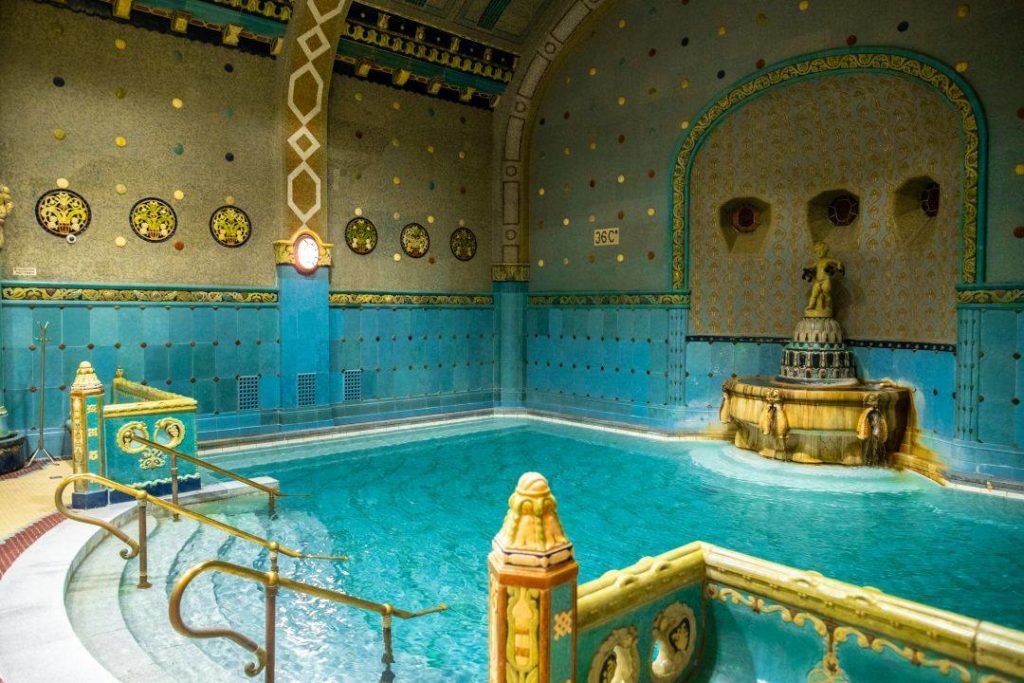
Budapest’s iconic thermal baths to sadly close for years due to massive renovation

Change language:
One of Budapest’s world-famous thermal baths, the Gellért, will close their doors on 1 October 2025 for a multi-year renovation project. Anyone wishing to enjoy the unique ambience of the Art Nouveau interiors and thermal pools has only a few weeks left to do so.
History of Gellért Thermal Bath
The Gellért Thermal Bath in Budapest has a rich history stretching back centuries. The “miraculous” thermal springs at the site were first mentioned in the 15th century and were highly prized by the Turks during their occupation in the 16th and 17th centuries. At that time, the bath was known as Sárosfürdő (Mud Bath) because of the fine silt from the spring waters that settled at the bottom of the pools.
The present bath complex, built in the Art Nouveau (Secession) style, was constructed between 1912 and 1918 as part of the Thermal Hotel Gellért, Budapest’s first luxury hotel equipped with state-of-the-art amenities of the early 20th century. Both opened in 1918. The bath expanded in 1927 with the addition of the world’s first wave pool and again in 1934 with the introduction of an effervescent bath.
In its early years, the Gellért Thermal Bath attracted an elite clientele and was considered one of Europe’s most modern and luxurious spa facilities. Remarkably, it remained in operation during the Second World War, despite suffering severe damage. Over time, it was restored and renovated, retaining its historic and architectural grandeur.
Today, the Gellért Thermal Baths are celebrated for their artistic beauty, featuring Zsolnay ceramic tiles, stained glass windows, and sculptures. They remain a major cultural and tourist attraction, symbolising Budapest’s centuries-old spa tradition. Situated at the foot of Gellért Hill, the bath complex stands as an iconic landmark embodying Hungary’s architectural and cultural heritage.
Long-planned thermal baths renovation finally set to begin
The Gellért Thermal Bath last underwent significant modernisation in the 1970s. Plans for a full-scale reconstruction of the thermal baths were first announced in 2021, when the Indotek Group acquired the adjacent hotel. The baths were initially expected to close in 2022, but delays in ownership changes and planning pushed the schedule back.
Since then, further postponements followed. However, the worsening condition of the facilities has now made the renovations impossible to delay any longer.
Experts have deemed the shared mechanical systems of the bath and hotel a serious safety risk.