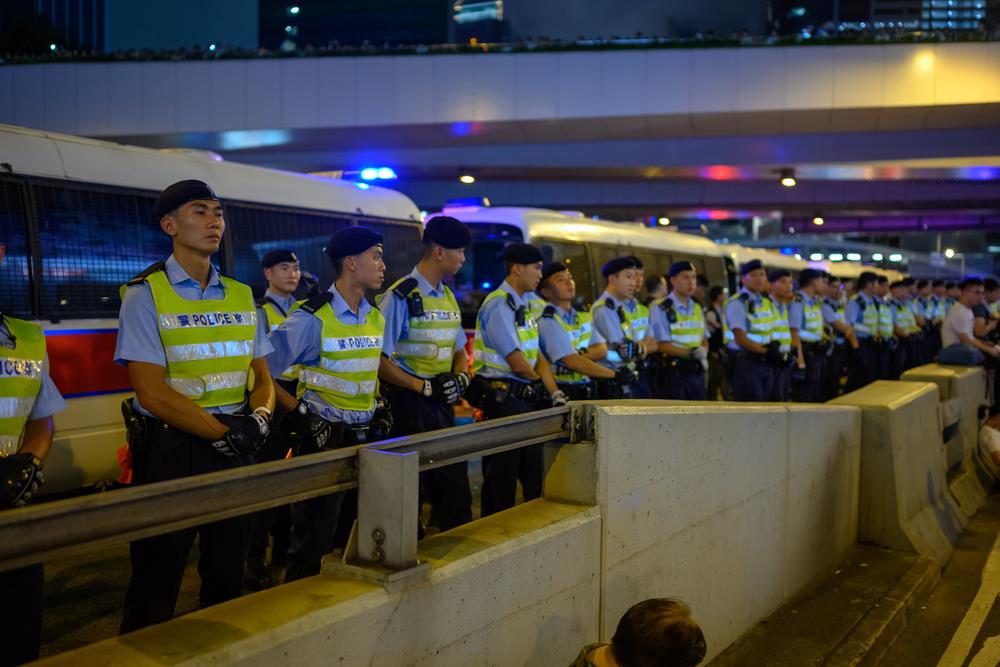
Chinese police patrolling Budapest? The shocking fate of the notorious 8th District illegal police station

Change language:
Austrian daily Die Presse visited Budapest to investigate what became of the Chinese police stations discovered in 2022 and the 2024 Sino-Hungarian agreement on joint policing. The findings were startling. Authorities in Hungary are aware of slightly more than 18,000 Chinese citizens living in the country, the vast majority of them residing in the capital.
Chinese police officers in Hungary
The original idea behind the cooperation was likely to assist the growing Chinese community in their daily lives and with public safety, with Chinese officers supporting their Hungarian counterparts, possibly as translators. The agreement between China’s Ministry of Public Security and Hungary’s Interior Ministry, led by Sándor Pintér, was signed in 2024.
However, it sparked controversy, with many fearing it would significantly increase the Chinese Communist Party’s influence in Hungary.

According to HVG, the Interior Ministry stated earlier this year that no Chinese police officers had entered Hungary so far, meaning that the cooperation has not actually begun. The statement did not provide any details on the reasons.
Two illegal Chinese police stations in Budapest
The non-profit Safeguard Defenders revealed in a 2022 investigation that two illegal Chinese police stations were already operating in Budapest at the time. One was located on Golgota Street in District VIII, the other in Kőbánya, a district in eastern Budapest.
Media reports at the time indicated that the station on Golgota Street was labelled as the Budapest Help Centre, or Service Station, of the Qingtian Overseas Police Station. Chinese residents in Hungary reportedly turned to these offices, for example, to renew their driver’s licenses.
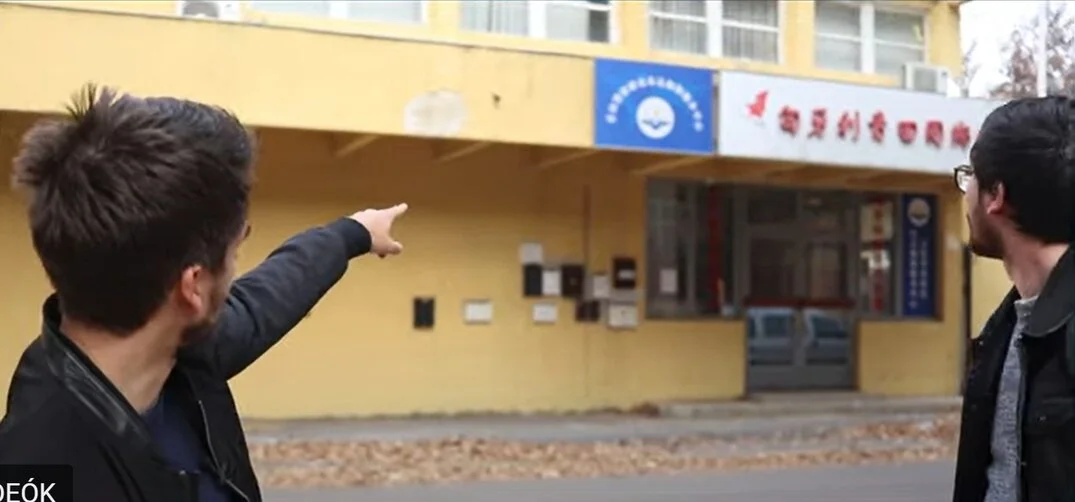
However, when opposition MP Márton Tompos of the Momentum Movement visited the Golgota Street location to ask about its operations, he found the building empty. The same happened at 37 Cserkesz Street in Kőbánya, though there were no visible signs or labels posted there.