


Beyond ‘Brussels’: Belgian Ambassador Jeroen Vergeylen on EU unity, trade & culture in Hungary – EXCLUSIVE INTERVIEW

Change language:
Today, July 21, Belgium’s national holiday, H.E. Jeroen Vergeylen, Ambassador of Belgium to Hungary, reflects on the values rooted in his country’s foundation, the evolving bilateral ties with Hungary, and Belgium’s commitment to shared European goals. In an exclusive interview, he shares insights into diplomacy beyond the politics of “Brussels,” opportunities for deeper cooperation, and why Belgian investors, artists, and chocolate continue to leave their mark in Hungary.
Daily News Hungary: The Belgian National Day is on 21 July. What exactly are the Belgians celebrating on this day?
H.E. Jeroen Vergeylen: We commemorate the oath taking of the first King of the Belgians, Leopold I, on 21 July 1831, the year following our independence in 1830. The first King’s oath included a pledge to respect the Constitution , an act that made him one of the first constitutional monarchs, subjected to the people represented in parliament, quite a modern approach in those days.
On top of that, the Belgian constitution of 1830 was one of the most liberal ones in Europe at the time. It contained fundamental values like the freedom of the press, of religion and of education. That is why Belgium attracted many modern thinkers and freedom fighters, including, for example, Lajos Kossuth, who lived in Brussels for a while before travelling on to the United States.
Kossuth’s mother, who had fled Hungary with him, stayed in Brussels, where you can still visit her tomb. Since those early days, Belgium has been an open-minded country, characterized by liberal values, free enterprise, individual rights, multilingualism, cultural diversity and high-quality life for everyone. Those are the values we celebrate on 21 July.
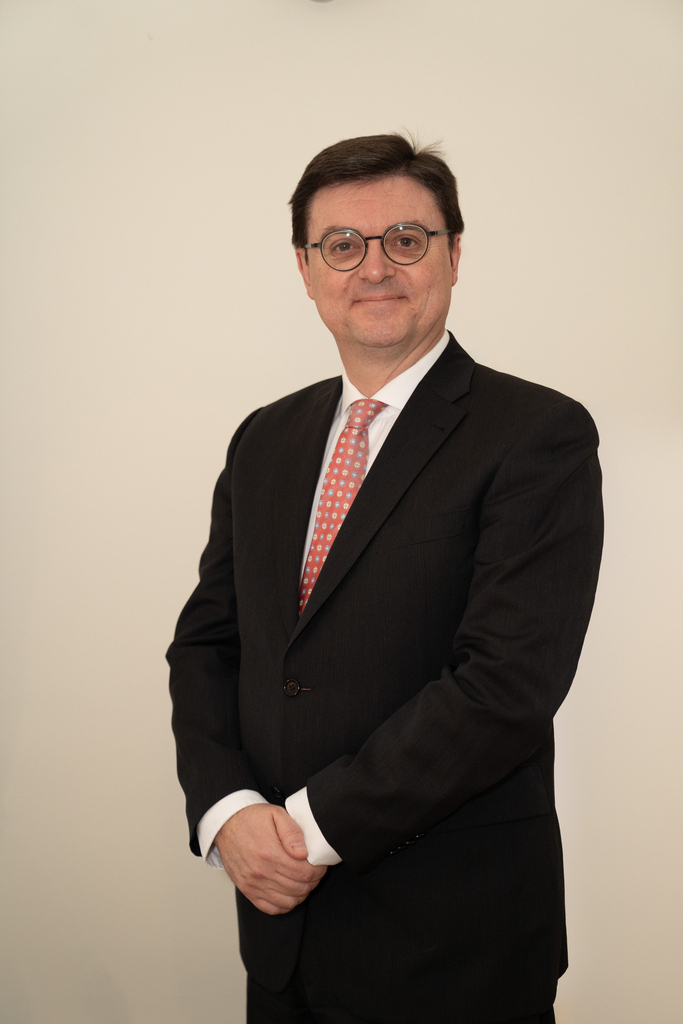
DNH: Brussels, as the EU’s stronghold, often has a negative portrayal in the Hungarian Government’s communications. While the message has been simplified for the electorate, Belgium itself is seldom the target. How would you describe the current diplomatic relations between Belgium and Hungary? What are the key areas of cooperation, and where do you see room for improvement?
Vergeylen: We understand that criticism of “Brussels” is targeted at the EU institutions and never at our Belgian capital as such. We kind of got used to it. I guess it’s the price we pay for hosting the institutions. But I must admit that it does hurt a little – Brussels still is the name of our Belgian national capital, after all.
The strictly bilateral relations between Belgium and Hungary, however, are strong and constructive, grounded in our shared EU and NATO membership. As founding member and host of both the EU and NATO, Belgium will always defend these organisations. It does not mean that we are never critical, it means that we value them greatly and will always strive to protect them and to cooperate to make them better and stronger.
While there are clear differences in viewpoints between the Belgian and Hungarian governments on certain EU principles and policies, we always engage in an open and respectful dialogue to ensure a unified approach to common challenges, based on shared interests. We collaborate closely on a range of EU issues, particularly in areas such as the competitiveness agenda, which has become our shared priority.
Belgium and Hungary are similar in many ways. We are two medium-sized EU member states, with open economies that rely heavily on free trade, open markets, and foreign direct investments. We are both centrally located in our respective parts of Europe and therefore key countries for logistic connectivity.
We are both characterized by a strong SME fabric that have all to gain from innovation. Our economic ties are robust, with Belgium being one of Hungary’s key trading partners within the EU. There is room for more growth in sectors such as logistics, defence, pharma and hi-tech applications.
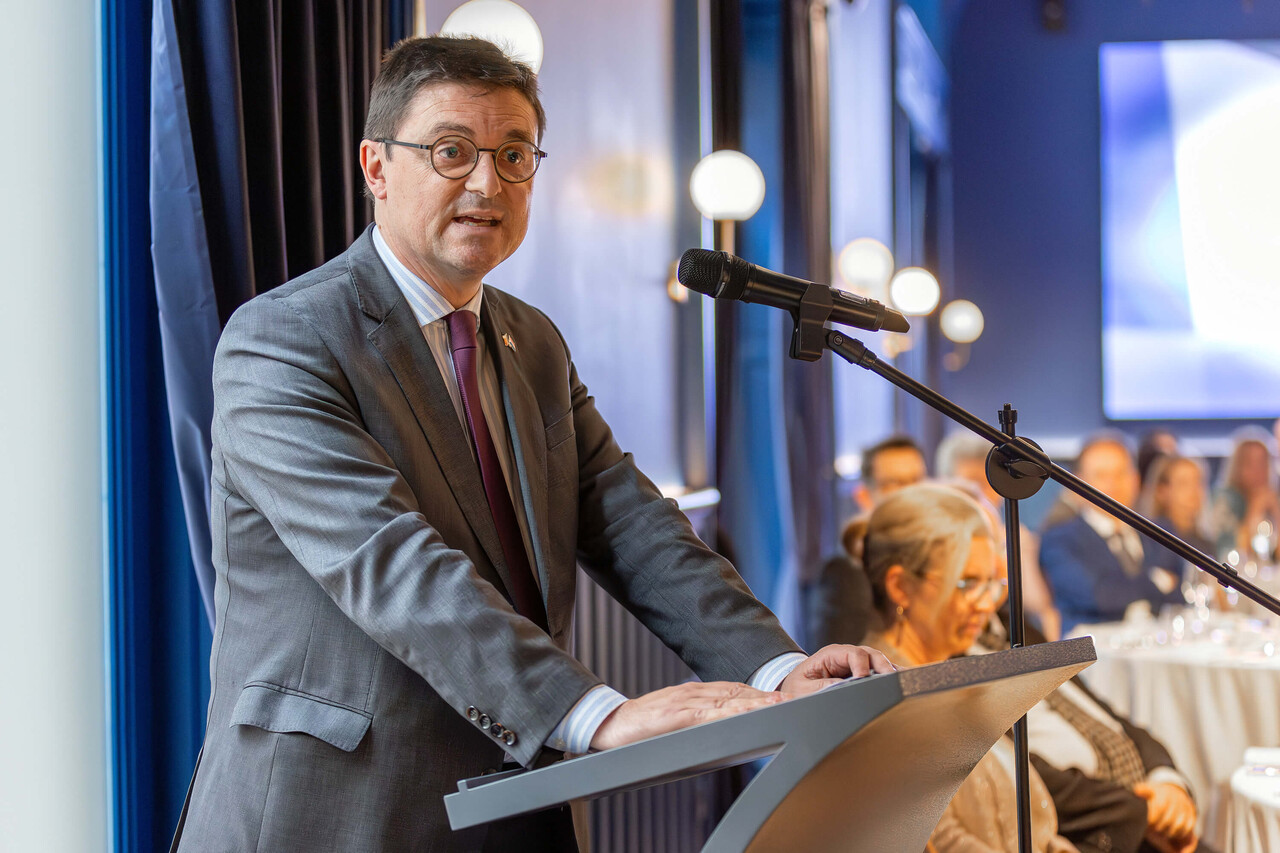
DNH: As Belgium’s ambassador to Hungary, what are the most important messages you would like to convey to Hungarian society?
Vergeylen: I would like to convey a message of mutual respect and highlight the importance of collaboration. Belgium and Hungary share a deep European bond. We understand from our history what it is to be surrounded by great powers and to be the battlefield of Europe.
It is crucial that we continue to work together to strengthen the European Union, which is the best guarantee to preserve economic growth, and to address global challenges like security, including economic security, climate change, migration and social protection. Additionally, I would emphasize the value of cultural exchange and people-to-people connections, which are key to understanding each other’s traditions and to forging lasting friendships.
Belgium and Hungary have a centuries’ long historic relationship and the contributions of the Belgian community in Hungary, as well as the Hungarian community in Belgium, are immense. We should use that solid foundation to build our common future.
DNH: In recent years, migration has been a central topic in Europe. How do you see Belgium’s role in this issue, and what is your assessment of Hungary’s approach to migration policy?
Vergeylen: Migration remains a central topic in Europe, and Belgium views it as both a matter of opportunity and shared responsibility. Belgium aims for a proactive migration policy that does not harm countries of origin, by fostering sustainable, transparent, and mutually beneficial partnerships.
A significant part of Belgian society has roots in immigration. Immigration has had a positive effect for Belgian society, one that can be seen in our politics and cultural life, but also in economic terms. If Belgium has one of the highest income per capita ratios in Europe thanks to our high productivity, it is certainly partially thanks to the contribution that various migration waves, including from Hungary, had on our prosperity.
At the same time, Belgium is not blind to negative effects of uncontrolled migration on society as a whole, but also on migrants themselves, who are too often exposed to life-threatening risks by illegal practices and human smugglers. Belgium is committed to stopping illegal and abusive immigration, to achieving more effective returns, in compliance with international law, while ensuring that legal migration, for work or study, continues to contribute to our economic and social development.
Belgium will also continue to advocate for the implementation of the European Pact on Asylum and Migration, which was approved last year during the Belgian presidency of the Council of the EU, but more work is necessary.
Belgium believes that open dialogue and cooperation at the EU level are essential to finding sustainable and humane solutions to migration, ensuring that the challenges are addressed collectively, with respect for human dignity and security for all.
DNH: What is the Belgian government’s perspective on the current geopolitical landscape, particularly with regard to the Russia-Ukraine war and the Israel-Palestine conflict, which has now escalated into a broader Middle Eastern crisis?
Vergeylen: The Belgian government views the current geopolitical landscape with great concern, particularly in light of the Russia-Ukraine war and the ongoing Israel-Palestine conflict. To effectively tackle these challenges, it is crucial to maintain a strong and united EU approach, ensuring coordinated action and resilience in addressing these crises. Unity is our strength; division is our weakness, which is why our adversaries are always trying to sow division among us. We should not fall into that trap.
Belgium strongly condemns Russia’s unprovoked and illegal aggression against Ukraine and is committed to supporting Ukraine’s sovereignty and territorial integrity. The war in Ukraine is also about Belgium’s, the EU’s and every other member state’s security. Our position is that the war must be stopped. Russia could do that immediately if it had the will to do so. If it does not, Ukraine will need to continue to defend itself and we will need to continue to offer our help in any way we can.
At the same time, we must strive for a just and lasting peace. In the meantime, we must support Ukraine with all our might and the best way to do that is by working together at the EU level and with our other partners and allies. We also believe that Ukraine is entitled to become a member of the EU if and when all conditions are met. There can be no shortcuts, but also, no unjustified delays.