
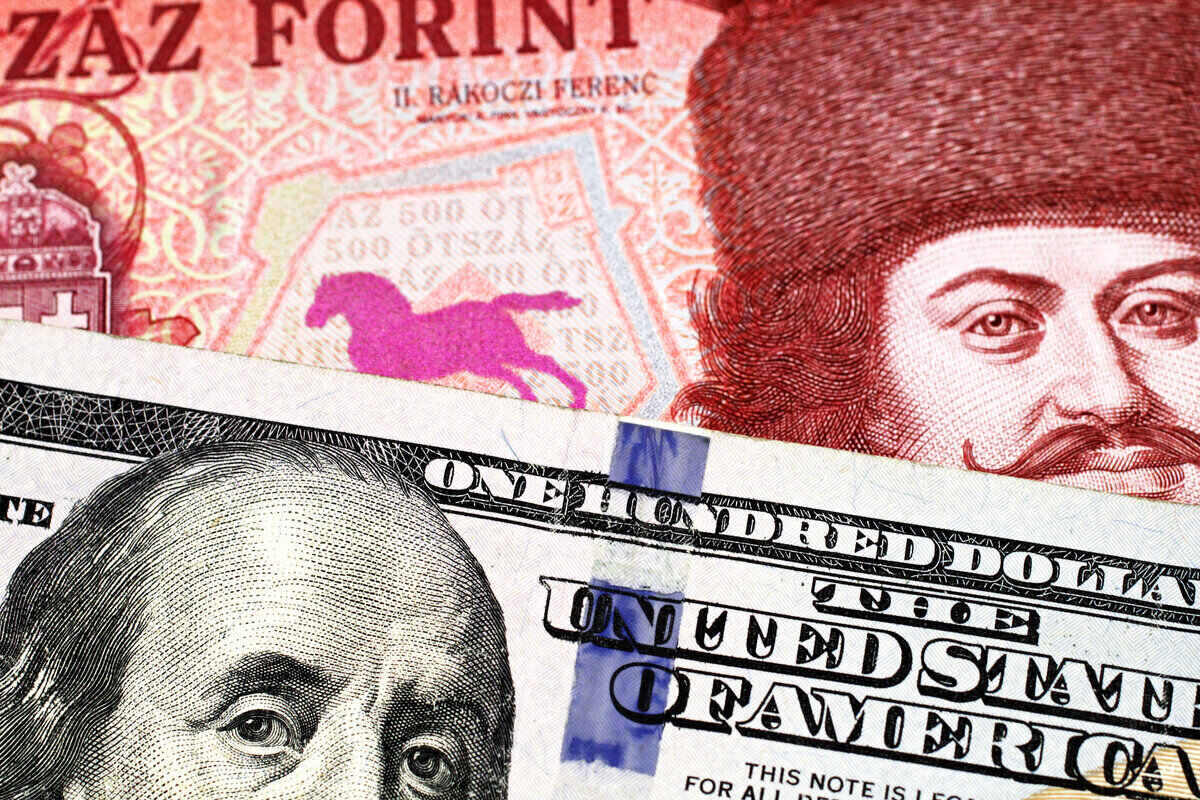
The Hungarian forint remained relatively stable against the euro on Tuesday but weakened against the US dollar as the American currency continued to strengthen on international markets.
US dollar on a hot streak
Rising energy prices also weighed on the euro, while investors awaited key interest rate decisions from the US Federal Reserve and the European Central Bank. Late on Tuesday morning, the euro was trading at around HUF 367, broadly in line with Monday’s closing level. The forint managed a modest recovery during the morning, briefly strengthening towards HUF 366.7.
The picture was less favourable against the dollar. After starting the day at around HUF 328.6, the American currency climbed to approximately HUF 329. By early evening, the forint had recovered some ground against both currencies, with the euro trading at around HUF 366.7 and the dollar at approximately HUF 329.3. As Portfolio claims, the last time the Hungarian currency was this weak against the dollar was under the Orbán government.
Strong dollar puts pressure on European currencies
The dollar’s international rally was the main factor behind the forint’s weaker performance against the American currency. The US dollar index, which measures the greenback against a basket of major currencies, continued to rise following gains on Monday. The euro also lost ground against the dollar, falling by around 0.3 per cent to approximately USD 1.1138. Elevated energy prices may have contributed to the decline.
European natural gas prices approached EUR 100 per megawatt-hour at the start of the week, while Brent crude oil traded close to USD 120 a barrel. As the European Union relies heavily on imported energy, persistently high oil and gas prices increase import costs and can put pressure on the single currency.
Stay up-to-date with Hungary Weekly Briefing: subscribe on Substack!
Investors await central bank decisions
Currency markets could see renewed volatility this week as traders prepare for the Federal Reserve’s interest rate decision on Wednesday and the European Central Bank’s announcement on Thursday. Ahead of major monetary policy decisions, trading activity can ease as investors adjust their positions and wait for signals about the future direction of interest rates. The forint’s relatively narrow trading range on Tuesday may reflect this cautious mood.
Hungarian economic developments could also influence the currency. The government’s forthcoming 2027 budget proposal and the release of preliminary third-quarter GDP figures on Friday are among the domestic events investors will be watching.
In case you missed it: Hungary shuts down bank: What happens to customers’ money?
Fitch says euro adoption remains years away
Meanwhile, Fitch Ratings has suggested that Hungary could introduce the euro no earlier than 2032, provided it makes sustained progress in reducing its budget deficit and meets the necessary conditions. According to the ratings agency, Hungary would need to join the EU’s Exchange Rate Mechanism II in 2029, a key step towards adopting the common currency. Achieving the required fiscal targets and bringing inflation under control remain significant challenges.
Euro adoption could improve Hungary’s sovereign credit standing by removing exchange rate risk and reducing financing costs, Fitch argues. However, substantial fiscal adjustment and greater macroeconomic stability would be needed first. For now, the forint remains caught between a strengthening dollar and a euro facing economic headwinds, with central bank decisions likely to shape its next moves.
Read also: Hungary’s economy could boom – Experts predict euro falling to HUF 350



