Subscribe to our social channels to get the latest news about Hungary!


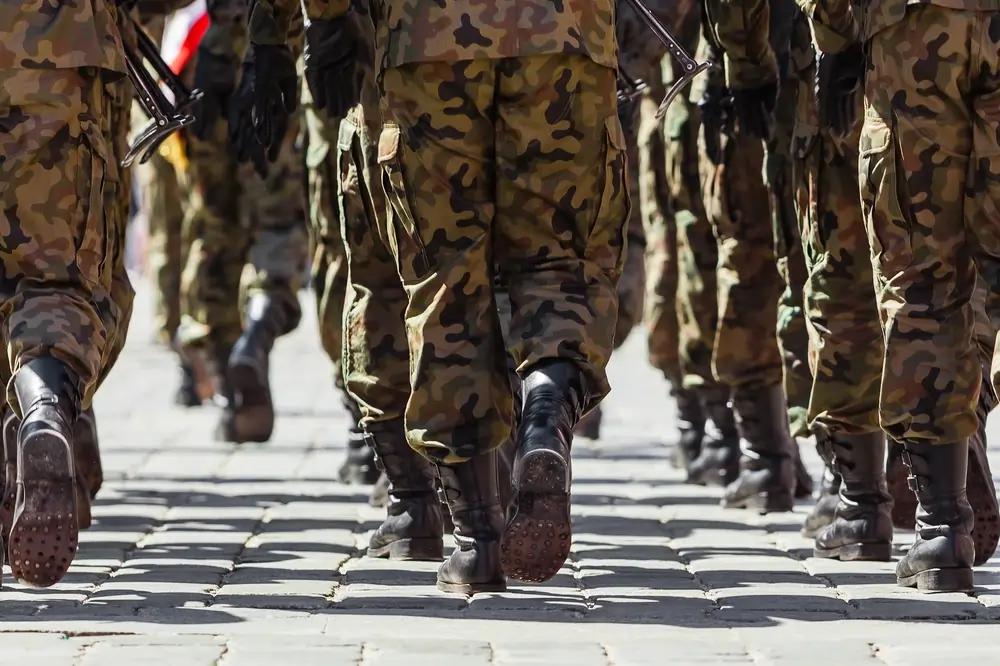
On Monday, the governments of the European Union formally adopted the European Defence Industry Programme (EDIP), aimed at joint defence development, procurement, and technological cooperation among member states.
The European Council’s approval marks the end of the legislative process, allowing the programme to be implemented. Between 2025 and 2027, EDIP will provide €1.5 billion in funding, including €300 million dedicated to modernising Ukraine’s defence industry and integrating it into the European ecosystem.
With the defence industry programme, Europe seeks to strengthen its own defence capabilities and reduce long-term dependence on external arms suppliers. However, the Hungarian government approached the programme with reservations and abstained from the vote, making it the sole country not to endorse it.
Since the outbreak of the war, it has become clear that Europe’s peacetime defence industry cannot rapidly scale up to meet the demands of a prolonged conflict. Ammunition and weapons stockpiles are depleting quickly, and industrial capacity can only be expanded gradually.
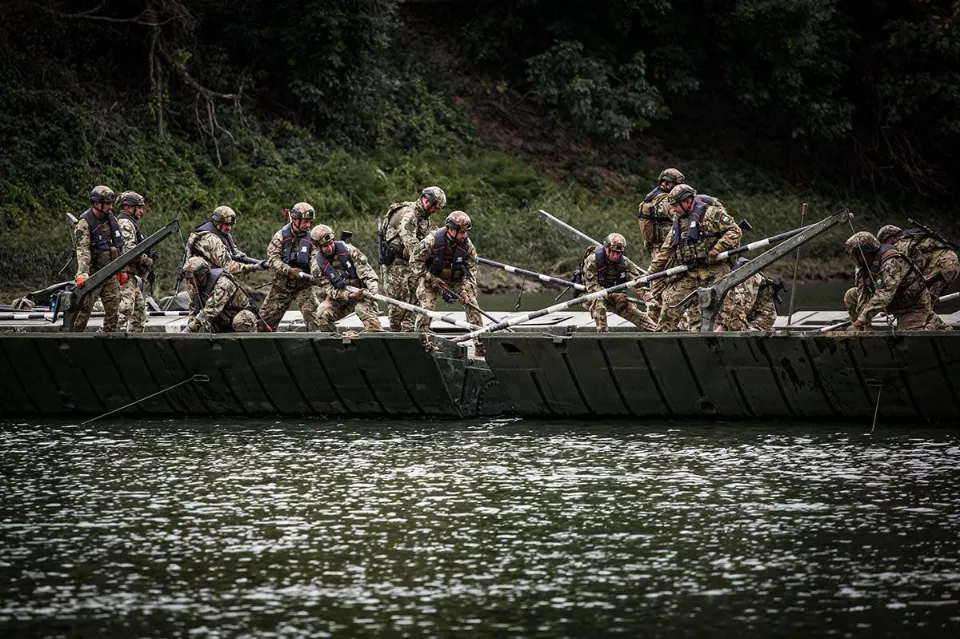
In many cases, EU countries have had to rely on American or other external suppliers. EDIP is designed to address this challenge by boosting European production and reducing vulnerability.
Through these measures, Europe has clearly decided not to remain a dependent purchaser in future conflicts.
Twenty-six member states supported the decision; Hungary alone abstained. While abstention is not a veto and does not block the programme, it signals political distance.

This is notable because the Hungarian government has long been strengthening its domestic defence and military technology industry: the Lynx production line operates in Zalaegerszeg, and a munitions factory is being built in Várpalota. Hungary had previously appeared to aspire to a regional role in security.
Yet now it seems that, while Europe moves into a new phase, Hungary remains on the sidelines.
Hungary’s political caution regarding EDIP was reflected by Prime Minister Viktor Orbán on his Facebook page, where he indicated that the programme could be perceived as a prelude to war, especially in the context of Ukraine’s EU integration.
“Dark clouds are gathering over Europe. Brussels is preparing for war with Russia. (…) The EU accession of a Ukraine at war would immediately oblige member states to participate in the conflict. This means that next year may be the last Hungarian election where we can truly decide on the issue of war and peace.” – wrote Viktor Orbán.
At the same time, Hungary has applied for substantial funding under the EU’s SAFE programme, which could be used for defence investment, arms procurement, and industrial development. The contrast is striking: politically, Hungary abstains from the EU’s joint defence programme, yet financially, it seeks to leverage EU resources to strengthen its domestic defence sector.
The EDIP still needs to be formally implemented through the usual EU legislative procedures, and any blocking minority would require the support of at least four member states, meaning the programme is unlikely to be halted despite Hungary’s abstention.
Featured image: depositphotos.com

 ZH
ZH IT
IT DE
DE HR
HR NL
NL FR
FR JA
JA RO
RO RU
RU ES
ES TR
TR


How can Hungary support European defence when it is a Russian ally? Of course Hungary abstained. Fidesz says the EU is an enemy but can never say that Russia is a threat. If you could be occupied by Russia for 46 years and then take free money from the EU for 21 years it completely destroys your credibility when you say the country that occupied you is your friend and the organization that funded your development is your enemy.
“How can Hungary support European defence when it is a Russian ally?”
That is a good question, Larry, although I would phrase it like this : “How can Hungary support European defence when it is actually a plan to for offence – against Russia … Operation Barbarossa 2.0?
Concerning your questions regarding who is Hungary’s friend and who is not, I would say this to you : The EU has changed a lot.
20 years ago the EU, indeed, The West, seemed to Orban that it would be a good friend to Hungary.
After numerous regime-change operations against Hungary, not to mention the war against Russia, over the last decade, the EU must surely seem like an enemy.
Time changes, and we must make adjustments.
Prime Minister Orban has made those mental adjustments.
hungary has always been free to leave and join russia. wondering why they haven’t done so
Good question, Dear Jose.
I think that Hungary joined NATO and the EU as a reflex-recoil motion to having been occupied by Russia for 45 years.
However, since that move has had very complex ramifications for Hungary, because the EU changed, Orban has tried to ride the fence between Russia and the EU.
He figured out that Hungary, poor and weak, would actually have some leverage this way.
That assumption has been correct, and, consequently, I would say to you that the Orban policy is to try to be on friendly terms with everybody.
‘Tis a kind of Swiss policy, without actually formally declaring neutrality.
Alas, with the EU, the U.S. and, indeed, the entire Western Elite, the only terms they understand or theirs.
So, here we are – Orban riding the fence between hostile parties, this to keep Hungary from being destroyed again.
Merry Xmas!
We are a lot of things – Swiss we are definitely not.
Hungary – “poor and weak” – just like the Soviet Union left us.
The EU has actually leveled us up, big time. If not for the Common Market, free movement of people and goods – we would never have made the gains we did since 2004. No German, US, Korean or Chinese investment. Basta. They make and build to sell to the “Western Elites” – tariff and trade barrier free.
Don’t you celebrate Christmas on January 7th?
Thank you for your interesting comment, Dear Norbert.
According to one of your great historians, Borvendég Zsuzsanna, it was NOT the Soviet Union which left y’all poor, but your leaders, like Kadar, ferreting out money and assets to the offshore accounts of Western Elites – those who, for the sake of decorum, shall go unnamed.
Also, I must mention that having been occupied for 45 years by the Soviets is, or was, a by-product of Horthy not following a policy similar to Orban.
Say what you will about Orban Viktor’s domestic policies, he has the right of it on foreign policy – just as his campaign posters show : ‘Aki Béke Akar Velünk Tart’
Yes, Dear Norbert I kind of suspected that the Hungarians are not the Swiss! However, aspects of Orban’s foreign policy remind me of them.
Yes, I know it has been beneficial to Hungary to be in the EU, but, unfortunately, the cost benefit analysis for nations like Hungary, has changed in recent years.
It is all moot, however, as the current EU is headed for the graveyard – a new one, or new blocs, coming to replace it.
I suspect that the new Europe will be divided into blocs – one a Central Bloc that will be an enlarged version of Visegrad.
Yes, we do celebrate Xmas on Jan 7th, but, also, on Dec 25th, as being White Southerners, we grew up in the Protestant traditions of our people, and, as well, we live in a community where everything is done in December – not January!
We also are Pagans, (Dark-Age Christians) and, as such, we leave our trees and decorations up until late in the Winter.
We just had snow, and, with all the Ladybugs huddling up in the corner of our foyer ceiling, we know a strong Winter is coming.
Oh joy!
Do y’all have Ladybugs in Hungary?; and do any bugs come in the house, in Fall, to help you predict the severity of Winter?
Have you put up your tree yet?
Your posts are complete Kremlin disinformation for fools. No one in their right mind could possibly believe that European nations plan to invade Russia which has the world’s largest nuclear arsenal and a mad man in charge who threatens to use it at the drop of a hat. Complete and utter B.S.
Thank you, Dear Larry, for your reply.
My opinions are based on simply watching what has unfolded over recent decades.
Yes, you and I may think it mad to attack Russia and provoke Russia, with all it’s arnaments, but, apparently EU leadership does not.
No, the EU & NATOs’ incredibly bellicose statements, efforts to crush Russia financially, isolate it internationally, and, lest we forget – a war that is occurring 1,000 miles to he East of where it promised it would remain, means that they do not agree with us.
Orban Viktor agrees with us – but, must of the Western Leadership does not.
Be well and be happy!
@Larry The Baltic States love dangerous pep talks! When I hear their politicians not shying away from preemptive strikes against Russia, they’re on a very dangerous path! For once, NATO secretary Rutte showed some common sense by countering these crazy ideas!The Baltic States are talking tough because they feel empowered by the American presence!Katia Kallas, former Prime Minister of Estonia and now European Commissioner responsible for the EU’s foreign and security policy, is starting to sense something is wrong!Last week she proclaimed that transatlantic cooperation was excellent, but even a blind mole could see that this is nonsense! The Baltic armies are nothing and they don’t even have any fighter jets! By the way, Larry, until the end of this month the Hungarian Air Force, together with Spain and Italy, is securing the Baltic airspace and they are even in command of this mission! Every four months, other countries take on this assignment! The US has lost interest in Europe and is shifting its power to its own backyard and, in the future, to China! Their phenomenal deployment of naval, ground, and air forces in the Caribbean is proof of that! They will focus on protecting their own borders from narcotics terrorists and their allies like Maduro! The pivot of their military power towards China is nothing new because Obama already started doing it! Currently, there are still 85,000 US soldiers stationed in Europe, but the Trump administration will drastically reduce this presence! Normally, US troops rotate, but the US recently withdrew a significant contingent from Romania without replacing it! This will happen much more frequently and in even greater numbers! It basically comes down to the US saying to Europe: Figure it out for yourself! Macron, Merz, Von der Leyen, and comedian Zelensky, along with a few other European idiots like the Spanish Socialist Sanchez, are really starting to get on the nerves of the White House, the Pentagon, and American taxpayers! The ingratitude of the European political elite’s haughty attitude towards Trump is also not appreciated in Washington!However, this is nothing new because they did this during his first term in office too! Fortunately, there are some exceptions such as the determined Italian Prime Minister Meloni and the pragmatic Orbán! This week, Trump remarked that Europe is becoming a lost continent and is destroying itself, partly due to mass immigration, primarily by followers of Allah!Meanwhile, there are millions of them walking around who don’t contribute a penny and who are sucking our Social Security dry like leeches! Germany alone pays more than €60 billion annually for asylum and migration and one in two benefit recipients does not even have the German nationality! The native population is being disowned and turned into second-class citizens by the attitude of the left-wing European political elite which passes by the bling bling cash register in the European Parliament every month! To be continued…..
“The Baltic States love dangerous pep talks! When I hear their politicians not shying away from preemptive strikes against Russia, they’re on a very dangerous path!
You are so right, Dear Hugo.
The leader of the Baltic States seem to be egging on a war with Russia – as if Britain, or NATO, could come and save them – if Russia became tired of it!
So many leaders of The West simply lack even the most elemental form of common sense.
Wish we had people like Helmut Kohl and Kohl in the saddle.
Millions of Ukrainians would not be dead or displaced.
Merry Christmas!
Hungary is a Western ally. If Hungarian national interests and security is not threatened, Hungary’s interest is not to ally with war. At this point Hungary remains a conduit for peace. If you know of another conduit for peace in Europe, please feel free to disclose it.
✌️ please.
Good analysis, Dar Andrew!
Just to confirm something here Andrew. As a signing member of NATO do you expect your government to honour Article 5 which states that an attack on any member is an attack on all and obligates all members to provide military assistance. If Russia attacks Poland then Hungary must provide military assistance. The same goes for everyone. Either you are an ally or not. This is not an alliance for FREE LOADERS. Hungary is the most vile specimen of FREE LOADER in Europe when it comes to the EU and NATO and this has to stop or it needs to leave both organizations.
If you want to apply all the money that the EU steals from Hungary, Dear Larry – then Hungary could be seen as paying too much.
The EU and NATO are breaking down – starting with the US withdrawal from this war.
How long it continues this way is unclear, but, these organizations are surely on borrowed time.
As to Poland attacking Russia – that is up to Poland and NATO, because it would take aggression on the part of the latter to egg Russia into doing it.
Otherwise, it is abundantly clear that Russia is totally disinterested in conquering Poland.
Poland is a fine country with a good people, but, it has nothing for a nation, Russia, that already has so many assets and materials it does not know what to do with them.
You sound quite AI-s Mouton!
Try to use your own words if you may have.
;D
If I understand you right Dear Rádzs, you think you are real, while anyone who holds a view with which you do not agree must be artificial?
Merry Christmas!
NATO is not going to threaten Russia militarily and Russia would be suicidal to attack a NATO country. This is not the underlying issue, it’s the campaign of sabotage, misinformation and meddling that Russia is waging on the collective west. Russia smells weakness and seeks to merciless exploit this. Their ultimate aim is to collapse the EU and NATO as functioning institutions. While this is far short of military engagement, the consequences will be severe for western nations, atomising western soft and hard power, much reducing its aggregate potential.
Russia responds only to strength and the only way of demonstrating strength at this juncture is in military power, obliging the west to strengthen its forces. It’s not belligerent to do so, it’s plain common sense and serves defensive aims. It’s an immense financial burden at this point that the west could really do without in light of their own difficulties but they’re left with little choice. We all wish for a more cooperative relationship with Russia, one where our interests align and we don’t have to feel threatened but Russia’s belligerent conduct (exemplified perfectly, inter alia, by its misadventures abroad) and its bellicose, hostile rhetoric means that they’ve made their bed.
Even the EU isn’t foolish enough to start all out war with Russia especially without the US, but they think the killing can keep going and damage russia. Orban and trump are the same side on this issue and to end the killing-
the EU biggest threat is happening now and EU continues to escalate it shows no sign of ending it.
Without a doubt, Dear TM, the EU is the biggest threat to the EU, or better put – to the Europeans.
The AFD always says this and they are 100% right.