Subscribe to our social channels to get the latest news about Hungary!


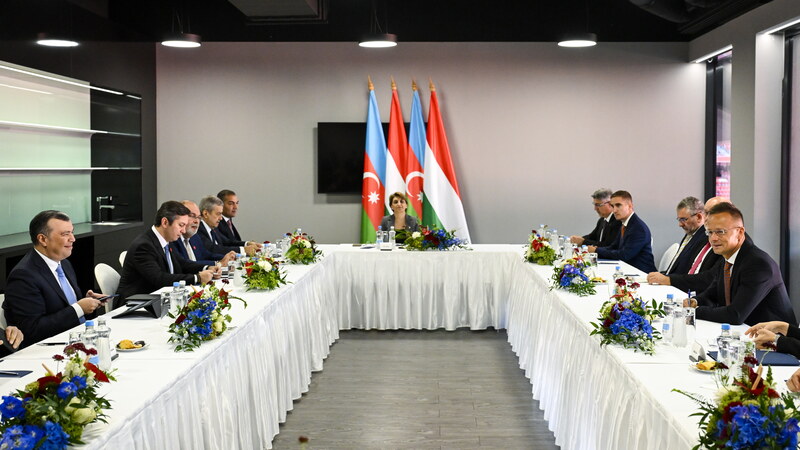
Hungary has recently gained a lot from cooperation with Azerbaijan, which has brought about very serious development in key sectors, such as the energy industry, the pharmaceutical industry, agriculture and construction, Minister of Foreign Affairs and Trade Péter Szijjártó said on Friday after the meeting of the Hungarian-Azeri Joint Economic Commission in Budapest.
Szijjártó said that Hungary has always been on the buyers’ side in international energy markets, but “energy cooperation with Azerbaijan has enabled Hungary to become an energy-producing country even without oil and gas fields”.
He noted that Hungarian oil and gas company MOL and state-owned MVM have acquired shares in the world’s most significant natural gas and oil fields in Azerbaijan and can now act as sellers on international energy markets.
Szijjártó said last year 15% of MOL’s group-level hydrocarbon production was linked to Azerbaijan, approximately 5m barrels of crude, and MVM extracted 382m cubic metres of gas from another significant hydrocarbon field in four months.
“MOL is on the verge of signing another agreement to become not only a part-owner but also the operator of another large Azerbaijani field. An agreement has been reached that, in addition to crude oil production, natural gas production will also start with MOL’s participation in one of the world’s most significant hydrocarbon fields from next year,” he added.
The minister said that Hungarian companies have so far acted as sellers in the pharmaceutical sector in Azerbaijan, while now, following an investment agreement, two significant domestic companies will also be able to act as contract manufacturers, gaining even greater market opportunities.
Szijjártó also noted that soft drink maker Hell Energy will soon start building a plant in Azerbaijan.
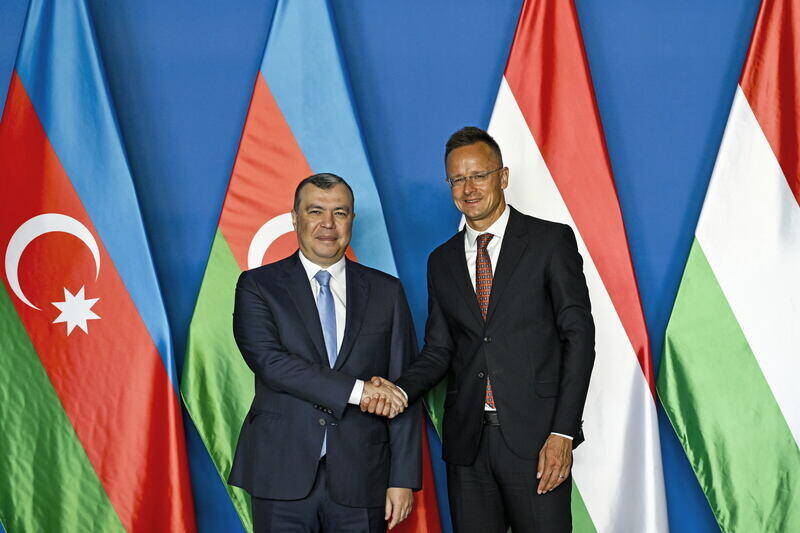
“We have been building cooperation with Azerbaijan based on mutual respect and mutual benefits for fifteen years, not just yesterday, for which we were initially laughed at and lectured by those Europeans who today are lining up in Baku to take photos with the Azerbaijani president,” the minister said.
Everything is in place for the further development of Hungarian-Azerbaijani economic relations, there are no open political issues between the two countries, and cooperation has already yielded great results, Péter Szijjártó said at a Hungarian-Azeri business forum, according to a statement issued by his ministry. The event was attended by representatives of more than sixty Hungarian businesses and around thirty Azeri companies.
Click for our Azerbaijan archive.
Read also:


This is how you do it: Pursue your own interests and build your own destiny, not that you’re being corralled into by globalist-socialist-fascist billionaires and their puppets in Brussels and elsewhere.
In recent years, the global approach to international relations has been shifting. Countries are moving away from the old model of exploitation and profit-driven dominance to one centered on mutual respect, sustainability, and shared prosperity. While the European Union claims to champion these values, the reality is more complicated. Despite the rhetoric, the EU continues to struggle with internal power imbalances and the imposition of policies that some member states feel undermine their sovereignty.
Hungary, under Viktor Orbán, has become a key voice in this tension. Orbán’s government has repeatedly pushed back against what it perceives as the overreach of Brussels, especially when it comes to matters of national control. The deal Hungary made with Azerbaijan to secure gas supplies is a prime example of this new approach. Orbán has bypassed the EU’s energy strategy to negotiate directly with Azerbaijan, ensuring Hungary’s energy security while avoiding reliance on EU-imposed regulations that may not serve its national interests.
This move is a statement: Hungary is not willing to cede sovereignty for the sake of EU unity. Orbán’s government is looking for a more flexible relationship with the EU, one that respects Hungary’s right to chart its own course while still being part of the broader European framework. The gas deal itself isn’t just about securing energy; it’s about demonstrating that a cooperative, win-win model can work without undermining national autonomy. Hungary is seeking pragmatic alliances where the benefits are mutual, rather than adhering to a one-size-fits-all EU approach.
Orbán’s stance is further evident in his neutral position on the Ukraine war. Unlike other EU leaders who have taken a more hawkish approach, Hungary has called for peace and dialogue, a policy that highlights its desire for balance and a foreign policy that doesn’t simply follow the EU’s line. By doing so, Hungary is pushing back against the prevailing narrative of EU unity at all costs and is carving out a space for more sovereign, independent decision-making in a world where national interests can still align with global cooperation.
Hungary’s approach challenges the EU’s prevailing model. It raises a critical question: can national sovereignty and multilateral cooperation coexist without one undermining the other? Orbán’s Hungary isn’t looking to dismantle the EU, but it does demand a seat at the table where sovereignty and flexibility are respected, and national interests are not sacrificed in the name of EU unity.
This shift is important, not just for Hungary, but for the EU itself. The European Union must confront the reality that a one-size-fits-all approach no longer works for all its members. If the EU is to remain relevant and effective, it must find ways to reconcile collective goals with individual sovereignty—and learn that true cooperation isn’t about forcing compliance, but about building mutually beneficial relationships where all parties have a voice.