Subscribe to our social channels to get the latest news about Hungary!


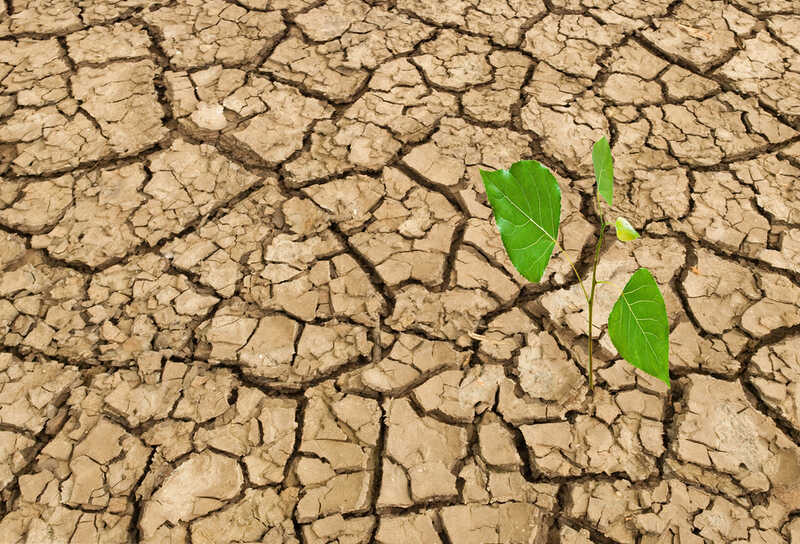
Drought is posing an increasing challenge for Hungary: if greenhouse gas emissions are not reduced quickly, by the end of the century, steppes could dominate a significant part of the country’s territory, while beech forests could disappear forever.
As Infostart reports, Hungary’s climate has been changing dramatically in recent years, with droughts increasingly showing their serious consequences. In 2025, with the exception of March, every month brought less than average rainfall, with the areas between the Danube and Tisza rivers, east of Lake Balaton, and Békés County suffering from particularly severe drought.
Vegetation is also unable to keep pace: the frequent lack of rainfall not only reduces crop yields but may also transform the structure of the entire ecosystem in the long term. Researchers at ELTE’s Department of Meteorology are therefore investigating how forests and other plant communities may respond to increasing water shortages.
Experts analysed the so-called forest drought index, which indicates which plant species can survive in a given area based on average temperatures and precipitation during the summer months. They developed three scenarios based on future greenhouse gas emissions.
The most optimistic scenario assumes radical, immediate emission reductions, in which case vegetation similar to today’s could survive until the end of the century. In contrast, if mitigation only began around 2040–2050, steppe—that is, forest steppe, which is more tolerant of drought—could already occupy a significant part of the Great Plain.
However, the most alarming forecast is the one that does not anticipate any reduction in emissions. In this case, by the end of the century, steppe would dominate more than 40 percent of the country, while beech forests, which prefer a wetter and cooler climate, would disappear completely.
These forests are mainly found in the North Central Mountains and the western part of Transdanubia, and are of outstanding ecological and economic importance. Their disappearance would not only lead to a decline in biodiversity, but also to a significant transformation of forestry and tourism.
Researchers emphasise that the difference between the scenarios is not random, but depends on how quickly and to what extent greenhouse gas emissions can be reduced. If we act quickly, Hungary’s forests have a chance of retaining their current appearance, and the spread of drought can be mitigated. However, if we delay, the steppe could become Hungary’s new “default” landscape by the end of the 21st century.
Read more agriculture-related news on Daily News Hungary!
Read also:


Oh, oh, you mean, a bit like “polar ice caps will melt by 2010,” “Manhattan will be under water through 2016,” or “island nations will be submerged before 2020,” “unless We Take Action Now™®©”?!?!
These are the same people who’ve been caught catastrophizing, doctoring data, and outright lying too many times to count, all while not being able to tell us with certainty what the weather is going to be like TOMORROW!
Yeah, give it up, guys. Nobody with more than a couple of brain cells is buying this garbage anymore. Earth’s climate changes constantly and the planet adapts quickly, even following sudden cataclysms such as meteor impacts. We don’t need a bigger government, fewer freedoms, and higher taxes to try to control the weather, thanks.