Subscribe to our social channels to get the latest news about Hungary!


The previously promised 13% minimum wage hike now seems unlikely to materialize. Minister of National Economy Márton Nagy told RTL News that given the current economic climate, a more realistic increase would be around 10% starting January 2026. The government believes even this should be considered a win, pointing out that neighboring countries have experienced negligible wage growth, making a double-digit increase a noteworthy achievement.
The basis for current wage negotiations is a three-year deal signed in 2023, which outlined minimum wage hikes of 9% in 2025, 13% in 2026, and 14% in 2027. The projections at the time were based on 3.4% GDP growth, 3.2% inflation, and an 8.7% average wage increase. But the economic landscape has since shifted dramatically. According to Telex, GDP growth this year is expected to reach just 1%, while inflation could rise to 4.7%.
The agreement included a clause allowing for renegotiation if conditions changed significantly—which the government is now invoking. Officials cite the need to preserve companies’ profitability and survival. Excessive wage hikes without corresponding gains in productivity, especially in sectors burdened with extra taxes, could erode profit margins.
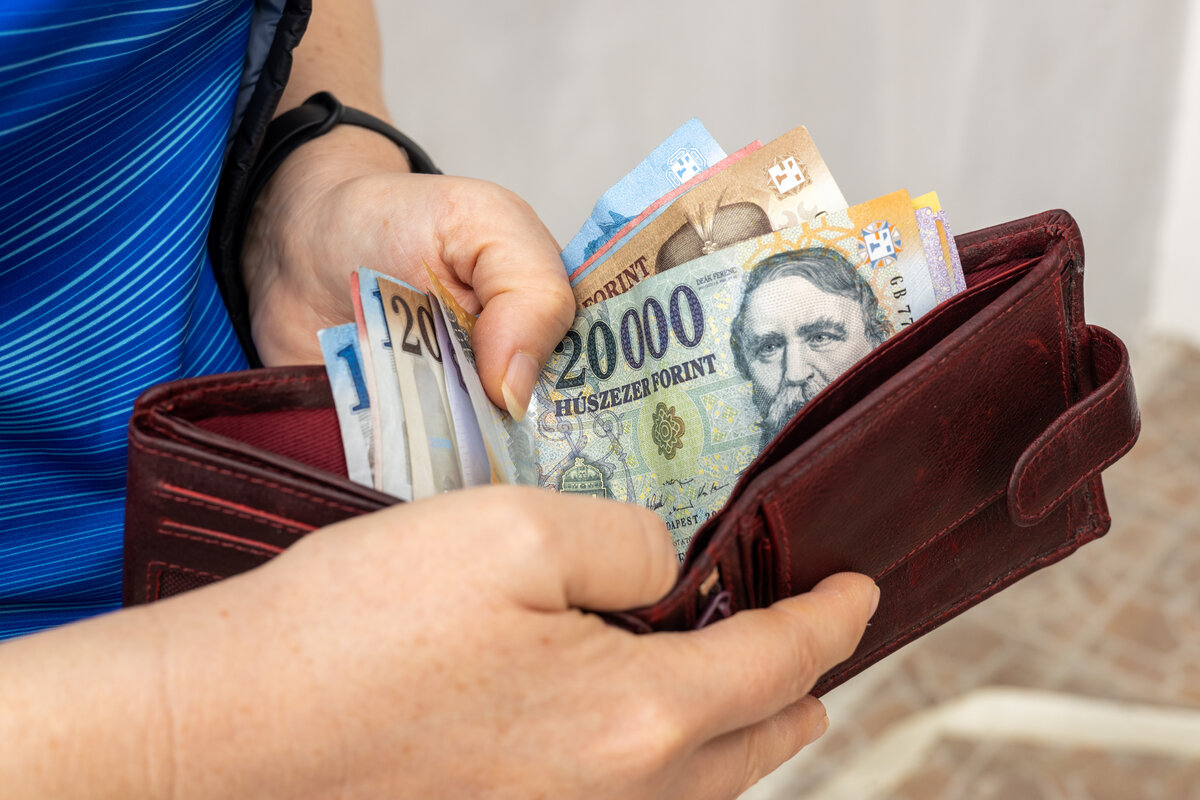
Zlati Róbert, president of the Hungarian Trade Union Confederation, acknowledged that although workers would welcome the largest raise possible, economic realities can’t be ignored. The goal, he said, is not to impose unsustainable burdens that could force companies to shut down. To help facilitate an agreement, the government is also proposing to reduce the employer-paid social contribution tax from 13% to 12%.
The issue of wage increases carries political weight as well. The government aims to boost real wages in the lead-up to elections. However, experts warn that wage growth must align with the economy’s long-term capabilities. Despite significant convergence over the past decade, Hungary still only outpaces Bulgaria in the EU’s minimum wage rankings, as noted in Eurostat statistics.
According to a Népszava report, Hungarian National Bank President Mihály Varga warned during Thursday’s Economic Association conference that inflation deceleration has stalled, and public expectations remain around 8%. This complicates efforts to stabilize prices and could dampen investment and growth over the long term. Varga emphasized that high inflation is one of the most damaging economic issues and called for strict monetary policies to combat it.
He also pointed out that the Hungarian economy has contracted in seven out of the last twelve quarters—something not seen since the 2008 recession. According to Varga, it’s wishful thinking to believe that a weak forint or artificially high wage increases alone can fuel growth.
The government has long set a target of a HUF 400,000 (EUR 1,018) minimum wage and a HUF 1 million (HUF 2,546) average salary. Though wage growth has generally outpaced inflation in recent years—boosting real incomes—the current climate brings economic realities into sharper focus, overriding earlier promises. As it stands, workers can still expect a double-digit raise in 2026, but it will likely fall short of the promised 13%, settling closer to 10% instead.
Read more Hungarian economy-related on Daily News Hungary!
Read also:
To read or share this article in Hungarian, click here: Helló Magyar


The situation is critical. If they dont act very soon, anyone with a decent to good level of English or German will head for the door.
This government 16 years later is gonna be ended. Their constant lies and aggressive attitude towards the Brussels crooks are the thorns for their downfall. It’s obvious that those wage increases will not be given in 2026 and 2027 respectively. The question is, will the country’s new prime minister send the current populist and pseudo-patriot Orban to the special court?