Subscribe to our social channels to get the latest news about Hungary!


When learning a new language, you might be tempted to learn just funny or special phrases or those that you would need when travelling. However, if you are planning to have a deeper understanding of a different nation (even if you are just passing by), it is always good to have a grasp on the basics.
Being able to count and tell the time is useful in many situations, ranging from going to get lunch all the way to asking when your train leaves. In this part, we are going to go through the numbers and the basics of telling time since they are closely connected.
As usual, let us recap the basic pronunciation:
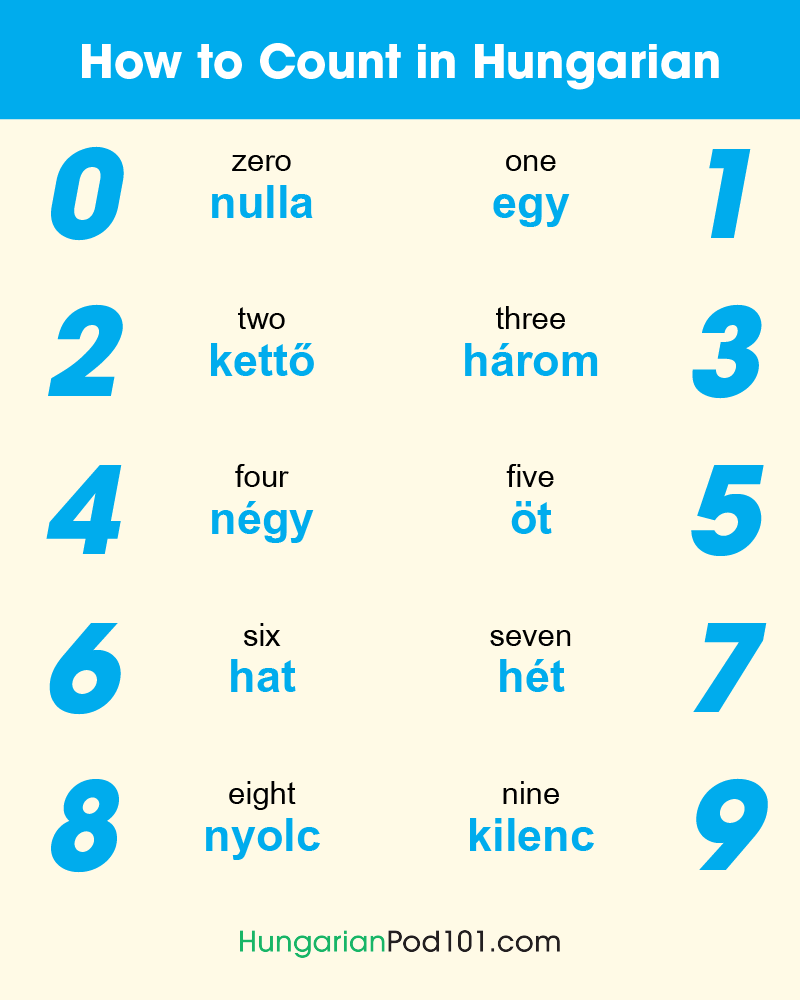
Other important numbers:
10 = tíz
20 = húsz
30 = harminc
Counting from 10 to 29 is a little bit tricky: you have to take ‘tíz’, add ‘-en’ (similarly ‘húsz’ and ‘-on’) and then add the single number: 17 is ‘tizenhét’, 23 is ‘huszonhárom’.
Every tenth number from thirty upwards is conjugated: you take the single numeral and add either ‘-van’ or ‘-ven’. In the cases where the vowel is a diphthong, it becomes a monophtong, like in 40: ‘négy’ + ‘-ven’ = ‘negyven’.
40 = negyven
50 = ötven
60 = hatvan
70 = hetven
80 = nyolcvan
90 = kilencven
If you would like to say 73, you would have to put ‘hetven’ and ‘három’ together, creating ‘hetvenhárom’, and so on. With ‘harminc’, it is simple: just take ‘harminc’ and add whichever number you wish to.
Once you reach 100, things change a bit again:
100 = száz
1000 = ezer
1000000 = millió
1000000000 = milliárd
The previous rule of just combining two numbers to create, for example, 506 applies here: ‘öt’ + ‘száz’ + ‘hat’ = ötszázhat.
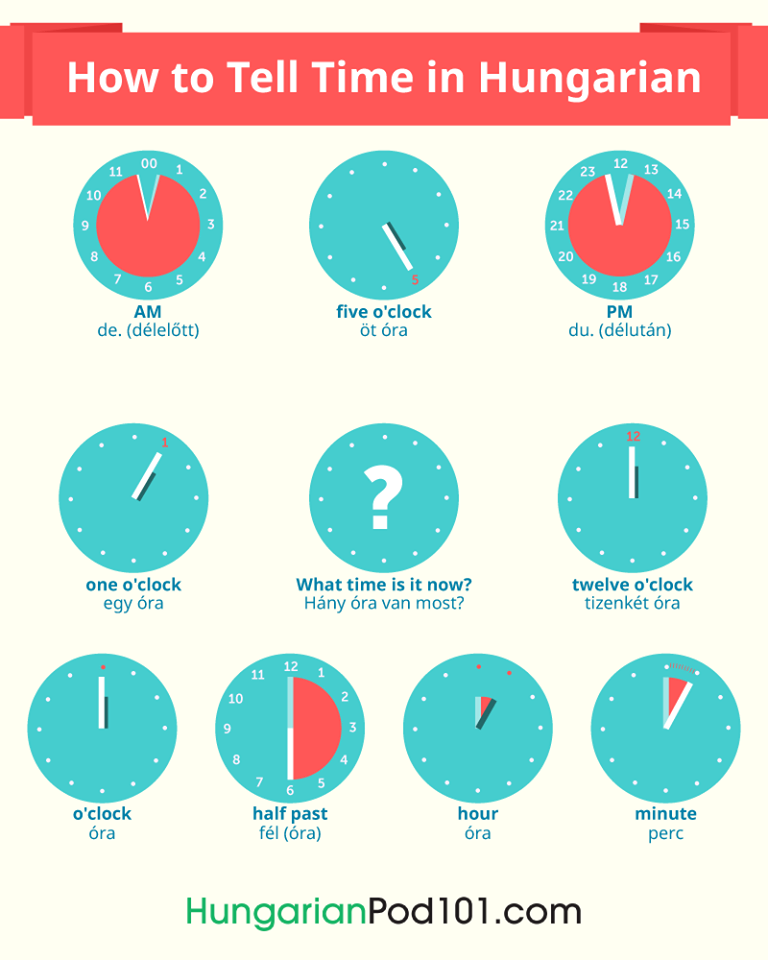
The basic, useful terms when it comes to telling the time in Hungarian are the following:
time = idő
second = másodperc
minute = perc
hour = óra
day = nap
week = hét
month = hónap
year = év
dusk, dawn = hajnal
morning = reggel
noon=dél
afternoon=délután
evening=este
night=éjszaka
In contrast with English, in Hungarian, the names of the days and months are not spelt with capitals. The days of the week are as follows:
Monday = hétfő
Tuesday = kedd
Wednesday = szerda
Thursday = csütörtök
Friday = péntek
Saturday = szombat
Sunday = vasárnap.
featured image: Daily News Hungary
Source: Daily News Hungary, https://www.facebook.com/HungarianPod101


