Subscribe to our social channels to get the latest news about Hungary!


One of the largest financial maneuvers in Hungary over the past decade has just concluded, largely funded by taxpayers and yet barely noticed by the public. According to an analysis by Válasz Online, Lőrinc Mészáros now controls nearly 70 percent of MBH Bank, while the state of Hungary retains just 20 percent—even though the foundation of the financial institution was built mostly with public money.
MBH Bank was formed through the merger of Budapest Bank, MKB, and the Takarék Group. Válasz Online reports that the origins of this story go back to 2013, when the Orbán government injected HUF 136 billion ($370 million) to integrate Hungary’s fragmented savings cooperative sector.
This money was placed in government bonds, which with interest had grown to HUF 188 billion by 2020. However, instead of being returned to the state, the funds were counted as capital for the Takarék Group—providing the financial bedrock for what would become MBH Bank.
Meanwhile, the government added Budapest Bank to the merger, while MKB had already been privatized. The Mészáros–Matolcsy circle acquired it for just HUF 37 billion ($100 million), although the state had previously spent several hundreds of billions to stabilize the bank.
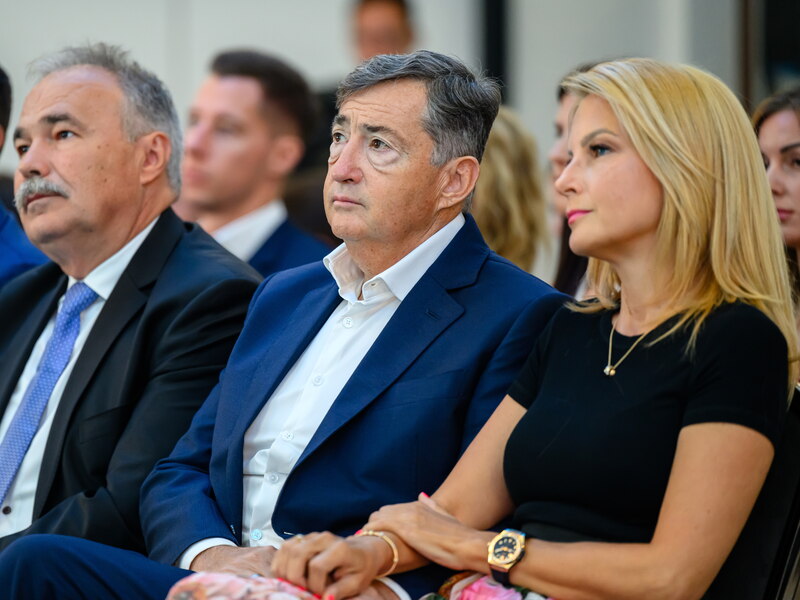
Initially, MBH Bank had several shareholders, including Quartz Investment Fund Manager, linked to Ádám Matolcsy, which held a 23% stake. In the summer of 2024, this share shifted to entities tied to Mészáros. The details of the transaction are not public, but sources indicate that both the attorney and administrator involved are close confidants of the billionaire from Felcsút.
As a result, Mészáros’s business interests now own approximately 70 percent of the country’s second-largest bank, which serves 2.4 million clients through 400 branches and 1,000 ATMs.
The most pressing concern lies in how the public funds were handled. The HUF 188 billion was not contributed as equity but rather as bonds in the Hungarian Bankholding, leaving the state with no significant influence. The deal is especially favorable for Mészáros’s consortium, which can use taxpayers’ money for 20 years while paying only the equivalent of government bond yields in interest. Analysts estimate this forgone interest could total HUF 10 billion annually—amounting to a HUF 200 billion ($540 million) taxpayer-funded gift over time.
The government has signaled its intent to divest its remaining 20 percent stake. If that happens, MBH would become fully privately owned, effectively locking the Hungarian state out of a bank it spent decades building with public funds.
Experts note that parts of the state-owned assets could still be reclaimed through legal avenues—but that would require political will. For now, Mészáros Lőrinc has acquired a powerful and profitable bank on remarkably favorable terms, generating annual dividends comparable to the very price he once paid to buy MKB.
Read more government-related stories on Daily News Hungary!
Read also:
To read or share this article in Hungarian, click here: Helló Magyar


This give away of hundreds of billions of forints of taxpayer money to Meszaros is another example of how Hungarians are a nation of fools who keep in power the thieves that rob them.
Agreed! As it says …. and yet barely noticed by the public 🙁