
Prime Minister Viktor Orbán and Minister for Economic Development Márton Nagy are both keen to boost domestic consumption as soon as possible. However, the relatively high central bank base rate of 6.5% does not support this goal. Both have already raised the possibility of a rate cut. According to experts, such a move is expected in the short to medium term and could have a significant impact on the forint.
A high base rate supports the forint
It is well known that the Hungarian National Bank managed to halt the dramatic fall of the forint in 2022 by raising the base rate to an exceptionally high 18.5%, thereby making the forint and forint-denominated investments more attractive domestically. However, this also led to a withdrawal of money from the markets, a collapse in investment activity, and the anticipated economic revival has not materialised, despite the government’s ambitions for an economic “take-off”.
- Political expectations boost the forint: Is the market betting on a Tisza Party victory?

Earlier this month, Orbán and his economic minister Márton Nagy highlighted that the current 6.5% base rate is very high. However, until now, the central bank has considered this level essential for curbing inflation — which stood at 4.3% in August — according to portfolio.hu.
Will rate cuts come only in 2027?
According to portfolio.hu, no experts believe that any rate cuts could take place this year. This is because inflation remains high, and without price caps it would exceed 5.5%. The forint is also vulnerable and considered a risk factor, which the high interest rate helps to protect. This is also one reason for its strong performance against the US dollar, as the American Federal Reserve continues to lower rates. This trend could eventually lead to a domestic rate cut, but according to Dávid Németh, an analyst at K&H Bank, it will still take time.
- The Hungarian National Bank issued special forint coins today
Portfolio.hu notes a new development: at least one analyst now expects no rate cuts even in 2026, forecasting them instead for 2027. This is bad news for borrowers, as it means loan costs will remain higher than they would be with a rate cut. Most experts, however, expect a rate reduction by mid or late 2026 at the latest.
The central bank governor spoke about predictability
The Monetary Council of the Hungarian National Bank will hold its October rate-setting meeting tomorrow. However, all indications suggest that the only scenario under consideration is maintaining the current interest rate. The central bank made no changes in August either, including to the interest rate corridor, according to the Hungarian News Agency.
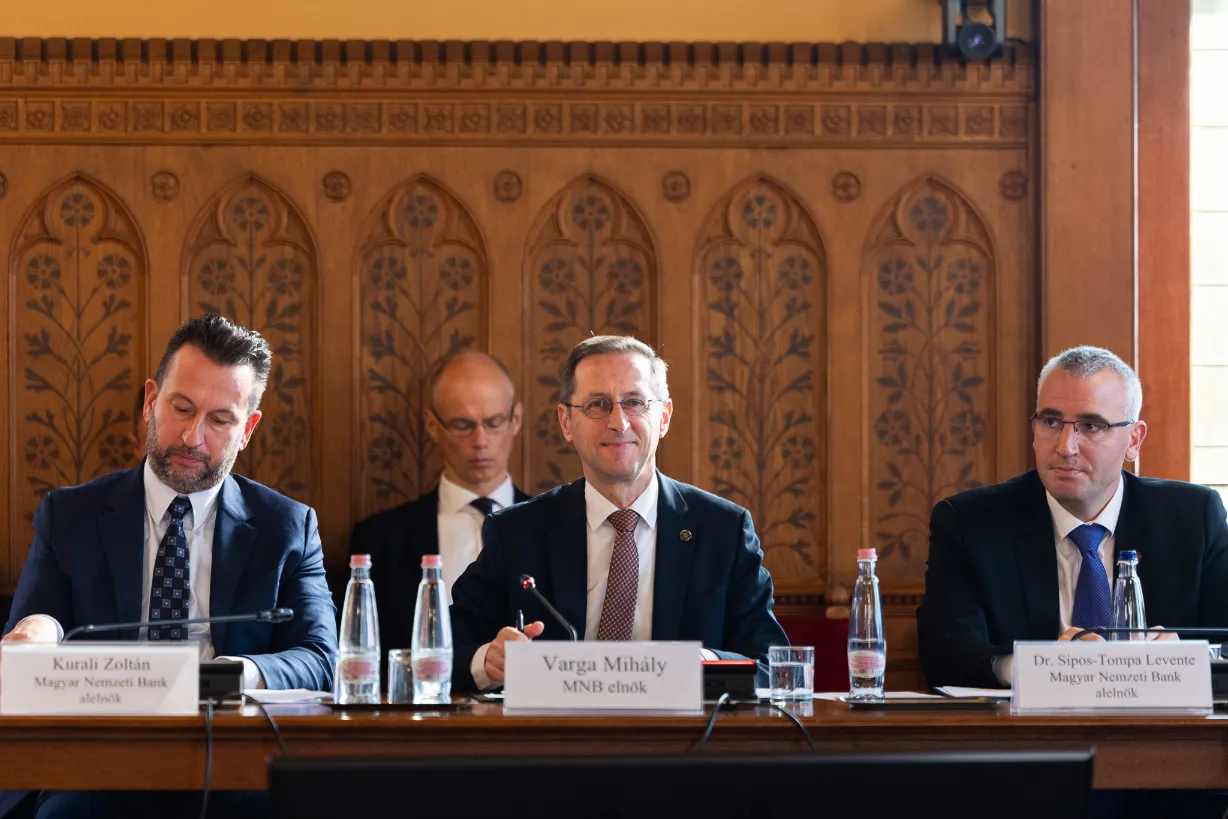
These expectations were reinforced by statements made today by central bank governor Mihály Varga at the meeting of the Economic Committee of Parliament, where he spoke about a predictable monetary policy and the goal of bringing inflation closer to the 2–4% tolerance range. The governor also emphasised that the bank will continue to focus on the following three goals in the coming period:
- achieving and maintaining price stability,
- pursuing a stability-oriented monetary policy, and
- maintaining a predictable investment environment.
Click for our archive on the forint.



As soon as a government takes away control of interest rates from the country’s central bank the stability of the currency loses all credibility. Fidesz is desperate to boost the economy before the April election. The forint will go the way of the Turkish Lira which plummeted sending inflation skyrocketing after Erdogan took the power of interest rate decisions from the central bank. The Lira went from $0.140 in Feb 2021 to today’s rate of $0.024. If Fidesz wins the election and starts big interest rate cuts the forint will become a lot more worthless than it already is.
Mihaly Varga, his LEGACY as the Finance Minister of the Victor Mihaly. Orban for over a decade, the names(s) Orban & Varga muchly RESPONSIBLE for the SHAMBLES that is the Financial & Economic “landscape” of Hungary, that grows in PRESSURIZATION to Decline.
Varga, the absolute “Dud” he proved he was as Finance Minister then “shifted” removed from his ministerial position as Finance Minister, through growing internal pressure questions within the Fidesz Party relating to the DECLINE in the Economic outlook for Hungary, the decisions and direction Mihaly Varga and Victor Mihaly. Orban – his “partner in crime ” and of “close” friendship – being another founding member of the Fidesz Political Party – Victor Mihaly. Orban has jointly set as the FUTURE of Hungary.
Mihaly Varga, his “Shuffle” to that of Governor of the Central Bank of Hungary, continues to perform displaying exhibiting his Financial and Economic incompetence.
Mihaly Varga – his legacy of failure as Finance Minister, part of the “inner sanctum” – a POWER player in-side of the Fidesz Party – has NOTHING, nothing absolutely NOTHING to contribute to the FUTURE of Hungary – NOTHING which joins in same, for the name – Victor Mihaly. Orban.