Even Hungary’s military successes could not stop Trianon

Change language:
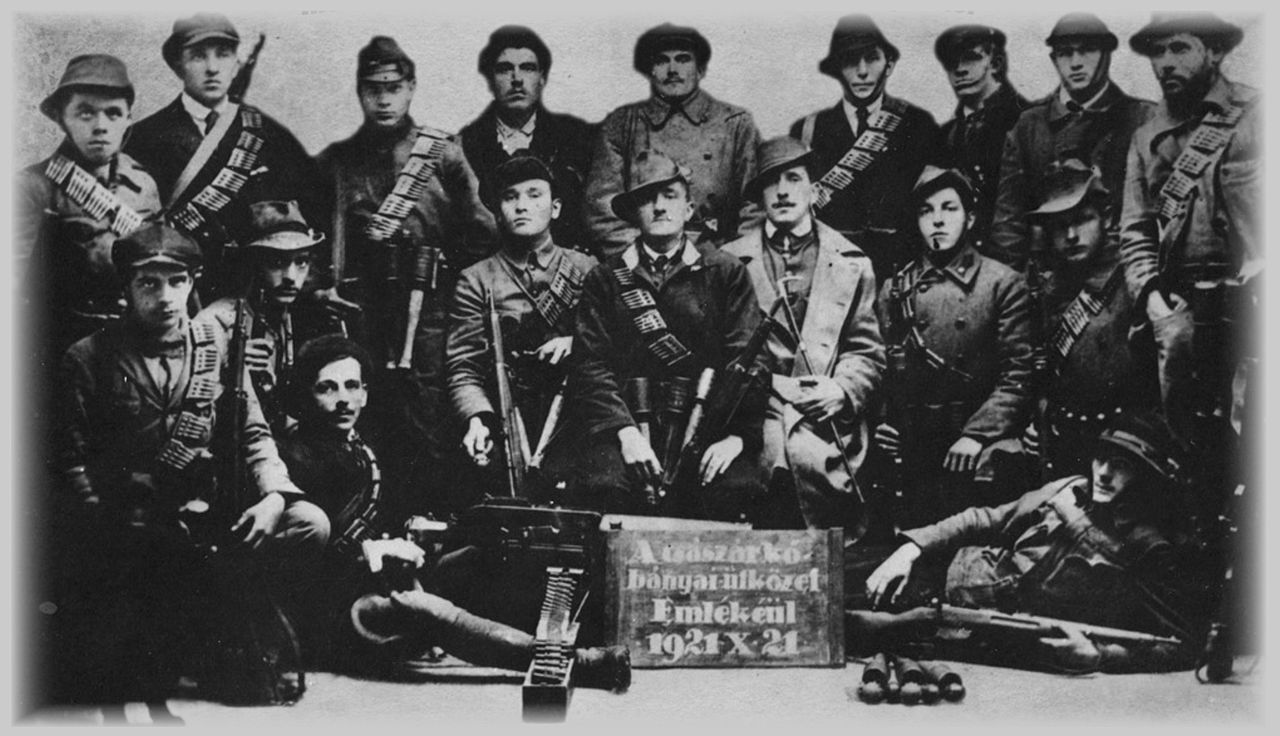
The widespread belief that Hungary did not resist the occupying armies of neighbouring countries in 1918–19 is not true: from the infiltration of the first enemy soldiers to the complete collapse of the Hungarian army and the Romanian occupation of Budapest, the resistance lasted for nine months. The Romanian army was at the Tisza when the Hungarian Red Army launched its highland campaign and liberated the eastern part of present-day Slovakia. Relying on the Rongyos Gárda (Ragged Guard) against Austria, the Hungarian government achieved some degree of success, but Hungary could not avoid Trianon.
With the help of historian Dr Tamás Révész, member of the Institute of History of the Humanities Research Centre and the Trianon 100 Hungarian Academy of Sciences Momentum Research Group, 24 wrote about the fighting in Upper Hungary, the hopelessness of the southern border and the success against Austria.
They ordered the evacuation of Upper Hungary
The ceasefire agreement with Hungary did not mention the northern border of Hungary; however, the infiltration of the Czech forces into Upper Hungary began in the first days of November. These were not dangerous attacks, so it was easily repelled by the low head-count Hungarian defence forces there. The “official” Czech offensive began in early December in 1918. On December 6th, an agreement between Slovak politician Milan Hodža and Hungarian Minister of Defense Albert Bartha drew the demarcation line along the ethnic border, at the Dévény-Érsekújvár-Losonc-Szomolnok-Homonna line. However, this was not good enough for the political leadership in Prague, so on December 23rd, Lieutenant Colonel Fernand Vix handed over another manifest to the Hungarian government, calling on the Hungarian troops to retreat roughly to the Trianon border.
They wanted to engulf the North Hungarian Mountains
At that time, the Hungarian political elite still believed in its pacifist foreign policy. They thought all occupations as temporary and wanted to settle the situation at the peace conference. They carried out the instructions of Entente, signalling Hungary’s willingness to cooperate so the country could sit ‘clean’ at the negotiating table.
However, the action against the Czechs sparked controversy in Budapest, and the need for resistance has risen in some members of the government.
In the end, they decided to retreat. The enemy could take over the area without resistance, which was a smooth but slow process. As the Czech legionaries arrived home, they occupied Pozsony in early January, then Kassa, and on January 14th, Ungvár. The weakness of the Czechoslovak forces is indicated by the fact that it took a total of six weeks to occupy the withdrawn parts of the country, the historian notes.
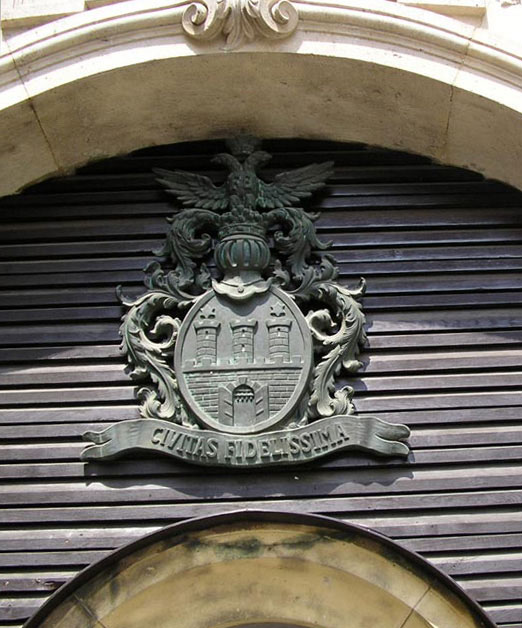
Resistance was only sparse. In Balassagyarmat, however, the population expelled the occupiers on the 29th of January with the help of the local military and city workers. Later, in memory of their brave action, the National Assembly awarded the title of Civitas Fortissima (the Bravest City) to Balassagyarmat.

However, the leadership in Prague did not want to stop there; their goal was to reach the Aszód-Gyöngyös-Miskolc line so that the great powers would give their blessing to the deed once its done, and the Czechoslovaks could keep the mineral-rich North Hungarian Mountains.
They followed in the footsteps of the Romanians
Behind the demarcation line, Czechoslovaks waited for the troops of the Kingdom of Romania to “do the dirty work”. The Romanian attack began on April 16th, pushing the forces of the Hungarian Soviet Republic to the right bank of the Tisza by early May. On April 27th, the Czechoslovak units took the move and marched into Miskolc and occupied the Borsod coal basin. At that time, the Hungarian defence was led by the Chief of Staff of the Armed Forces, Aurél Stromfeld.
The Campaign of Upper Hungary
Stromfeld began to organise the resistance at the head of the Hungarian Red Army. Aurél correctly assessed the situation, according to which it was necessary to attack in the north, Tamás Révész historian mentions three compelling reasons:
- firstly, the Czechs were the weakest threats,
- secondly, Ózd, Miskolc and the Gömör–Szepesi Ore Mountains provided an economic background, and their workers provided a social base for the governing council,
- and thirdly, the Soviet Union was near, and the help of the Soviet Red Army seemed to be the only way to take up the fight against the Romanian and Czechoslovak forces in the long run.
The Hungarian Red Army launched an attack on May 20th and succeeded at liberating Miskolc and averted the threat to Salgótarján.
Ten days later the operation, known today as the Campaign of Upper Hungary, began. At first it was a huge success, on June 6th Kassa was again in Hungarian hands, then a few days later Bártfa and Eperjes were also returned to Hungarian hands.
The Romanian and Czechoslovak forces were separated, and on the 16th the whole of south-eastern Slovakia came under Hungarian rule. Around the middle of the month, however, the attack stalled and in mid-June, the Hungarian army attempted a strike to the west but failed due to the growing resistance.
It was all a ruse
The Entente ended the Hungarian advancement with the ‘Clemenceau manifest’, in which they promised that if Hungary gave up the territories they obtained through their advancement, the Romanian army would be withdrawn from the Tisza roughly behind to today’s Hungarian borders.