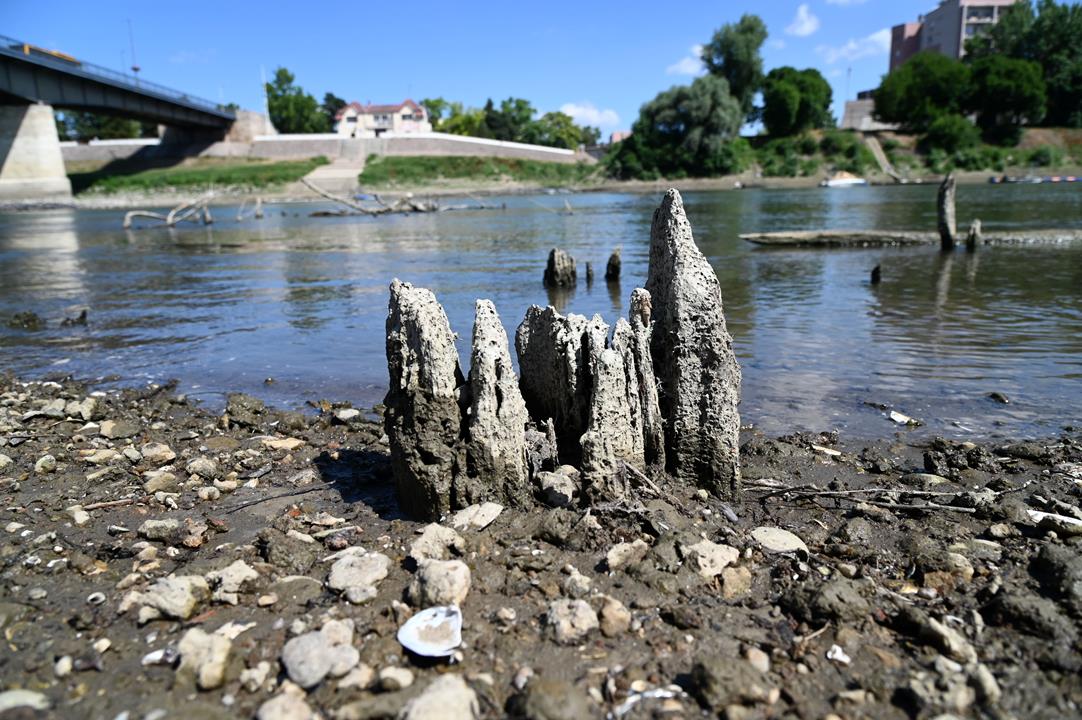
Experts have been warning for years that, without swift action, large parts of Hungary could turn into desert. The ongoing drought has only intensified due to the complete lack of significant rainfall throughout June, coupled with extreme heat, leaving the country parched. This trend shows no signs of abating. It is no surprise, then, that water levels in both the Danube and the Tisza are alarmingly low, raising fears that portions of Hungary’s wildlife may soon migrate elsewhere.
Hungary is bone dry after record-low precipitation in June
Nagy-Kurunczi Rita, lead meteorologist atIdőkép, published a sobering report on the evening of 30 June. June is typically Hungary’s wettest month, but this year it brought barely any precipitation. Data show that only 15–30 mm of rain fell across most of the country, and that came in the form of scattered showers and storms—most of which quickly ran off instead of soaking into the parched soil.
New 10,000 km² European sand desert forming in Hungary: Over 620,000 lives at risk
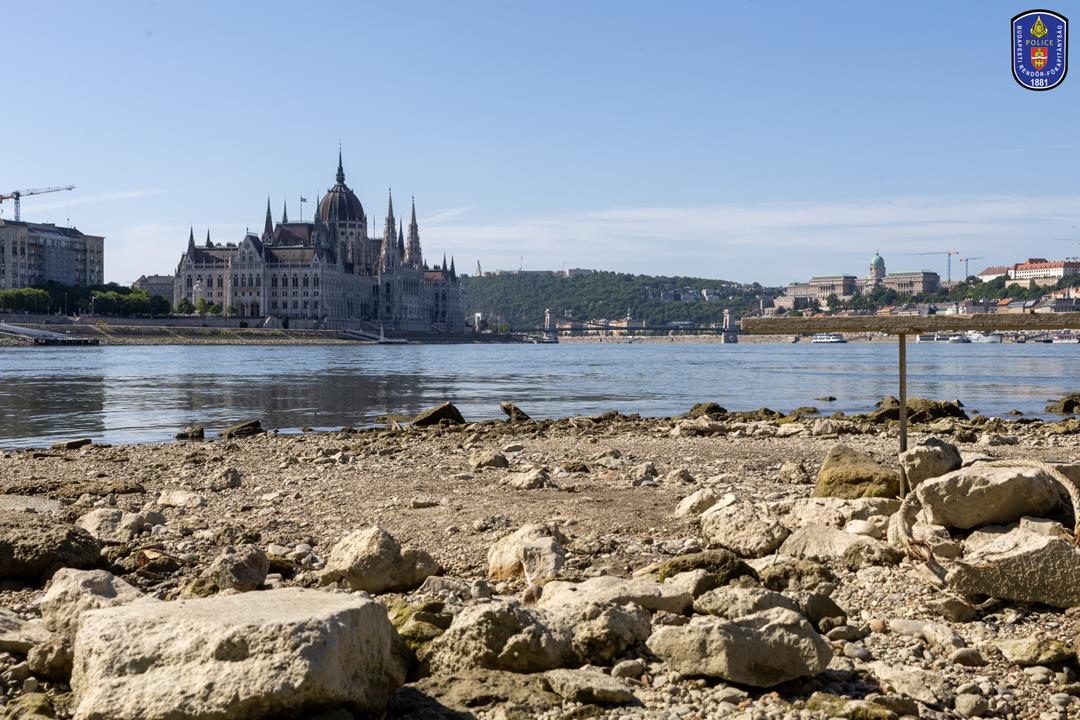
You can take a walk in the Danube river bed near the Hungarian Parliament. Source: Hungarian Police
The situation is most dire in the already drought-prone Great Hungarian Plain, where the prolonged dry spell has led some areas to begin the harvest early, as cereal crops reached maturity faster in the heat. There is hope that relief may come next week, but it is difficult to make accurate forecasts that far ahead.
River Tisza water level in Szolnok. MTI/Mészáros János
The daily Blikk reports that 80–120 mm of rainfall is missing from agricultural lands in the Plains. The topsoil is completely dry, grass has withered in many areas, and only trees provide occasional bursts of green. Unsurprisingly, outdoor fire bans are in effect, with additional water usage restrictions in some regions. In the Buda Hills, even drinking water is in short supply.
Brace yourselves! Extreme UV-B radiation and heatwave hit Hungary
Hungary lacks precipitation. Photo: MTI
Danube and Tisza water levels dangerously low
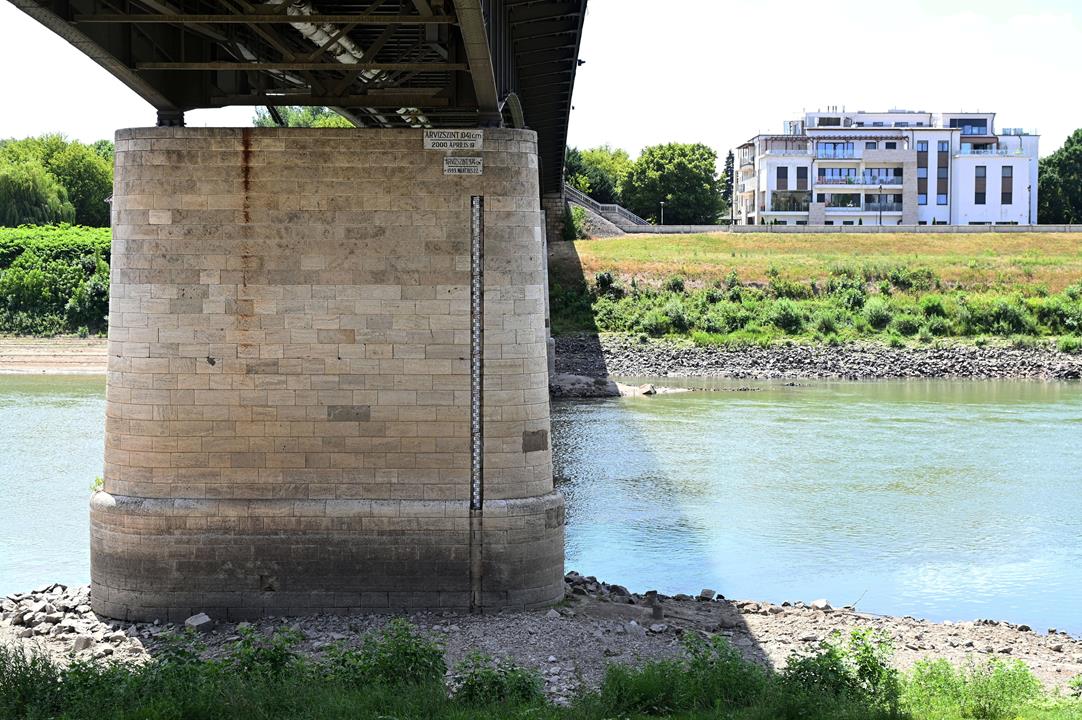
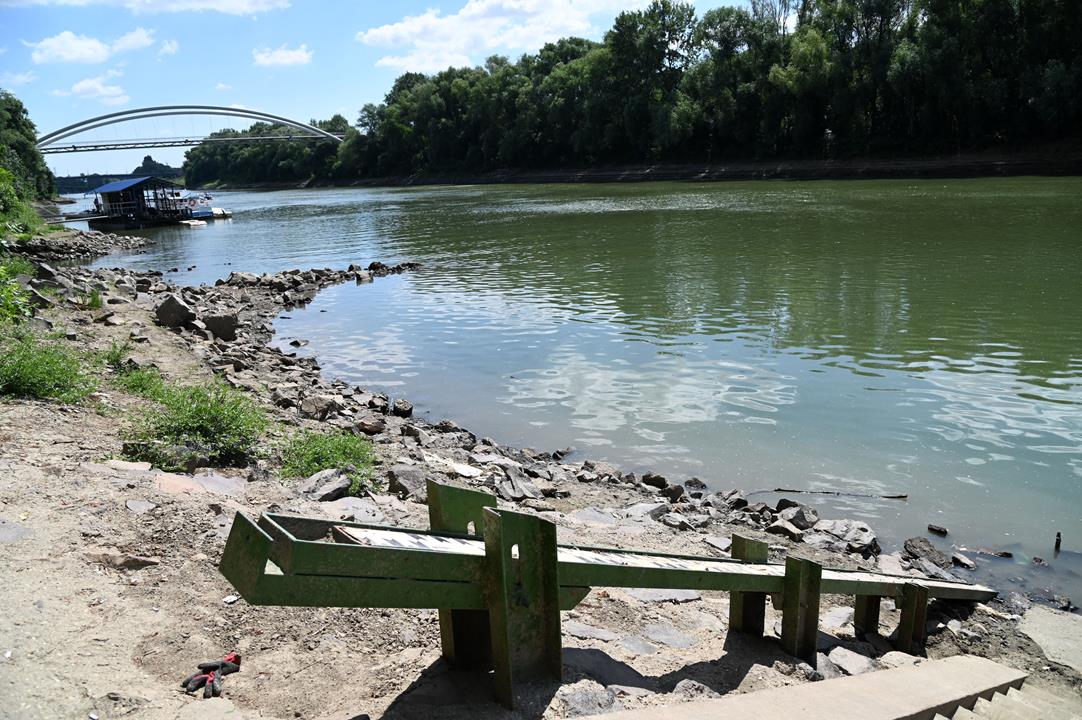
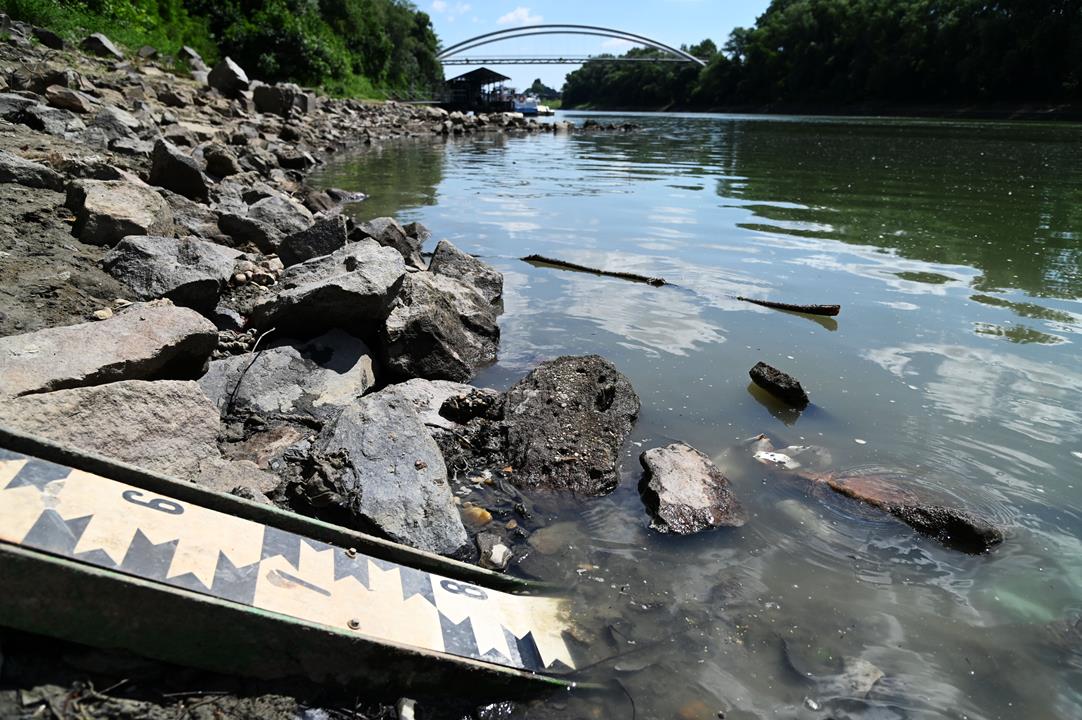
Water flow into the Danube and Tisza rivers is down by 40% and 60%, respectively. These dramatic shortfalls have driven levels to near-record lows. At Szolnok, the Tisza measured -285 centimetres two days ago—just 6 centimetres above the historical minimum. And there is still all of July ahead.
Near-record-low river levels on Tisza, Danube. Photo: MTI
Even the Hungarian police are warning of the implications of the Danube’s low water levels. With less water, navigable space shrinks, making manoeuvring more difficult for all watercraft—from large ships to paddleboards and kayaks. Vessels also risk becoming stuck on newly formed sandbars. Speedboats are stirring up stronger waves, which could damage moored boats. Swimming remains forbidden in unauthorised areas, and submerged hazards make jumping into the water especially dangerous.
Drought in Hungary: the remains of the Ottoman-era wooden bridge in Szolnok. Photo: MTI
The rainfall deficit is also threatening wildlife populations, particularly in forests and hunting zones. As reported by infostart.hu, some animals may begin to migrate. Experts suggest drilling new wells, although such efforts are costly and cannot solve the problem overnight. A grant programme is available, but it requires a 30% co-payment by applicants.
What is needed, experts say, is a much larger and more comprehensive intervention to retain as much water as possible in the landscape. Currently, Hungary’s entire water management system—designed in the 19th century—is based on moving water out of areas as quickly as possible to maximise land for agriculture. The “Water to the Landscape” program is a promising start, but it urgently needs to be scaled up.
To read or share this article in Hungarian, click here: Helló Magyar