


Will Putin intervene if Orbán loses in 2026? Security expert warns of troubling signs

Change language:
As previously reported, the Hungarian state news agency MTI recently published—without criticism—a statement from Russia’s Foreign Intelligence Service claiming that the European Commission, Ukraine, and several Western organisations are working together to unseat the Orbán government in 2026 by supporting the Tisza Party.
According to Péter Buda, former senior national security officer and intelligence expert, the Russian statement signals that removing Orbán would threaten Russia’s broader strategy in Europe—hence their public show of support for their preferred ally. The only question is whether Orbán’s camp is aware of it.
Table of contents
- Orbán’s government regularly interferes in the domestic affairs of other countries.
- Russia’s position regarding the 2026 elections has been made clear.
- Hungary holds a key place in Russia’s strategy.
- But have the Ukrainians also infiltrated?
Orbán’s government regularly interferes in other countries’ domestic affairs
It would be naïve to think that nations—especially major powers—do not go to great lengths to see friendly leaders rise to power in neighbouring or strategic countries. Hungary is no exception, despite its constant rhetoric on sovereignty. Consider Orbán’s controversial statement in support of far-right Romanian leader George Simion, or various forms of government-linked backing for figures such as Andrej Babiš in the Czech Republic, Janez Janša in Slovenia, Nikola Gruevskii in North Macedonia, or the massive pre-election loan to Marine Le Pen.
Russia’s position is clear
Russia, of course, is no stranger to foreign interference either—their intelligence services remain active in Hungary. That makes it all the more striking that MTI would publish the Russian Foreign Intelligence Service’s statement without scrutiny.
The statement alleges a coordinated effort by the European Commission, Ukraine, and Western entities to oust the Orbán government in 2026 in favour of the Tisza Party. Hungarian Foreign Minister Péter Szijjártó has not summoned the Russian ambassador, and Fidesz parliamentary group leader Máté Kocsis simply responded that the allegations are long-known facts that no one in the West disputes—though he provided no evidence to support this.
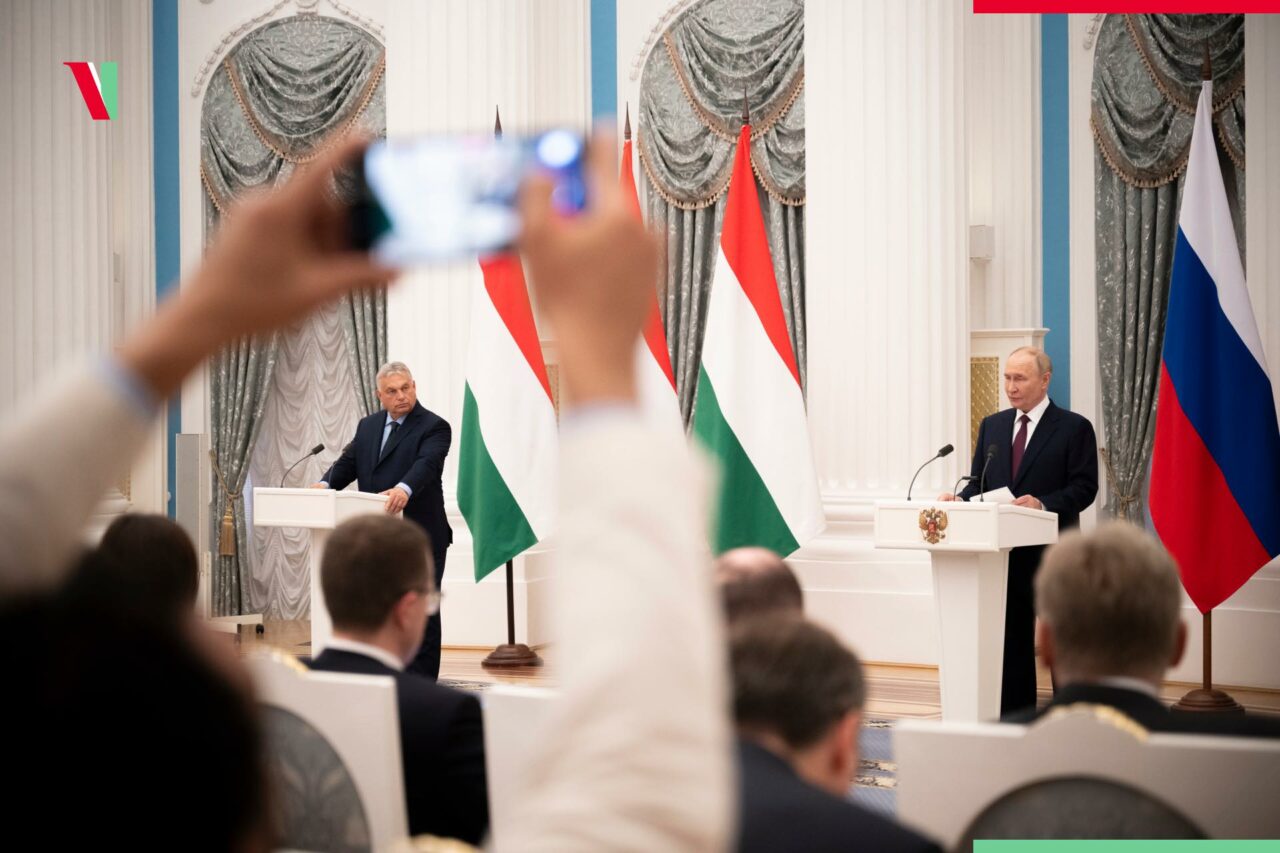
In an interview with 444, Péter Buda explained that the very fact Russia issued such a statement months ahead of Hungary’s elections suggests they care deeply about the outcome and have taken a side. Moscow clearly backs Viktor Orbán, because, according to the Russian narrative, they are in a constant struggle against the West, and in the Tisza–Fidesz rivalry, the West sides with Tisza. Therefore, Russia has every reason to support Orbán.
In 2026 Hungary is faced with the same choice St. Stephen made 1,000 years ago. Let’s hope that Hungarians will have the same wisdom to make the same decision he made. What happened to the spirit Hungarians had in the 1980s when Brody Janos crafted Istvan a Kiraly? Have they lost their minds?