
Hungary has been blocked from accessing at least 19 billion euros of European Union funds for years due to rule of law issues—an eye-watering HUF 7,418 billion at today’s exchange rates, an unfathomable amount for everyday people. To put this in perspective, this sum could finance every Hungarian pensioner’s pension payments twice over for an entire year. István Ujhelyi, a former Member of the European Parliament, says there exists a document capable of releasing these funds almost like magic, but it comes with serious political conditions. He suggested that only a Tisza government could get it.
EU money is as essential as a slice of bread
Over recent years, Hungary has experienced little meaningful economic growth; at times, the economy stagnated or even slipped into recession. The result has been soaring inflation and increasing hardship in daily life, despite nominal wages rising in figure. The government has tried various strategies to kickstart growth, but neither Chinese battery manufacturing, other foreign investments, nor state-driven stimulation of domestic consumption can replace the development funds provided by the European Union.
For simplicity’s sake, “Brussels” planned to inject HUF 32.1 billion into Hungary’s economy between 2021 and 2027 through cohesion and recovery funds. However, only 10.2 billion euros have arrived, thanks to the government having implemented the committed judicial reforms. The remaining money is still parked, although agricultural subsidies continue independently. During such a difficult and vulnerable economic period, this money is as essential as a slice of bread, yet without political will, its release is highly unlikely.
We could permanently lose funds after next year’s elections
Moreover, deductions are continuously made from the missing over 19 billion euros. These deductions include daily fines and penalties related to Hungary’s asylum system, plus a 1.1 billion euro sum lost due to a failure to implement certain rule-of-law reforms. Whether these amounts can be recovered with political change remains uncertain, though much is possible if both sides desire it.
- EU funds, lawsuits, and a geopolitical gamble: Why PM Viktor Orbán’s ‘sovereignty’ could cost Hungary more than money
Hungary must complete payments from the Recovery and Resilience Facility (RRF) by summer 2026, yet these payments have not even started because the government has failed to meet any of the 21 milestones. Some projects are funded from the state budget, but their accountability is, at best, questionable. Losing even this source would cost the Hungarian economy over 10 billion euros—more than HUF 4,500 billion—enough to finance the entire state healthcare system for a year and two months.
The nearly 9 billion euros still frozen due to rule-of-law procedures would require thorough reforms to unlock. However, the Hungarian government, fighting the European Commission, shows little openness toward this.
Tisza government could get the money
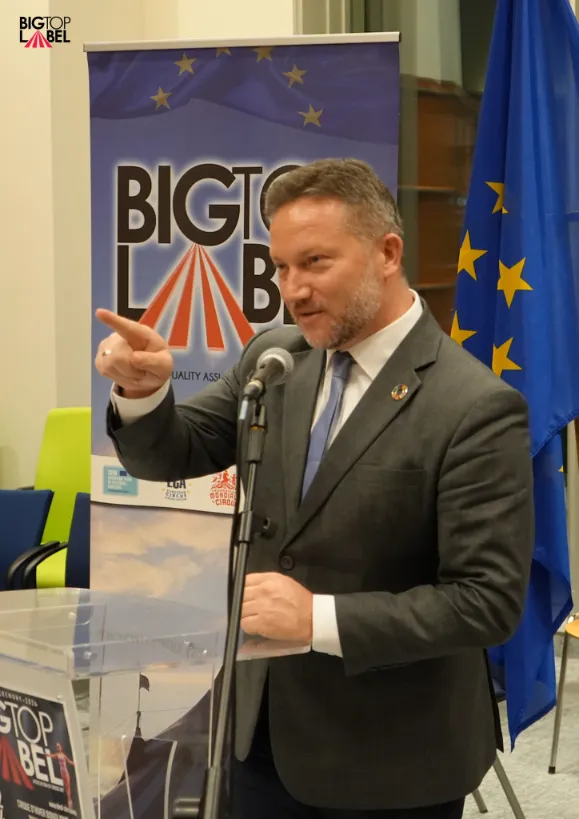
István Ujhelyi, who served as an MEP until 2019 representing MSZP and later as an independent, spoke on the ATV channel about a specialist scenario he has seen. It outlines what the parliament convening after the April 2026 elections would need to do to free the funds. He called Brussels’ demands legitimate in the interview and added that the Tisza government agrees with the list’s points, hinting that Fidesz has so far rejected them.
- Hungary threatens EU budget block unless frozen funds are released

Ujhelyi believes that with political will and the right decisions, Hungary could start receiving various EU funds within weeks—potentially giving the Hungarian economy a significant boost.
He cited Poland as an example, where after a government change, the blocked funds were released at record speed within weeks, injecting fresh momentum into the economy.
There is always a loophole. According to Portfolio, even though the RRF funds must be used by June 2026, Warsaw found a solution, recognising it is physically impossible to spend and finalise accounting for so much money in that time. Poland was allowed to channel EU money into financial funds, which then flow into the local economy as subsidised loans. Thus, the money isn’t lost after summer 2026. A solution always exists—if there is mutual political will to find it.
- Click for more articles concerning money.
How are fund payments progressing across Europe?
According to Portfolio, the post-COVID RRF fund has so far injected 362 billion euros into the European economy and could boost the EU’s GDP by 900 billion euros. Larger member states have already drawn down most of their funds, while Central and Eastern European countries lag behind. Bulgaria and Romania are slowly fulfilling their milestones, but Hungary’s situation is unique—no payments have yet been made, and there is only until next June left. Analysts say the programme alone could raise Hungary’s GDP by 1.2%.



Any such moneys to support perverts, deviants and abusers like Peter Magyar are nothing but BLOOD MONEYS! No thanks, Hungary doesn’t need and doesn’t want such moneys from the communist headquarters of Europe that is the European Union!
This has to be a joke- he is the EU man funded and promoted by then.
France – germany and UK are being destroyed by Imigration . Brussels is majority muslim. Even though it a nightly horror show on social media we hear silence here. Little Ireland, pop half the of hungary will be the next to fall after UK. This is the biggest crisis in europe- even if you are not a EU member you will not survive as free country Trump is friends with Russia because europe needs it survive vers a war. The marshel plan gave millions in 1940 money to rebuild europe- even though many US died- it offered the same to eastern europe, but stalin turned it down. Yes they were asked to repay it when they could – it akso funded NATO for over 75 years. You better hope trump keeps relations with Russia. He has contempt for the leaders of the EU, but cares about peace in europe and russia more . Your snarky comment here show what fools you are.
Soros is under major investigation by the US , yet isn’t even reported here.- he is one of the biggest funding source for the downfall of the West