Subscribe to our social channels to get the latest news about Hungary!


The unification of Pest, Buda, and Óbuda in 1873 created Budapest. But how did these cities originally get their names?
In 1873, when Pest, Buda, and Óbuda were unified, choosing the name Budapest for the new capital seemed natural. Interestingly, the idea of merging the twin cities had emerged decades earlier, in the 1830s. In 1831, István Széchenyi shared his views on unification in his work Világ:
“Your capital should be renamed Budapest, a name that within a few years—or even months—would sound as familiar and natural as Bucharest. This way, the two cities, which currently view each other with scepticism, would unite. What benefits would stem from this union! In no time, Hungary would have a flourishing capital! Especially if the national assembly were not held in Pozsony (Bratislava), far from the country’s heart and from Transylvania, but in the centre of the nation… There should be one capital, not two; one unified, rather than a divided heart.”
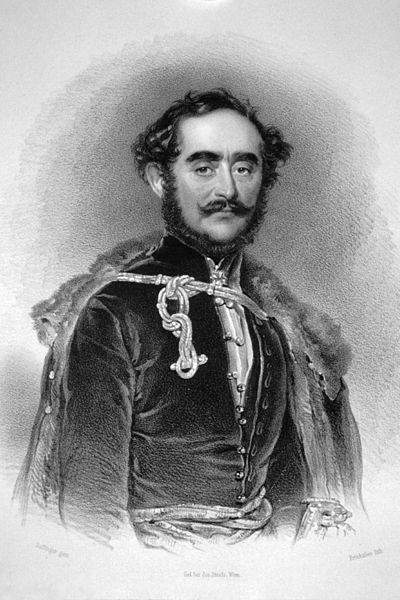
Széchenyi, who spoke several languages, was troubled by the name Pest, since in German it evoked “pest” (a plague) and in Latin “peste” (an epidemic). Additionally, the combination of “Buda” and “Pest” brought to mind “pestis” (the plague in Hungarian). As a result, he proposed several alternatives, including “Bájkert” (Charm Garden), “Dunagyöngye” (Danube Pearl), “Etelvár,” and “Hunvár.” Ultimately, he championed the name “Honderű.” However, in the early 1840s, he abandoned this idea when it was pointed out that “Honderű” sounded too similar to the French words “honte” (shame) and “rues” (streets), as noted by Szabolcsi Miklós in his book Honderű.
When the widely accepted name Pest-Buda was about to be printed on maps, the letters of “Pest” would have overlapped on the Buda side of the Danube, while “Buda” would have appeared on the Pest side. To prevent confusion, it became increasingly accepted that the name of the capital—formed from the unification of Pest, Buda, Óbuda, and Margaret Island—should be Budapest. In 1846, János Arany had already written in the ninth canto of Toldi: “Many thousands live in the city of Budapest.”
To find the origins of the first great city in the region, we must go back to Roman times, as revealed by the Budapest Archives. From the mid-2nd century BC, Roman conquerors appeared in the area, and the Danube became the natural border of the Roman province of Pannonia. Military camps were established at crossing points to defend the empire, and civilian settlements grew around the legionary bases. One of the most significant was Aquincum, located in today’s Óbuda, which became the capital of Pannonia Inferior in AD 103. The citizens built stone houses and baths, entertained themselves in an amphitheatre, and relied on Roman troops for protection.
One theory suggests that the city was named after Buda, the brother of Attila the Hun, who supposedly lived much of his life in the area before passing away there. In gratitude for his contributions, locals named the settlement “Buda,” according to BPhirek.hu. During the early Árpád era, the name Buda referred to the settlement established on the site of ancient Aquincum. Only after the Mongol invasion—when a new fortress, dubbed Újbuda (“New Buda”), was built—did the original settlement begin to be called Óbuda (“Old Buda”).
Another explanation traces the name to the Roman era when sources of thermal water were discovered in the vicinity—resources still in use today. Given this, the settlement was logically named Aquincum, from the Latin word “aqua” (water). Some scholars suggest that Buda could derive from the Slavic word “voda” (water), referring to the area’s abundant thermal springs.
In the mid-19th century, an intriguing theory emerged. Hungarian scholar Flóris Rómer, while studying the Roman defensive line on the left bank of the Danube, speculated that a fortress had existed there. Linking this to the writings of the 2nd-century geographer Ptolemy, he connected it to a settlement called Pásszion or Pesszion. Historian Lajos Nagy later suggested that medieval scribes altered its name from Pesztion, which the Romans might have preserved, potentially passing it down to the Hungarian settlers.
The more widely accepted explanation, however, ties the name Pest to Gellért Hill on the Buda side of the Danube. In Slavic languages, “pest” means “cave” or “rock cavity,” while in archaic Hungarian, the word referred to an “oven” or “kiln.” Because the hill contained thermal caves, it was called “Pest Hill” (Pest-hegy), and this name eventually transferred to the settlement on the Danube’s opposite shore, according to Telex.
This “migration” of the name across the river can be traced in medieval sources. Interestingly, Buda’s German name, “Ofen” (which also means oven), derives from the same linguistic roots. A pre-Mongol invasion document even lists “Ofen” as a settlement on the Danube’s left bank, indicating today’s Pest. However, the local German-speaking population later applied the name exclusively to Buda’s castle hill.
To read or share this article on the history of Budapest in Hungarian, please visit the original publication here: Helló Magyar
Read also:


