Subscribe to our social channels to get the latest news about Hungary!


According to mno.hu, the list of Hungarikums has been expanding for five years now. It includes things like fish soup, stew, pálinka, remedies, and even an educational method. But what exactly are the Hungarikums, how does a product profit from being called a Hungarikum, and what guarantees good quality?
Imagine a table full of delicacies like Karcag mutton stew, Egri Bikavér, Csabai sausage, grape marc pálinka, chimney cake… people are wiping their Hungarian moustaches, while cattle dogs are barking. This could be an idyllic picture from the 70s-80s, but the truth is that we are very much in the present world. In the world of Hungarikums, created “to identify values that are important to the whole of the nation”.
March brought about the expansion of the list, as the Kodály method, the Hungarian shepherd and hound dog, and the fisherman’s soup from the region of Tisza were added to the list. Out of these, the first two are easy to comprehend and demark, but the problem with the latest characterises the whole of the Agriculture and Food Industry category.
The case of Hungarian fish soups is a bit cynical, as fishing in the natural waters of Hungary was prohibited two years ago, thus revolting hundreds of people. This meant that the fish had/has to be purchased from either abroad (in frozen form), water farms, wholesalers or lake farms.
To define Hungarikum, we turned to www.hungarikum.hu, the official website of Hungarikums.
“Hungarikum is a collective term indicating a value worthy of distinction and highlighting within a unified system of qualification, classification, and registry and which represents the high performance of Hungarian people thanks to its typically Hungarian attribute, uniqueness, specialty and quality.
In the beginning of the 21th century a movement was organized that aimed to systematize and sum up the Hungarian values. After a broad societal and professional collation, the Act number XXX of 2012 concerning Hungarian national values and Hungarikums was established and declared by the Hungarian Government on the 2nd of April, 2012. The act’s purpose is to give a legal frame to Hungarian people in order to specify and identify their own values, moreover to contribute the promotion of collected values.”
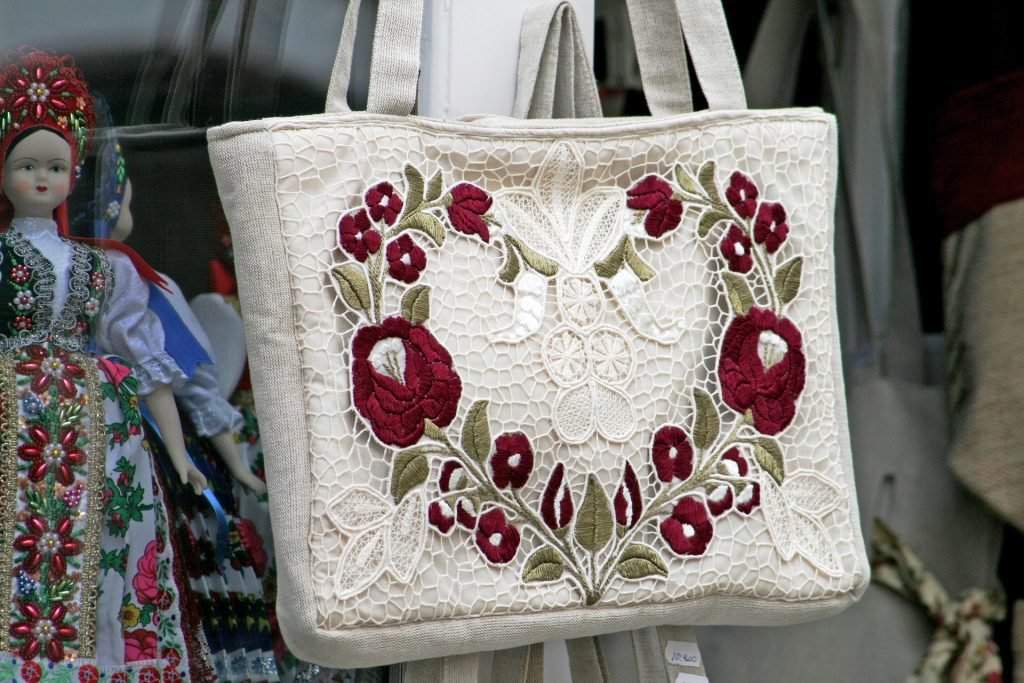
The listed Hungarikums come from many different fields of life. Among others, you can find Halas lace, Herend porcelain, Béres drops and Béres drops extra, Erős Pista, the life-work of Ferenc Puskás, the caves of Aggtelek etc. in seven categories (Agriculture and Food Industry, Health and Lifestyle, Industrial and technological solutions, Cultural Heritage, Sport, Natural environments, Tourism and catering).
However, it’s not quite clear what kind of advantage it means for a product to be listed as a Hungarikum. More importantly, what is the guarantee of good quality in the case of a concept which is used in general terms quite often?
Another question that might arise is how we can compare exact brands, like Pick, Herz, Unicum with general concepts like Csabai sausage or grape marc pálinka, mentioned without origin or any categorization. The production of the former ones follow strict rules and sometimes even secret family recipes, while generally listed products can be of any quality. Even though the pálinka law, for instance, has bettered the quality of the beverages sold in shops, we can still find fake versions that are quite far from what is called a Hungarikum.
Something even more complicated is the case of the fish soups of Baja and Tisza, and the Egri Bikavér. These are amazing delicacies in themselves but what if a foreigner is not an expert in gastronomy? Truth is, that there’s a good chance that they will be sold something that is quite far from traditional flavours. On the other hand, it must be admitted that improvements have been made in past years in this field as well, for instance, there are some restaurants that stick to freshly made fish soup, but this is still on the rare side.
The case of Egri Bikavér is especially delicate, as part of the beverages sold under this name are undrinkable. This is not too good for the reputation of the beloved Hungarian wines. This demonstrates that “Hungarikum” in itself is not necessarily a guarantee for good quality. But then again, there are several oenologists, determined experts in Eger who have been successfully fighting for the good reputation of the wines of Eger.
Despite the efforts for guaranteeing good quality, the current generalizing approach of the Hungarikum-system is leading to a different way. According to Tamás Molnár B., the founder of the Hungarian Gastronomy Association, it would be better to determine criteria of quality, just like they do in France with the Label Rouge labelling (it distinguishes excellent quality food, ingredients and plants from general quality ones).
“Without strict professional criteria, this is only a show-off, or the development of national sense. For instance, what has recently become a Hungarikum under the name of fisherman’s soup from the region of Tisza is basically “tavern fish soup”. They cook the fin, head of the fish, cream it, and add the fish pieces. This could turn into a delicious meal, but what makes it a Hungarikum?”
The Hungarian Gastronomy Association has created and reserved the “Golden ribbon” trade-mark, which stands for quality. They would be happy if they could win the government for the case, because they believe that they should take part in the controlling process. The Association based its criteria on the French one. To put it simply, good quality cereals, vegetables and animals should come from natural farms, or somewhere close to them.
An agreement has been made between the association, the Ministry of Agriculture and the National Food Chain Safety Office, and Tamás Molnár B. feels like things are slowly progressing, even though the offices don’t quite feel the importance of the case. Still, the association believes that the creation of true gastronomy is the interest of the whole country, and the Hungarikum system is going in a different direction for the time being.
Photos: MTI, www.facebook.com/Hungarikum~, www.szeged.varosom.hu
Ce: bm
Source: http://mno.hu/


