


Prostitutes and secret clauses: 5+1 perplexing myths about the Treaty of Trianon

Change language:
The signing of the Treaty of Trianon is considered one of the most tragic events in Hungarian history. However, despite—or perhaps because of—its significance, many misconceptions and legends surround this event.
The Treaty of Trianon was signed at the Grand Trianon château in Versailles on 4 June 1920. It formally ended the war between the Allies and the Kingdom of Hungary, redrawing the country’s borders and resulting in Hungary losing over two-thirds of its territory and more than half of its population.
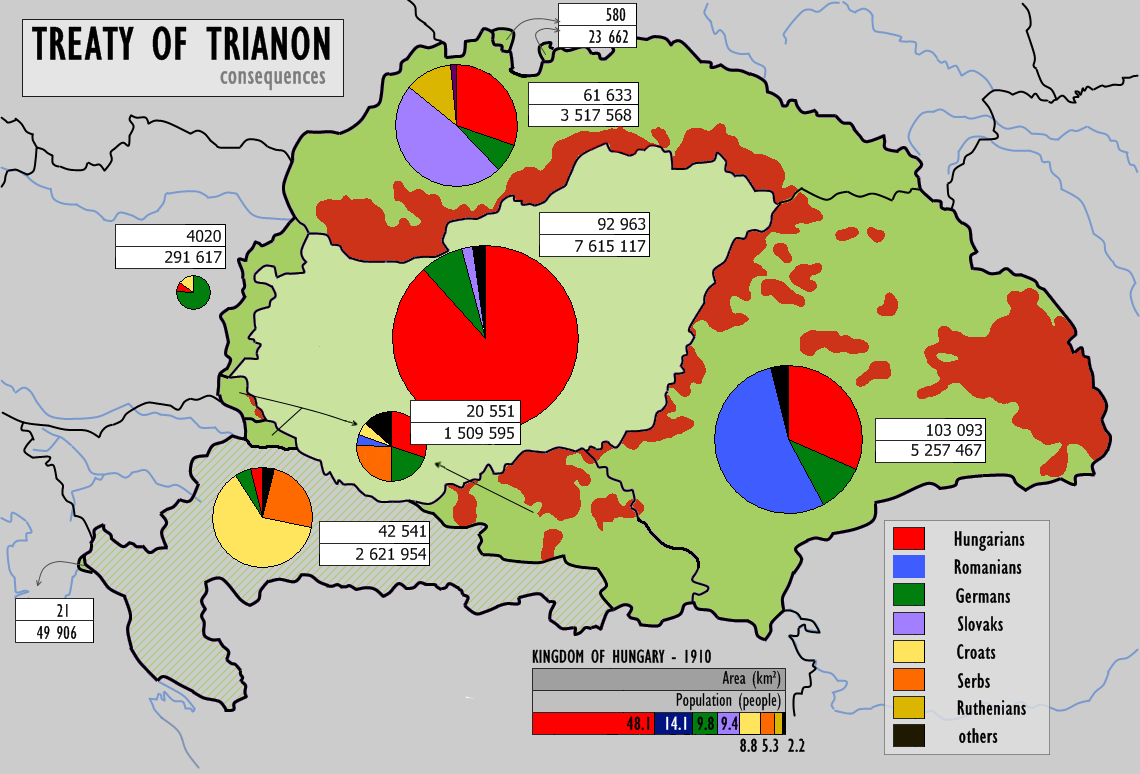
The economic and social upheaval brought about by the treaty, along with the collective trauma it inflicted on the country, has been so influential in Hungarian history that, in 2020, the BBC noted how “for Hungary, the 1920 treaty was a national wound that still festers to this day.”
Indeed, as reported by DNH in 2020, 83% of Hungarians believed that the Treaty of Trianon was the most tragic event in the country’s history. Another representative study from 2020 found that a majority of Hungarians agreed that “those who are Hungarian are still hurt by Trianon to this day.”
On the 104th anniversary of the event, we examine some of the misconceptions surrounding this significant piece of history.
Albert Apponyi’s speech in three languages
It is an oft-repeated claim that the leader of the Hungarian delegation, Count Albert Apponyi, delivered his speech in three languages to the victors of the war in response to the peace terms. While this is technically true, it needs some clarification.
As Rubicon historical magazine notes, Apponyi’s speech, which lasted about 70 minutes, was delivered in French. He then summarised the most important parts in English (as British Prime Minister David Lloyd George did not speak French well). Finally, in Italian, Apponyi only addressed a few sentences to the Italian Prime Minister at the very end of his speech.
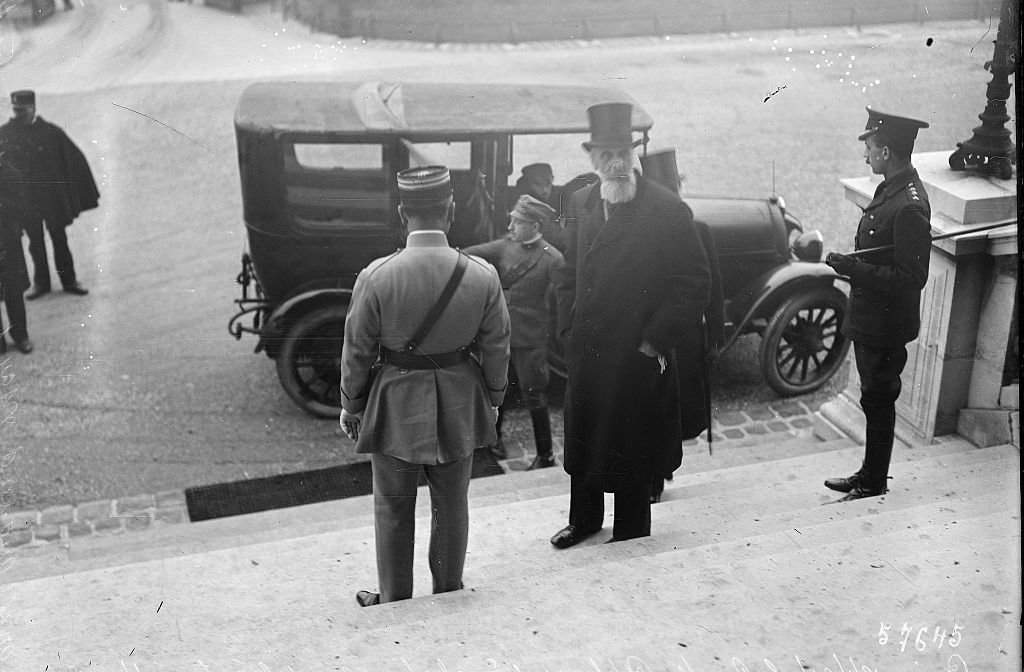
Photo: Wikimedia Commons
Map forgery and navigable streams
As highlighted by Múlt-kor magazine, there were accusations in the press at the time that representatives of Hungary’s neighbouring states had falsified maps to persuade the Entente powers to decide in their favour. It was alleged that small streams were often presented as navigable rivers to influence the new borders.
One such accusation was that the Czechs at Sátoraljaújhely falsely claimed the Ronyva Rivulet was navigable. When the Entente Commission surveyed the area, the Czechs allegedly lit a fire on the bank of the stream, waved a blanket over it, and told the French and British that a steamer was passing by.
History is rewritten over and over again. The truth is hidden somewhere. This is a new version, trying to make wester EU countries look better. This is nonsense.
According to Fidesz, the opposition signed the deal 😂
Former senior partner Austria? Hardly a complaint after the end of the Habsburg’s and empire, downsizing to a manageable nation state size, at same time post WWI?
According to Maria, Ukraine should accept the lost of his territory against russia, but what she does not accept, just like orban, is the lost of 2/3 of Hungarian territory.