Geopolitics and power shifts: Experts discuss transatlantic relations at NKE conference

Change language:
On May 21, the John Lukacs Institute for Strategy and Politics hosted an international conference titled Transatlantic Relations and Geopolitical Competition in Central Europe at the Ludovika University of Public Service (NKE).
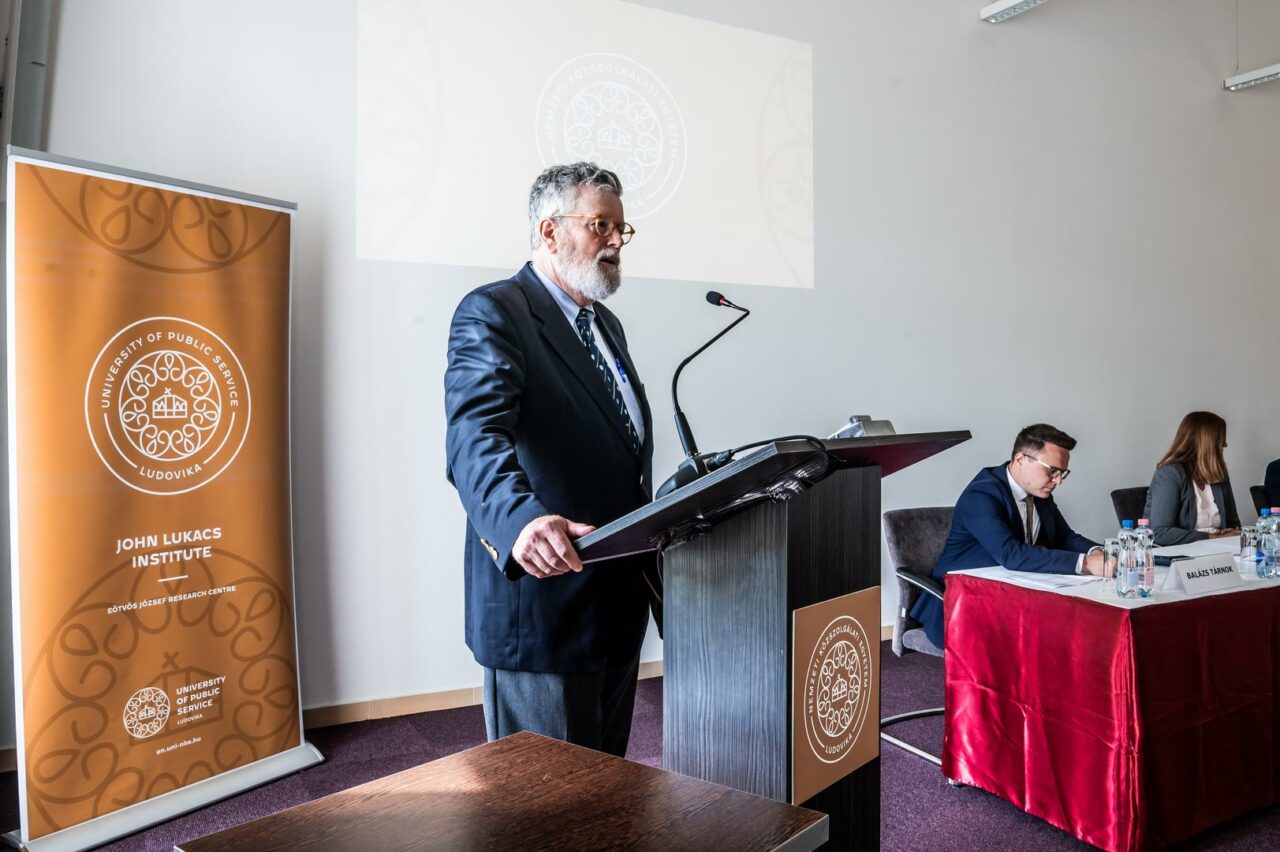
The keynote address in the first panel was delivered by Professor Michael C. Desch, Director of the Notre Dame International Security Center. Professor Desch addressed a foundational text in the study of international politics—Thucydides’ History of the Peloponnesian War. Drawing historical analogies, Desch stressed the enduring significance of power dynamics and the consistent patterns of human behavior across time. He discussed how a rising power can instil fear in an established hegemon, increasing the likelihood of conflict—a lens through which the current U.S.-China rivalry may be viewed.
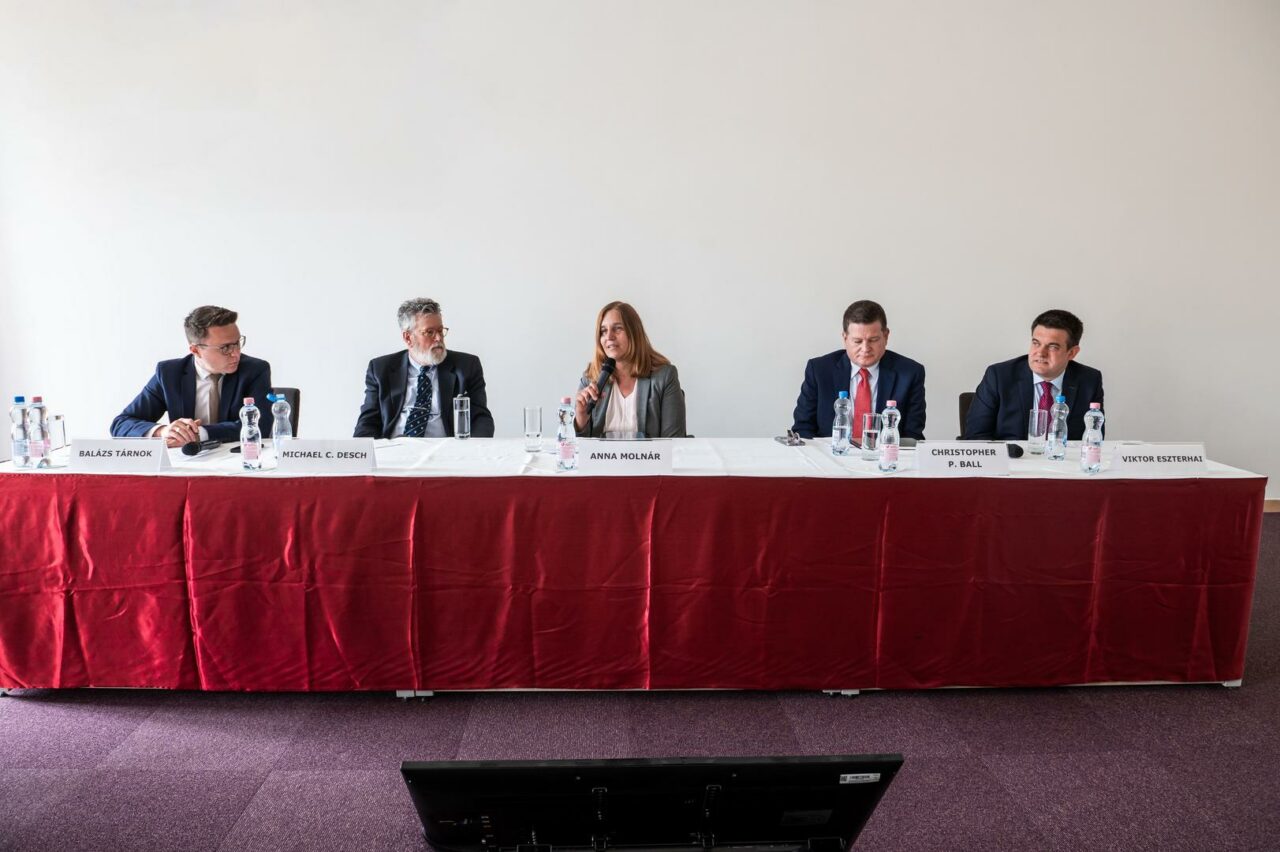
Desch framed Thucydides as an early realist, noting that realism continues to inform our understanding of global affairs. The keynote was followed by a panel discussion. Professor Anna Molnár, Head of the Department of International Security Studies at Ludovika University for Public Service, elaborated that the European Union is now facing renewed urgency to adapt, particularly in light of Russian aggression. She argued that the EU must move beyond its image as a soft power and become capable of projecting force when necessary.
Professor Christopher P. Ball of Quinnipiac University provided an economic perspective, analysing how recent shifts in U.S. trade policy have affected transatlantic economic ties. He noted that the American, and more specifically the MAGA rationale for these changes, often stems from a belief that post–World War II alliances have become imbalanced.
Viktor Eszterhai, Head of the China and Indo-Pacific Research Program at the John Lukacs Institute for Strategy and Politics, examined evolving perceptions of China in the West, especially the shift from cooperative multilateralism to strategic competition. Eszterhai posed critical questions about the extent to which Europe and the U.S. truly align on China-related issues.
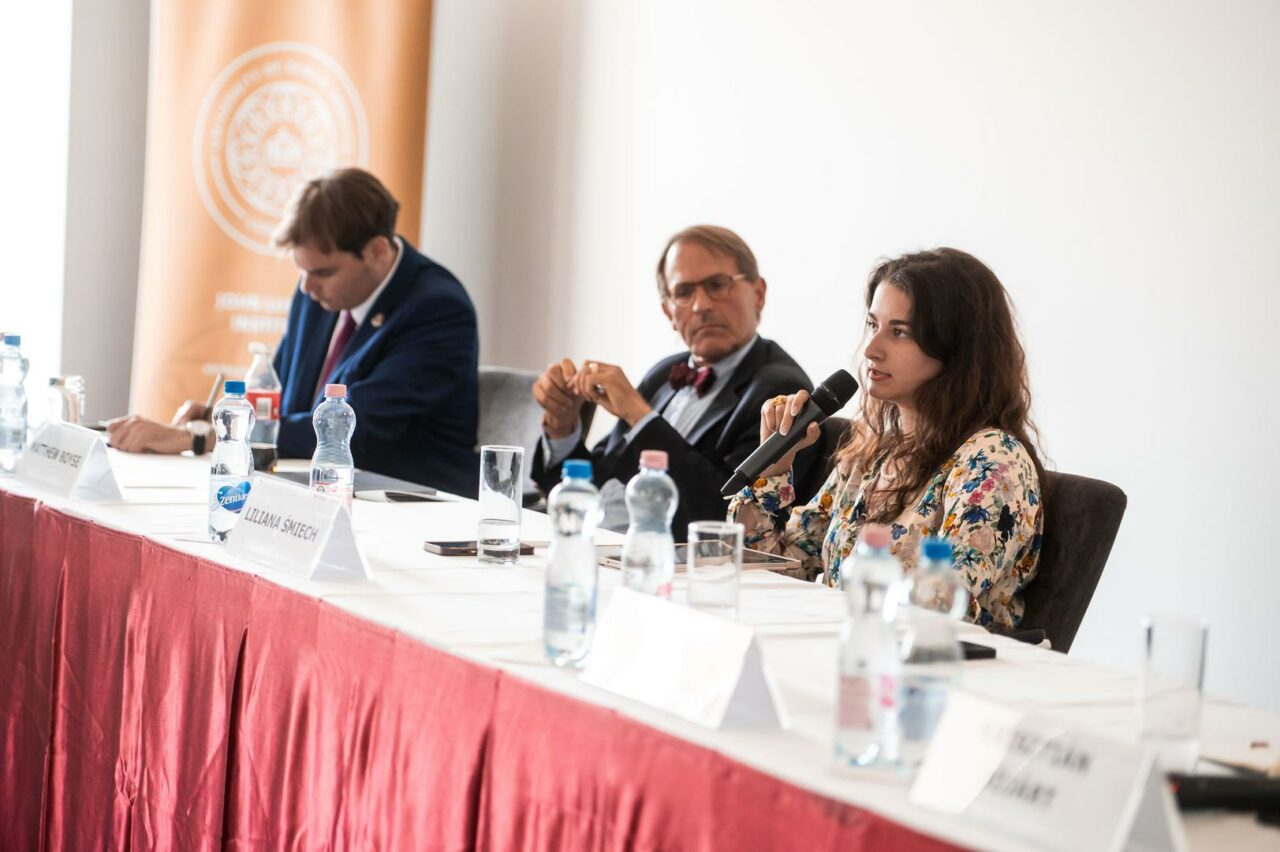
The second panel featured a keynote address by Matthew Boyse, Senior Fellow at the Hudson Institute’s Centre for Europe and Eurasia. Boyse argued that after the Cold War, Russia reverted to nationalist assertiveness and has since pursued an expansionist foreign policy. Europe initially responded with caution, maintaining economic ties. It was only after full-scale war broke out that more substantial Western responses emerged.