

China’s ambassador to Budapest, Gong Tao, says Beijing remains confident in the long-term development of Hungary-China relations under Prime Minister Péter Magyar, while signalling opportunities for deeper cooperation in robotics, artificial intelligence and other high-tech industries. In an exclusive interview with Daily News Hungary, the ambassador also discussed the Budapest-Belgrade railway, BYD’s controversial appointment of Péter Szijjártó, the Semcorp case, cheap Chinese online shopping and efforts to attract more Chinese tourists to Hungary.
Daily News Hungary (DNH): Péter Magyar and his government have now passed the symbolic 100-day mark in office. What have been your first impressions of the new Hungarian government, and how would you assess the development of Hungary–China relations since the change of government?
His Excellency Gong Tao: Under the leadership of Prime Minister Magyar, the new government has been advancing the reform and restructuring of government institutions, worked to secure EU funds, led the Hungarian people in tackling the challenges posed by extreme heat and drought, and achieved notable progress in both domestic and foreign affairs. I would like to extend my congratulations on these achievements.
Regarding China-Hungary relations, I still clearly recall Prime Minister Magyar’s remarks at his first international press conference, when he expressed appreciation to the Chinese side for respecting the choice of the Hungarian people and highlighted that developing relations with China serves not only Hungary’s interests but also the common interests of both countries. From his remarks, I perceived the positive attitude of the Hungarian government toward developing relations with China, which left a strong “first impression” on me.
Since the new government took office, the leaders of our two countries have maintained good interaction through exchanges of letters and messages, with a common understanding of moving China-Hungary relations forward. I have met with several ministers of the Hungarian government and maintained close communication with them on important issues concerning bilateral relations and cooperation. China-Hungary relations are kept on a track of steady development.
Developing China-Hungary relations serves the common interests of both sides and meets the expectations of our peoples. As Chinese Ambassador to Hungary, I am full of confidence in the long-term development of China-Hungary relations and am ready to work with the Hungarian government and friends from all sectors to deepen friendly exchanges and cooperation between China and Hungary across various fields, so as to achieve mutual benefit and win-win outcomes and bring greater benefits to the peoples of both countries.
Read our previous interview with His Excellency Gong Tao: Exclusive interview: China’s ambassador to Hungary talks government ties, the Budapest–Belgrade railway and more
Daily News Hungary (DNH): The Budapest–Belgrade railway is one of the flagship projects of Hungarian–Chinese economic cooperation. Passenger services are expected to begin once the remaining testing and safety procedures have been completed. What can you tell us about the current status of the project, and when do you realistically expect passengers to be able to travel directly between Budapest and Belgrade?
H. E. Gong Tao: The Budapest-Belgrade Railway is an important government-to-government cooperation project between China and Hungary. Thanks to the joint efforts of both sides, all infrastructure construction on the Hungarian section has been completed. Freight services were officially launched on February 27, with operations kept safe and stable. The railway is expected to significantly strengthen Hungary’s geographical advantage as a transportation hub in Europe and contribute to regional economic development.
Chinese participating businesses, consistently guided by the principles of green development, environmental protection, and regulatory compliance, strictly adhering to EU and Hungarian laws and regulations as well as railway technical standards. Meeting challenges with painstaking efforts, they have applied China’s advanced railway construction management experience, technologies, and equipment to the project, while also training a large number of specialized local professionals in Hungary.
Regarding the launch of passenger services, Chinese enterprises involved in the project have been working with MÁV since last October to conduct ETCS testing. The Hungarian government attaches great importance to this matter and expressed hope for passenger services to open at an early date. Now, both sides are working faster toward this goal.
The Chinese Embassy will continue to play its coordinating role and work closely with the Hungarian government and MÁV to support the Chinese participating enterprises in completing the remaining testing work on the Hungarian section to a high standard and launching passenger services as soon as possible, so that the Hungarian people can experience the convenience brought by the railway’s upgrade and modernization.
Never miss a headline: join Daily News Hungary’s official WhatsApp channel!
Daily News Hungary (DNH): BYD recently appointed former Hungarian foreign minister Péter Szijjártó to a senior international role dealing with external relations and new business development. The appointment has generated considerable political and public debate in Hungary. How is this appointment viewed from the Chinese side?
H. E. Gong Tao: This is Mr. Szijjártó’s personal career choice as well as a market-based hiring decision by the enterprise, on which we have no comment. The Chinese side takes note of the investigations conducted by the Hungarian government in accordance with the law. The Chinese government has always required Chinese enterprises, including BYD, to strictly abide by Hungarian and EU laws and regulations and to actively fulfill their corporate social responsibilities.
In recent years, BYD has deepened its presence in the Hungarian market and continuously advanced the localization of employment and supply chains. BYD has invested in and built a bus plant, a battery plant, and an electric vehicle production base in Hungary, while also establishing its European headquarters and R&D center in the country. These projects are expected to create more employment and development opportunities for Hungary and contribute to the country’s sci-tech innovation and green transition. The company is also active in local community affairs, cooperating with Hungarian universities and vocational education institutions, and strengthening its integration into local society.
Economic and trade cooperation between China and Hungary is and must be mutually beneficial and win-win. China stands ready to work with Hungary to further deepen practical cooperation for the benefit of the two peoples.
Daily News Hungary (DNH): A few days ago, the Chinese Embassy shared Semcorp Hungary’s open letter and stressed that China consistently requires Chinese companies operating abroad to comply with local laws, fulfil their social responsibilities and take strict measures to protect the environment. Why did the Embassy consider it important to emphasise this message publicly at this particular moment?
H. E. Gong Tao: In June this year, Semcorp’s Debrecen facility was ordered by the Hungarian authorities to suspend production on suspicion of environmental pollution. Following the incident, the company actively cooperated with the competent authorities in carrying out rectification and inspections. Meanwhile, it invited retesting by qualified and professional laboratories and sought professional opinions from environmental experts. The retesting and assessment results were disclosed by the company. The conclusion was that no evidence was found to indicate that the factory had caused the environmental pollution stated in the shutdown order. The relevant reports were also submitted by Semcorp to the Hungarian authorities.
The Embassy’s forwarding of the company’s open letter was intended both to ease concerns among the Hungarian public about possible pollution and to urge and remind all Chinese businesses operating in Hungary to strictly abide by local laws, actively fulfill their social responsibilities, and adopt rigorous measures to protect the environment, so as to better integrate corporate development with local social and environmental interests.
We fully understand and respect the Hungarian government’s policy of strict supervision of the battery and other key sectors, which reflects its commitment to environmental protection and the sustainable development of businesses in the long term. At the same time, we hope that, while conducting supervision in accordance with the law, the Hungarian side will provide a fair, just, transparent, predictable and non-discriminatory business environment for all Chinese and foreign investors alike.
Daily News Hungary (DNH): China’s rapid development in humanoid robotics has attracted enormous international attention. Just recently, a Chinese-backed humanoid robot production facility was established in Šabac, Serbia, with plans for significantly larger production in the future. Could Hungary also become a manufacturing or development centre for Chinese robotics?
H. E. Gong Tao: Recently, the humanoid robot factory jointly built by China and Serbia officially commenced production. This is Europe’s first mass-production base for humanoid robots and represents a new direction for deepening practical cooperation between China and friendly countries.
This also represents an area where China-Hungary cooperation holds great promise.
First, there is a high degree of alignment in our priority areas for development. Both China and Hungary are committed to achieving high-quality development, with a focus on high value-added industries, commitment to sci-tech innovation and the cultivation of high-quality talent, and close attention to cutting-edge technologies such as AI and intelligent robotics.
Second, there is a solid foundation for industrial cooperation between us. Robotics and automobile manufacturing share many technological commonalities and are mutually reinforcing at the industrial level. Practical cooperation between China and Hungary in new energy and automobile manufacturing has already yielded fruitful results, laying a solid foundation for both sides to further explore cooperation in the field of robotics.
Third, there is enormous potential for future cooperation. China and Hungary are already exploring cooperation in such fields as AI and embodied robotics. For instance, Unitree’s products are quite popular in Hungary; Chinese and Hungarian businesses and institutions have initiated cooperation in autonomous driving; and universities and research institutes from both countries are also exploring future opportunities for cooperation.
Daily News Hungary (DNH): Many Hungarians are interested in the “Temu topic.” Since July, the European Union has imposed a €3 customs duty on low-value parcels entering the EU, a measure that particularly affects platforms such as Temu, Shein and AliExpress. Many European consumers appreciated these platforms precisely because they offered extremely low prices. Do you see the new rules as legitimate consumer and market protection, or as a form of protectionism directed primarily at Chinese businesses? Is there a way back to the era of extremely cheap Chinese online shopping for European consumers?
H. E. Gong Tao: Cross-border e-commerce is a new form of trade that has emerged alongside the growing trend of global consumption and benefits hundreds of millions of consumers. Policy adjustments in relevant areas should aim to facilitate trade. China respects the EU’s customs regulatory sovereignty and understands its concerns over false declarations and tax compliance. However, the fact that the new small-parcel rule passes costs on to EU consumers and deals a blow to normal cross-border e-commerce trade is also a matter of concern. At the same time, we oppose de facto country-specific discrimination.
The Chinese government always stands for an open and inclusive multilateral trading environment and opposes all forms of unilateralism and trade protectionism. We hope that the EU can uphold the principles of a market economy and non-discrimination, and create a fair, transparent, and predictable business environment for businesses from all countries, including Chinese ones, rather than making consumers bear the costs of trade barriers and protectionism.
Daily News Hungary (DNH): Hungary has become an increasingly visible European destination for Chinese travellers. What do you think Hungary could do better to attract more Chinese tourists and encourage them to stay longer and explore destinations beyond Budapest?
H. E. Gong Tao: I am pleased to see that, with exchanges and cooperation deepening between China and Hungary across various fields, Hungary is becoming an increasingly popular European destination for Chinese tourists. This is attributable to the high level of political mutual trust between the two countries and also the shared aspiration of our two peoples for mutual understanding and friendship.
Hungary boasts a rich historical and cultural heritage as well as beautiful natural scenery. Beyond Budapest, Lake Balaton, the Tokaj wine region, and other destinations also boast their own unique charms. I believe that by further optimizing flight and domestic transport connections, improving services such as Chinese-language guided tours, mobile payment, catering and accommodation, launching more themed programs that integrate hot springs, gourmet food, wine, and folk experiences, and strengthening targeted promotion in China, Hungary can attract more Chinese tourists to explore the country in greater depth and encourage them to extend their stays.
China stands ready to deepen tourism cooperation with Hungary and promote people-to-people exchanges and mutual understanding, to inject new vitality into China-Hungary friendship.
Daily News Hungary (DNH): The Chinese Embassy and the China Cultural Centre in Budapest have invested considerable effort in bringing Hungarian and Chinese culture closer together. Based on your experience, how receptive are Hungarians to Chinese culture, and which programmes or initiatives have proved particularly successful in strengthening mutual understanding between the two countries?
H. E. Gong Tao: In recent years, the growing participation of Hungarian people in various cultural activities has reflected an increasing interest in and appreciation of Chinese culture. Traditional Chinese festivals, calligraphy, music, martial arts, and cuisine are all widely popular. To better engage with the Hungarian public and connect with them on a more personal level, the Embassy recently launched its official TikTok account. The account has attracted widespread attention from Hungarian friends, garnering more than 600,000 views and nearly 10,000 followers in just one month. Many of them have also left comments asking a wide range of interesting questions about China.
It is heartening to see that Hungarian friends are not only interested in China’s traditional culture but are also increasingly eager to learn about contemporary China’s development and social life. Events such as Spring Festival temple fairs, Chinese film screenings, art exhibitions, and youth exchange programs have received enthusiastic responses, bringing the peoples of the two countries closer together in a direct, warm, and interactive way. Recently, young people from Hungarian universities, think tanks, and media organizations have visited China’s Hunan, Hubei and Fujian provinces, witnessing firsthand the country’s development and transformation, experiencing its rich and diverse culture, and coming away with good memories.
Looking ahead, China stands ready to further facilitate exchanges and cooperation with Hungary among cultural institutions, schools, local communities, and young people, so that mutual learning among civilizations can better promote people-to-people bonds and consolidate the social and public foundation for China-Hungary friendship.
Daily News Hungary (DNH): Finally, if you looked five or ten years ahead, what would you like Hungary–China relations to look like? What would you consider the greatest opportunity – and the greatest risk – for the relationship between the two countries?
H. E. Gong Tao: The traditional friendship between China and Hungary has a long and rich history. The close friendship and cooperation between the two countries represent an important historic achievement, built through more than seven decades of dedicated efforts by the two governments and peoples. With enormous potential for cooperation and a promising future, China-Hungary relations are well positioned to reach new heights.
Over the next five years, China will steadily advance the implementation of the various tasks set out in its 15th Five-Year Plan. Over the coming decade, it will continue to work toward the goal of basically achieving socialist modernization. Hungary, for its part, is committed to building, by 2030, a “human and well-functioning Hungary.”
Looking ahead, the greatest opportunity for our two countries lies in our shared pursuit of modernization and the improvement of people’s well-being. This common aspiration has enabled China and Hungary to remain committed to moving in the same direction and making progress together amid 77 years of changes and challenges in the international landscape. It will also provide strong impetus for the two countries to further align our development strategies and explore cooperation in emerging and innovative fields, including the digital economy, new energy, artificial intelligence, and intelligent manufacturing.
There is no fundamental conflict of interests between China and Hungary. The greatest challenges facing our bilateral relationship arise instead from an increasingly turbulent and complex international environment. Today, the world is undergoing profound changes unseen in a century, while instability and uncertainty are on the rise. These developments will inevitably pose new challenges to China-Hungary relations.
Looking to the future, it is important for our two countries to continue upholding the principles of mutual respect, equality, and win-win cooperation; strengthen dialogue and communication; jointly explore opportunities for cooperation; work together to address risks and challenges; and shoulder our shared international responsibilities. By doing so, we can add new dimensions to China-Hungary relations and ensure that our enduring friendship continues to flourish in the new era.

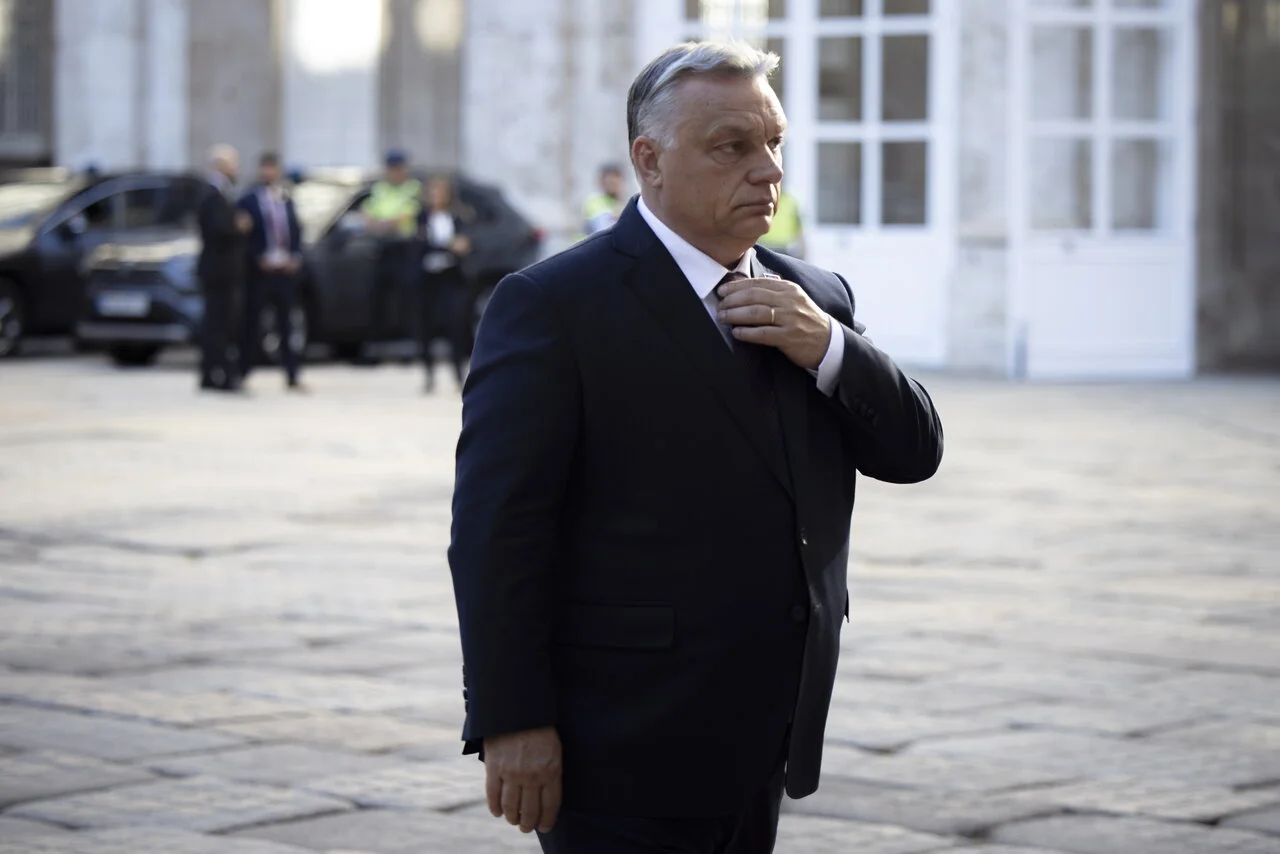


Though Prime Minister Magyar has totally mismanaged Hungary’s relationship with Russia, he is a doing a good job with The Ukraine & China – among others.