Subscribe to our social channels to get the latest news about Hungary!


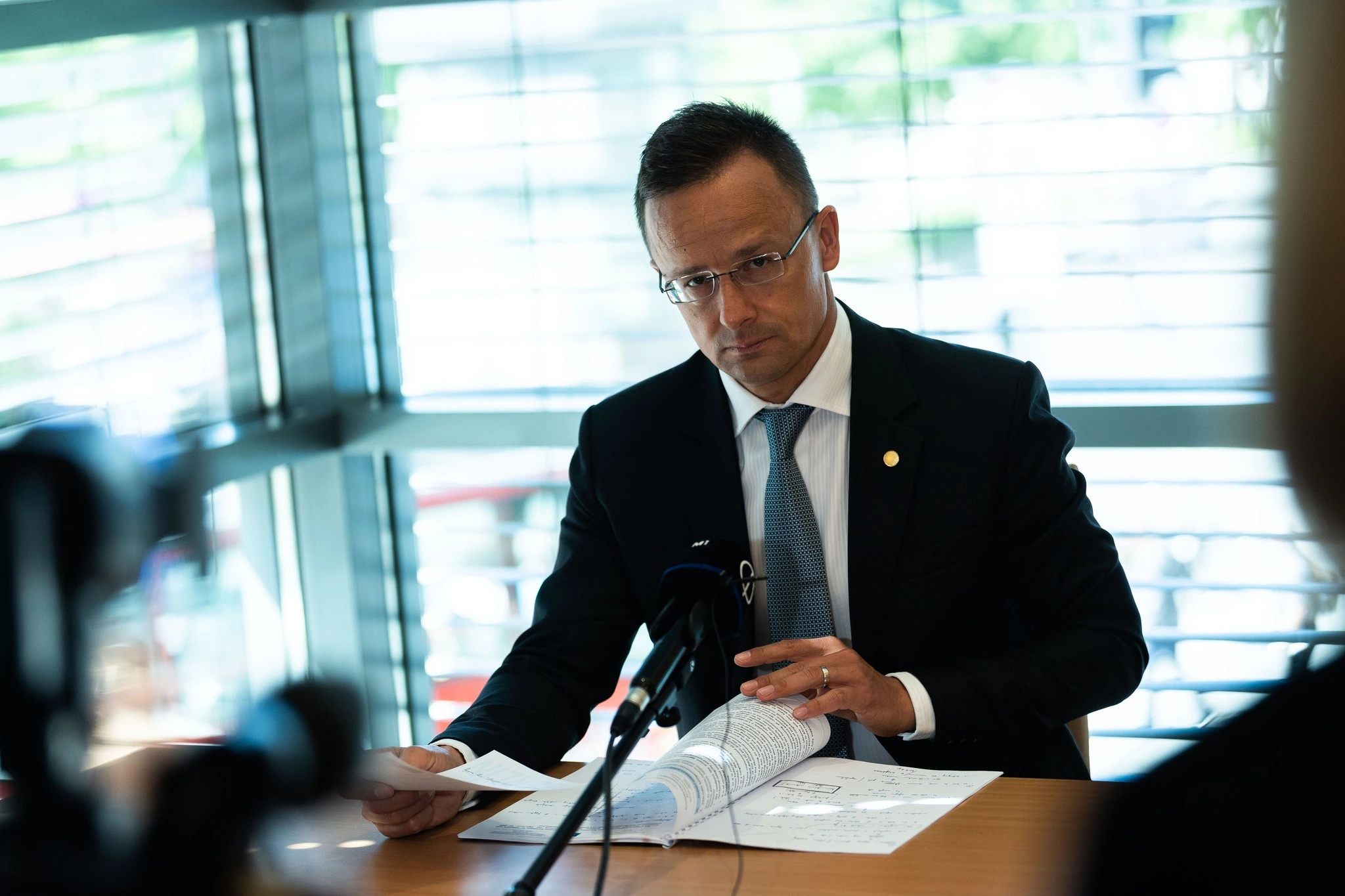
The position adopted by NATO on the war in Ukraine continues to coincide with Hungary’s national interests, namely that everything must be done to ensure that the conflict does not spread beyond Ukraine’s borders, Foreign Minister Péter Szijjártó said in Berlin on Sunday.
Addressing a press conference during a break in an informal meeting of NATO foreign ministers, Szijjártó said that as a neighbouring country to Ukraine, what mattered most to Hungary was that the conflict did not spread beyond Ukraine’s borders. That is why, he said, it was “especially good news” that this was the position being taken by the alliance in line with the stance adopted by NATO’s strongest member states.
Everyone in NATO “knows that Hungary is on the side of peace”
and as a neighbour to Ukraine is in a “special situation”, the minister said, adding that “fortunately the voice of common sense is strong enough” within the alliance.
He underlined that NATO is a defence alliance, “and our most important duty and interest is protecting Hungary and the Hungarian people”.
The position that everything must be done to prevent direct conflict between NATO and Russia also enjoys broad support, Szijjártó said.
The situation is “extremely fragile” and requires great caution,
he said. “We, of course, understand and respect that quite a few member states” are aiding Ukraine with weapons deliveries, he said, adding, at the same time, that it was crucial that those deliveries are not made “within the framework of NATO”.
The members of the alliance agree that “NATO is not sending weapons into this conflict”, he said. The reason why Hungary decided not to send weapons to its north-eastern neighbour and banned the transit of weapons deliveries through its territory into Ukraine was to ensure that it does not get dragged into the war, he added.
Member states also discussed the need to maintain “strategic dialogue with Russia” in the interest of preventing an escalation of the conflict and any “tragic consequences due to certain misunderstandings”, Szijjártó said.
Hungary fully supports this position and welcomes this week’s phone call between the US secretary of defence and Russia’s defence minister, he added.
Concerning the humanitarian aspects of the crisis, Szijjártó said he had told the meeting that Hungary has taken in almost 700,000 refugees from Ukraine. “We of course allow entry to everyone fleeing the war and provide care for them,” he said. Based on the “dynamics” of the war, the number of refugees entering Hungary is not declining, and Hungary is prepared to help anyone fleeing the war, he said.
The meeting also touched on the sanctions being imposed on Russia, Szijjártó said, adding that it was “pointless” to impose sanctions that “hurt us more than the country we would impose them on”.
Hungary stands by its position that “because the Hungarian people are not to blame for the outbreak of this war, nobody can expect them to pay the price of war”, Szijjarto said.
Concerning Finland and Sweden’s bid to join NATO, Szijjarto said Hungary had always backed the alliance’s “open door policy”, adding, however, that the position expressed by Turkey should also be taken into consideration.
As regards NATO’s planned new Strategic Concept, Szijjártó said the alliance must also pay attention to “security challenges” from the south as well as terrorism and illegal migration.
Terrorist groups are looking to take advantage of the fact that Europe’s focus is on the war in Ukraine, and with both Russia and Ukraine being among the world’s top grain exporters, a fall in exports due to the conflict could cause serious food shortages in areas that are already less stable, Szijjártó said. This could lead to a rise in extremism and terrorism, which in turn could lead to the emergence of new migration waves, he added.
Source: MTI


