Subscribe to our social channels to get the latest news about Hungary!


Budapest, February 25 (MTI) – Global threats have changed and become more complex over the recent period, making the security policy environment less predictable, Hungary’s foreign minister told a security conference in Budapest on Thursday.
The political, economic, social and technological changes underway are shaping a new world order, Péter Szijjártó said in an opening address to the event hosted by the Centre for Euro-Atlantic Integration and Democracy (CEID).
There will be winners as well as losers in the whole process, and Hungary most certainly wants to be part of the first group, he told the conference that focuses on recent security challenges related to migration and tasks for the next NATO summit scheduled for July in Warsaw.
Szijjártó said that illegal migration has increased the threat of terrorism and deteriorated public security. For this reason, he said, halting mass migration is the most urgent task of the European Union.
This requires strengthening the protection of the EU’s southern borders collectively along with making efforts to eliminate the root causes of mass migration, Szijjártó said.
The minister highlighted the importance of cooperation among the Visegrad Four countries of the Czech Republic, Hungary, Poland and Slovakia at this time of crisis and the help the other three states provided for Hungary in protecting its borders.
Speaking to reporters, Szijjártó said the next NATO summit should discuss further enlargement of the alliance, accomplish the integration of Montenegro and offer Macedonia and Georgia the prospect of membership.
Slovak Foreign Minister Miroslav Lajcak told the conference that Slovakia and Hungary agree on the need to further enlarge NATO but their position is not shared commonly in the alliance.
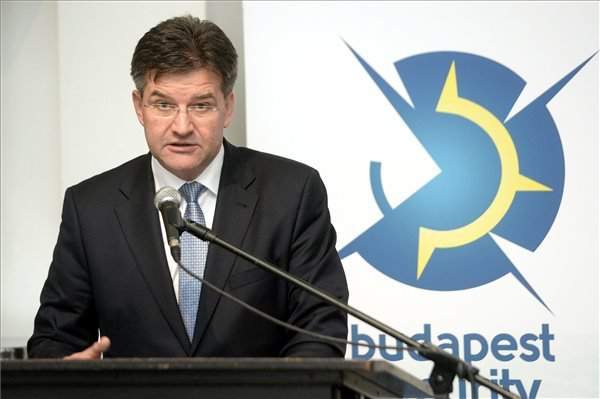
Other members view enlargement as a provocative process that would destabilise the alliance, he said.
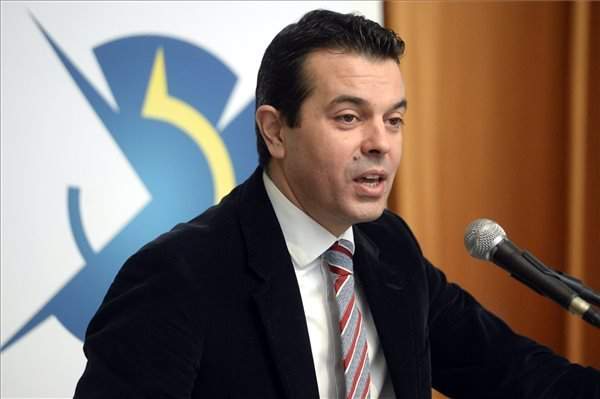
Macedonian Foreign Minister Nikola Poposki said that only a rather small proportion of the around one million people who came to Europe last year are supposed to be radical terrorists. But this circumstance must not be underestimated in light of the fact that several culprits of the Paris attacks had turned out to have reached Europe via the Western Balkans.
Ted Whiteside, NATO’s Assistant Secretary-General for Public Diplomacy, said the alliance will work in cooperation with the EU’s border agency Frontex and Turkish and Greek authorities in efforts on the Aegean Sea.
Although it is not the duty of NATO to turn back vessels carrying migrants, the alliance must extend help to all who are in peril, Whiteside said. He added, however, that all the rescued will be taken back to Turkey.
Zsolt Németh, the head of Hungarian parliament’s foreign affairs committee, said it is high time for Europe to reconsider its security. Nemeth, of the ruling Fidesz, added that he trusted the deal with Ankara would be respected but it cannot be excluded that Turkey will not protect Europe. “Being able to protect the borders is a very important precondition for the existence of every political entity”, he said, citing the US as an example.
Former Austrian foreign minister Michael Spindelegger, who currently heads the International Migration Policy Development Centre, called for a balance to be found between the security of the state and its citizens. The flow of migrants needs to be controlled and legal regulations should be reviewed because the Geneva Convention entered force in the 1950s and the Dublin agreement is not functional. Conditions for lawful entrance in Europe need to be created and new arrivals should be integrated with the help of education and employment.
Alvaro Renedo Zalba, the Spanish prime minister’s advisor in EU affairs, said that the number of illegal migrants arriving in the Canary Islands has been reduced from 36,000 to practically zero in a few years through a dialogue with the countries of origin and the deployment of all available means. The most efficient measure was the systematic return of illegal entrants which discouraged would-be migrants from setting off.
Photo: MTI
Source: http://mtva.hu/hu/hungary-matters


