Budapest is set to return to normal operations from 1 September after the capital’s energy supply was restored. Decorative lighting, fountains and the Gellért Hill waterfall will also be switched back on following weeks of energy and water-saving measures.
Budapest’s restrictions to end
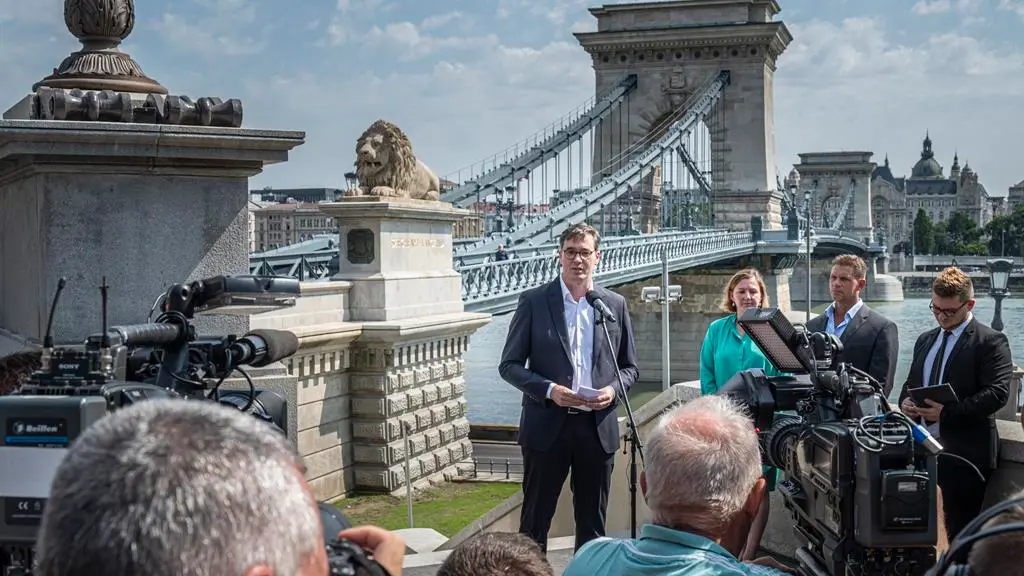
Budapest’s municipal companies will return to their usual operating schedules from 1 September, Mayor Gergely Karácsony announced on Sunday. The temporary restrictions were introduced during a period of extreme summer heat, severe drought and pressure on the country’s energy system.
According to Karácsony, the measures can now be gradually withdrawn after energy supplies have been restored. The mayor said the capital had adapted to the exceptional circumstances while trying to keep public services running with as little disruption as possible.
Among the measures introduced were reduced energy consumption in public transport and at municipal companies, more economical watering of Budapest’s trees and lower overall water use. The city’s decorative lighting was also temporarily switched off, along with fountains and the Gellért Hill waterfall.
From September, these measures will come to an end, and Budapest will once again operate under its usual arrangements.
Public transport also cut energy use
The measures produced significant energy savings across the capital during August. According to information released by the Mayor’s Office, BKK and BKV vehicles accelerated and braked less intensively, saving more than 661 MWh of electricity in the tram network and over 355 MWh on the metro system.
BKK also reduced the energy consumption of escalators at metro stations and cut electricity use at its office building by around 20 per cent. The city said these steps demonstrated that Budapest could respond collectively and responsibly to the increasingly extreme effects of climate change.
Living, working or doing business in Hungary?
Make things easier with professional support in English. Explore Daily News Hungary’s Services in English and find the help you need.
Nearly 20 MWh saved by switching off city lights
Budapest’s public utility company, BKM, saved almost 20 MWh of electricity by temporarily switching off the capital’s decorative lighting. Its peak electricity demand was also reduced by almost 4 MW, while total energy savings at the company exceeded 120 MWh.
The city compared this figure to roughly half an hour of full production by one unit of the Paks Nuclear Power Plant. Meanwhile, Főkert saved around 25,000 cubic metres of water by temporarily shutting down the city’s fountains. BKM is also continuing to install solar power systems, with its installed generation capacity expected to reach 1 MW by the end of the year.
Have you heard? Relief for drivers as Budapest traffic becomes easier with important flyover now finished
Gellért Hill waterfall and fountains return
For Budapest residents and visitors, one of the most visible changes will be the return of the city’s decorative features. The Gellért Hill waterfall and fountains, which were switched off as part of the emergency water-saving measures, are expected to resume operation.
Karácsony said that although the immediate conservation measures are ending, the lessons learned during the crisis should remain. He said the capital would continue working towards a more sustainable, energy-independent and resilient Budapest, while thanking residents for their patience and cooperation.
The city is also consulting with MOHU Budapest, which operates the Capital’s Waste Recovery Facility, about temporarily reducing heat intake during critical periods. This could allow additional electricity to be fed into the national power grid when the system is under particular pressure.