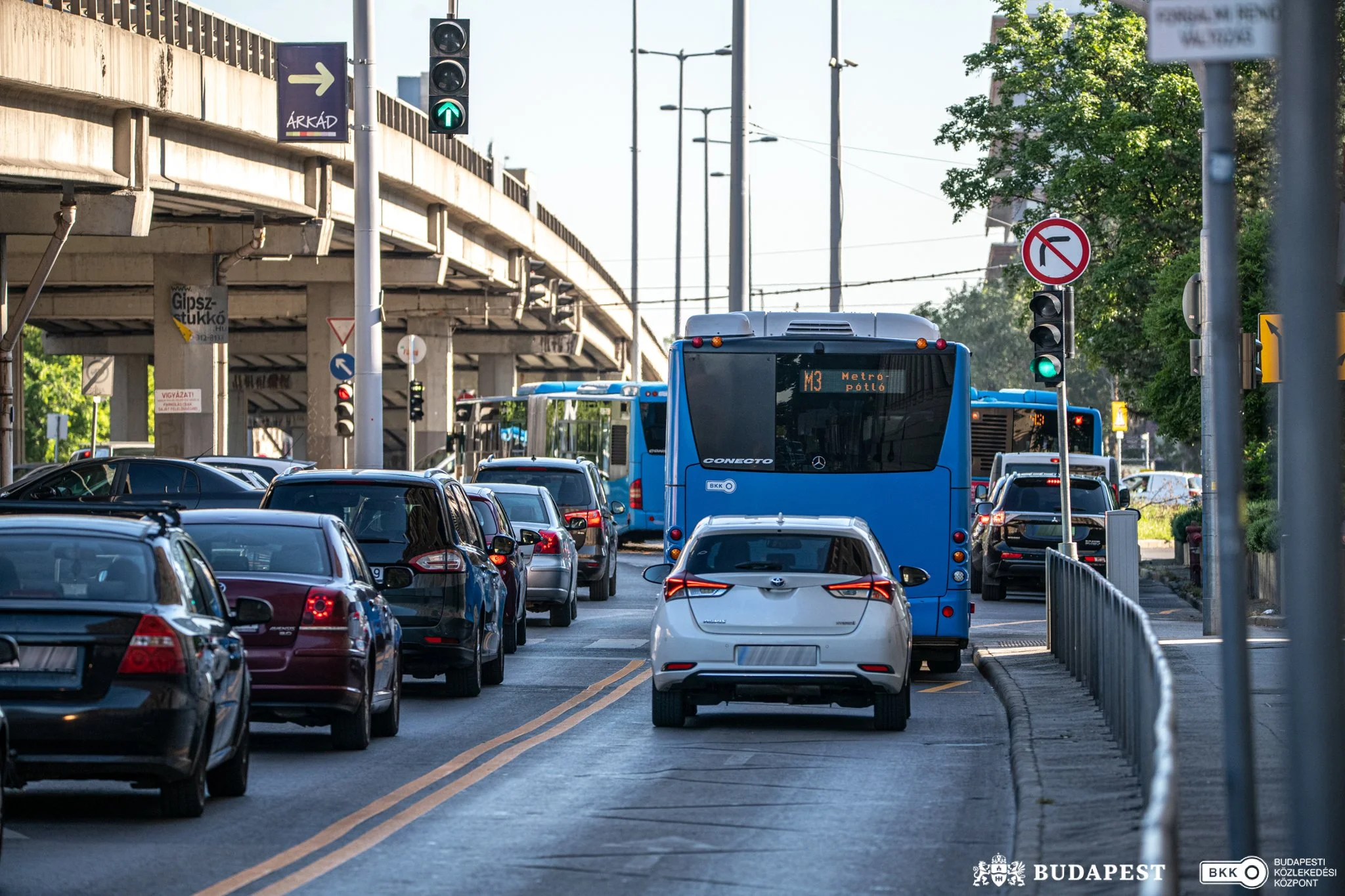
Budapest’s night-time transport network, along with services across the surrounding metropolitan area, is to be overhauled from 1 July, promising more frequent, better coordinated routes and more direct links between the city centre, outer districts and neighbouring towns, Transport and Investment Minister Dávid Vitézy announced on Monday.
Review of the night network
Vitézy noted that, two decades ago, one of his greatest achievements as a civil activist had been the significant expansion of the night bus network. Later, as head of the Budapest Transport Centre (BKK) after 2010, one of his first decisions was to introduce the now well-established 24-hour tram service on line 6. However, he argued that the system has since become due for reconsideration, as both the capital and its suburban belt have undergone profound change, with populations rising in outer districts and hundreds of thousands moving into the agglomeration, the Hungarian news agency wrote.
In his previous role as chair of a metropolitan committee, he last year proposed launching a comprehensive review of the night network. The first step, implemented last summer, was the extension of metro operating hours; the second phase, now underway, is the redesign of the bus network.
Over the past year, the ministry has worked closely with BKK on the new system, including several rounds of public consultation. The broad outlines are now familiar: a more transparent night network, closer in structure to daytime services, with more direct connections and expanded coverage in a number of outer districts.

Budapest and its metropolitan area in one single system
Vitézy also highlighted as a key achievement the coordinated development of Budapest’s night services with the “blue” Volán regional buses serving the wider metropolitan area. Though modest, he said, this marks an important step towards treating transport in Budapest and its surrounding settlements as a single system—an approach essential to addressing the challenges posed by suburban sprawl.
The new arrangements are expected to make it easier to reach outer districts during the night, while also aligning with the extended metro timetable. Travelling from the city centre, including from Deák Ferenc Square, to towns around the capital will become markedly simpler.
Changes in the timetable of the night buses
According to the announcement, night buses serving Budaörs, Törökbálint, Budakeszi and the Zsámbék area will in the future run via the Small Boulevard. New routes 922 and 988 will pass through Budakeszi to Széll Kálmán Square, then continue via Batthyány Square, Chain Bridge and Deák Ferenc Square, before crossing the Small Boulevard and Liberty Bridge to Móricz Zsigmond Circle, linking key points of the inner city before continuing directly through Budaörs to Törökbálint. Services to these towns will operate every 30 minutes in both directions.
A direct nighttime connection will also be established between central Budapest and the Gödöllő area. Services will depart uniformly from Deák Ferenc Square, passing through Örs vezér Square, Cinkota, Szilasliget and central Mogyoród before circulating within Gödöllő.
Szentendre and its surrounding settlements will likewise become more accessible at night. The first post-midnight 943 service towards Budakalász, Pomáz and Szentendre will depart directly from Deák Ferenc Square, followed by regular hourly connections throughout the night via coordinated services arriving from the city centre.
Pécel will gain a faster and more direct night link, with the new 969 service running hourly throughout the night from Deák Ferenc Square along a quicker route.
Gyál, Nagykovácsi, Szigetszentmiklós
Gyál will also be easier to reach, with services providing connections at Határ út to buses serving the city centre, while all routes will now serve Bem József Street, ensuring more uniform and frequent coverage across the town.
Have you read this one? Budapest public transport fares to increase from 1 June
Towards Nagykovácsi and Solymár, services will be more frequent and better coordinated with departures from the city centre. Buses will run hourly, connecting at Hűvösvölgy with new routes 905 and 905A. In Solymár, night buses will also be timed to meet trains arriving at Nyugati station, improving access to the town’s outer areas.
Connections to Szigetszentmiklós will also be strengthened, with hourly services throughout the night from the direction of the city centre via Csepel. Routes that previously terminated at Lakihegy will now circulate throughout the town.
Details of the Budapest-side changes are to be published by BKK on Monday. The new network will come into operation on 1 July, as a result of coordinated work between BKK and MÁV-Volán, the minister said.
Key decision on Budapest taxi fares was taken by the City Council