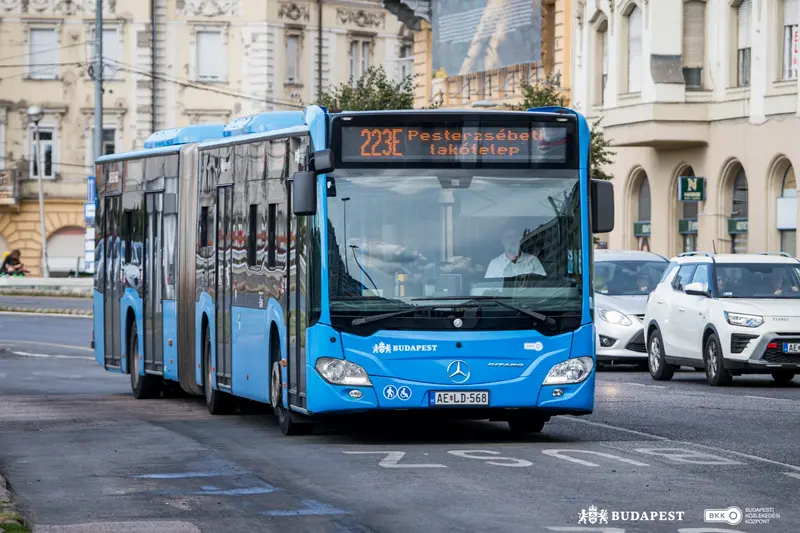
Budapest’s General Assembly has approved agreements paving the way for the Budapest Transport Centre (BKK) to become a regional public transport organiser, with the new system scheduled to launch on 1 January 2027.
The proposal, submitted by Budapest Mayor Gergely Karácsony, was passed on Friday with 17 votes in favour and 11 abstentions, according to the Hungarian news agency MTI.
The decision follows an agreement reached between the Hungarian government and the capital. At a meeting of the Council for Metropolitan Development on 1 October, the parties approved plans for shareholder and cooperation agreements involving the Budapest Municipality, the Ministry of Transport and Investment, the state-owned National Transport Centre (OKK) and BKK.
Under the arrangement, OKK will acquire a 50% stake in BKK through a capital increase, making the state an equal shareholder alongside the municipality.
Don’t miss this: Budapest drivers to face weeks of disruption as major junction undergoes renovations
One transport organiser for the capital and its suburbs
From 1 January 2027, the company will operate under the name BKK Budapest Metropolitan Transport Centre Plc. It will act as a joint transport organiser, commissioning public transport services across the capital and the surrounding region.
Its responsibilities will include services operated by the capital, suburban railway lines, suburban rail services and regional bus routes terminating in Budapest. The aim is to bring the organisation of transport across the metropolitan area under a more coordinated system.
The reform could affect almost three million people living in Budapest and its surrounding settlements, who rely on a network of urban and suburban transport services for commuting and other journeys.
Stay up-to-date with Hungary Weekly Briefing: subscribe on Substack!
Politicians welcome the decision
Transport and Investment Minister Dávid Vitézy welcomed the vote in a post on Facebook, describing it as approval of the regional BKK concept.
He said the state would become a 50% owner alongside the capital and that BKK would gain commissioning rights across the entire suburban region.
“The biggest winners are the passengers,” Vitézy wrote.
Mayor Gergely Karácsony also praised the decision, saying that from January, the BKK would organise public transport throughout the region. He described the residents of Budapest and its agglomeration — nearly three million people in total — as the main beneficiaries of the agreement.